How-to
How to Make Passive Income on YouTube Without Filming: The Step-by-Step Guide
A practical blueprint to launch a highly scaleable, faceless audio-visual channel that runs on autopilot.

Yes, you can make passive income on YouTube without filming: a faceless lofi or ambient music channel earns from long videos that keep getting played, and nobody holds a camera. Chillframe is the tool that runs it, writing the music, making the scene and posting each finished video to your channel on your schedule.
A lot of new creators want to know how to make passive income on YouTube without filming videos or speaking on camera. The usual route (expensive cameras, hours of raw footage to edit, complicated audio setups) stops many people from ever launching a channel. Automated production tools change that. You can now build a profitable faceless YouTube channel from original music and visuals. Focus on high-demand niches like lofi beats and study music, and you build a library of evergreen videos that earn views around the clock.
Can you make passive income on YouTube without filming?
Yes. You can earn passive income on YouTube without showing your face or holding a camera. It's a semi-passive business model: you put the time in up front to build an original library and set up automated systems, and then the returns keep coming.
Here is how successful faceless channels work:
- The niche: high-demand audio-visual niches like lofi hip-hop, ambient soundscapes or study beats.
- The videos: software makes original music and looping visual animations, so nobody films anything.
- The income: once the channel meets eligibility requirements, it earns recurring revenue from ads, affiliate marketing, digital products and channel memberships.
- The schedule: a structured production workflow and scheduling tools automate your uploads, so the channel runs steadily in the background while you work on optimization and growth.
To move a channel from an active project to semi-passive income, treat your uploads as digital assets. Every 30-minute study mix or 1-hour ambient soundscape you publish is an evergreen piece of your library.
Over the months, those videos build up watch-time and get picked up by the YouTube recommendation algorithm. While you sleep or work on something else, viewers in Tokyo, New York or London are streaming your study music. The key is to stop editing videos by hand and move to a structured system that makes and distributes them for you.
Choose a faceless YouTube model that can compound
Pick a format you can produce quickly and repeat. The standard faceless models are:
- screen recordings for software tutorials
- stock-footage explainers
- 2D whiteboard animations
- audio-led channels
Tutorial channels mean recording your screen and narrating every step. Audio-first channels focus on good soundscapes paired with aesthetic visuals, which is why lofi music channels scale so well. If you're still planning, our walkthrough on how to start a faceless YouTube channel covers naming, niche selection and channel setup in order.
Some creators try to build channels from downloaded Creative Commons tracks or compilations of existing music. That's very risky. YouTube policies require you to add significant original value to any existing material. If you re-upload other musicians' tracks, your channel is likely to get copyright strikes or be turned down for monetization.
Building a channel with an AI music generator gives you full control over your catalog instead. Making your own lo-fi beats, synthwave tracks or relaxing rain sounds means your audio is entirely your own. Pair that original music with a capable lofi video generator and you get an appealing, aesthetic video built from audio that was never in a commercial catalog, which is what Content ID matches against.
How to create lofi YouTube videos without filming
A lofi video starts with a clear listener use case. You might target students who want company through a study session, or professionals who want background music for coding. Chillframe makes videos up to 1 hour long, so you cover a long session by publishing consecutive hour-long episodes rather than one huge file. Once you've set the mood (a rainy night in a Tokyo cafe, say, or a sunny afternoon in a cozy library), you can start making it.
Doing it the traditional way takes four separate jobs:
- Make a MIDI music track in a digital audio workstation.
- Export the audio file.
- Make a matching visual loop in a separate animation tool.
- Merge the two in a video editor.
That manual workflow can easily take 5 to 10 hours per video.
Chillframe does all of it for you. It makes the music and visuals, puts the video together, and publishes it to your YouTube channel on the schedule you set. You choose the mood and visual style, and Chillframe handles the technical side. A Series makes videos at 10, 30 or 60 minutes, which covers the study-session and background-listening formats that do well in this niche. You keep up a high-frequency upload schedule without spending your weekends editing video files.
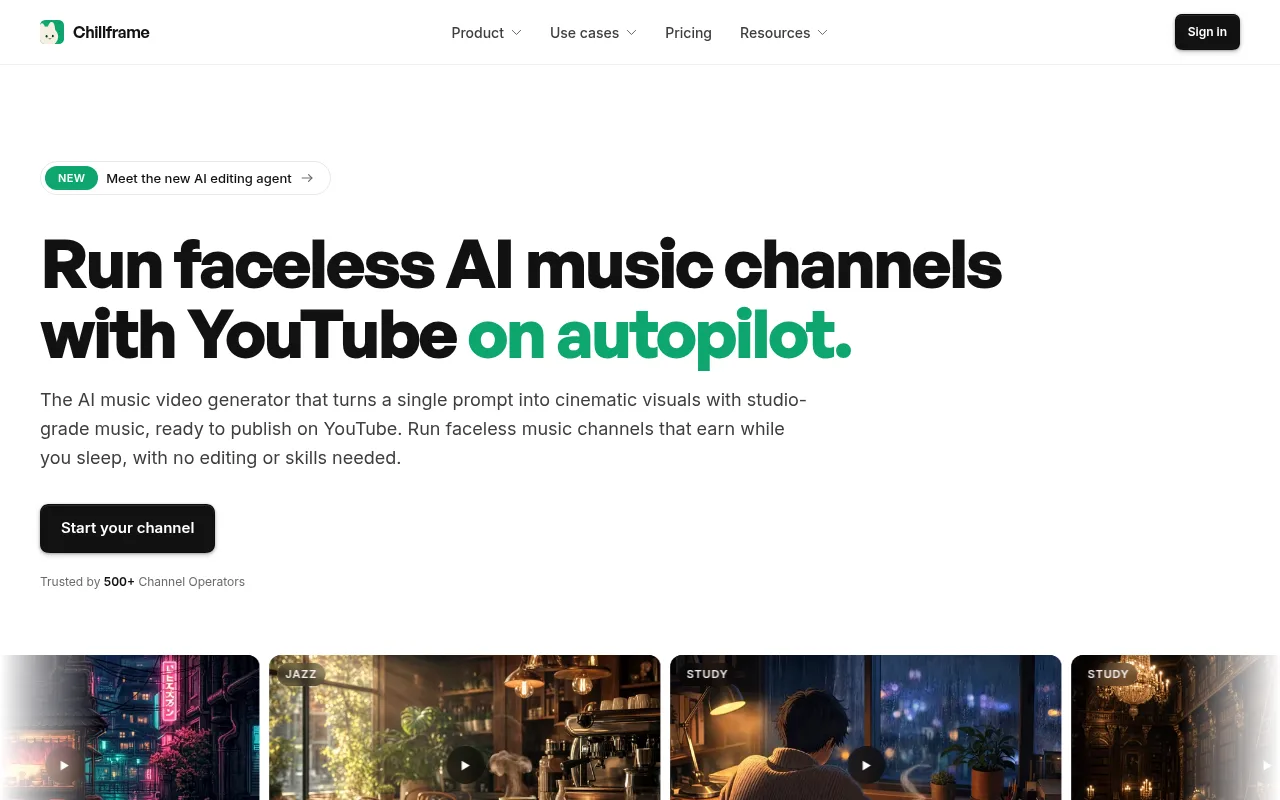
Once the video is made, it needs its publishing details: a descriptive title, an SEO-optimized description and an eye-catching thumbnail. Chillframe writes an optimized title and description for each video and takes the thumbnail from the video itself, so you go from an idea to a published YouTube video without picking up a camera or opening a video editing suite. Learn more about automated workflows in our guide on the AI video generator for YouTube.
Build a repeatable publishing system
To build a loyal audience, your channel needs a recognizable series format. Someone who enjoys your rainy-day lofi tracks should spot your next upload straight away. You get there with:
- consistent visual themes
- similar thumbnail layouts
- structured titles like "Lofi Beats for Coding, Volume 1"
Consistency is what search algorithms reward most. Upload now and then and it's hard to build momentum. A recurring schedule lets you line up weeks of videos in advance. A Chillframe Series publishes straight to your channel at the times you set, whether that's 8 PM for late-night study sessions or 6 AM for morning meditation. Approve the first video and from then on it's fully hands-off.
Keep an eye on how the channel performs. Check your YouTube Studio dashboard regularly for watch-time, click-through rate and audience retention. If one visual style or music tempo gets 30% more watch-time, steer your future videos toward it. You can read more about setting up these systems in our deep-dive on the YouTube automation tool strategy.
Ways to monetize a faceless channel
The YouTube Partner Program (YPP) is the most common way to monetize, but successful creators spread their income across several streams. Ad revenue alone rises and falls with seasonal advertiser spending. Our broader guide to making money on YouTube shows how these streams compare.
The ad revenue numbers:
- The split: according to Zebracat, YouTube ad revenue is shared 55% to the creator and 45% to YouTube.
- The threshold: Spotlightr notes you need at least 1,000 subscribers and 4,000 public watch hours over the past 12 months to share in it.
- The rate: once accepted, creators usually earn between $2 and $12 for every 1,000 views, depending on where viewers are and the channel's niche.
Beyond ad revenue, you can monetize a lofi channel in several other ways:
| Monetization Method | Primary Benefit | Setup Complexity | Revenue Source / Estimate |
|---|---|---|---|
| YouTube Ad Revenue | Passive recurring income | Medium (requires YPP) | $2-$12 per 1,000 views |
| Affiliate Marketing | Earn commissions immediately | Low (no subscriber minimum) | Variable commissions on product links |
| Channel Memberships | Recurring monthly support | Medium | Custom monthly pricing tiers you set |
| Digital Products | High profit margins | High (requires product creation) | Sales of wallpapers, presets, or sample packs |
For example, put affiliate links in your descriptions for things your listeners use, like noise-canceling headphones, study planners or productivity software. Channel memberships can offer perks like high-resolution desktop wallpapers to download or early access to new tracks. For a niche-specific breakdown of which of these pay on an audio channel, see our guide to faceless YouTube channel monetization.
Use SEO and analytics to create evergreen demand
To get views before you have an audience, optimize your videos for search and recommendations. Instead of calling a video "My New Lofi Beat", use search terms that match exactly what people want, such as "lofi music for study sessions" or "chill ambient beats for anxiety relief".
Keyword research platforms like Morningfame, VidIQ and TubeBuddy help you find low-competition phrases with high search volume. They give you useful insight into what your target audience is actively searching for on YouTube.
You use those outside SEO tools to plan what to make and to spot trending topics. Chillframe is your core production engine: it makes the actual music and matching visuals, then publishes them straight to your channel. Put smart keyword research together with automated production, and your channel keeps targeting high-demand search terms with fresh, original videos.
Avoid copyright and reused-content problems
The biggest hurdle for faceless channels is YouTube's strict policy on reused and repetitive content. If your channel is static, low-effort slides with public domain music, YouTube may turn down your Partner Program application or demonetize your existing videos.
To build a business that lasts, make sure everything you upload is original. Don't use unlicensed movie clips, viral meme soundbites or copyrighted songs. Even with Creative Commons assets, read the license terms carefully to check whether commercial use is allowed and whether attribution is required.
| Policy Area | Potential Risk | Safe Practice |
|---|---|---|
| Reused Content | Rejection from YPP and demonetization | Generate original music and visuals for every upload |
| Copyright Claims | Video takedowns or revenue redirection | Use original synthesis or properly licensed loops |
| Repetitive Content | Channel suspension or limited reach | Vary your visual themes, audio tempos, and metadata |
A dedicated automation tool removes the biggest source of these problems. Chillframe makes original music and visuals, so you aren't re-uploading anything that belongs to someone else. The rest is your call: vary the moods, tempos and artwork across your library, and give each upload its own metadata, so your channel reads as a catalog and not one template repeated a hundred times. In a Series, you choose whether the visuals and music stay the same, similar or different each time.
A practical path from active setup to semi-passive income
Going from a blank channel to a passive income stream works best step by step. Don't try to target every niche at once. Focus on one specific audience (students, coders or gamers, for example) and build a series around what they need.
- Build a library. Make 10 to 15 high-quality videos with Chillframe.
- Set the schedule. Connect your YouTube channel and set up a recurring publishing schedule, such as a new 1-hour lofi video every Tuesday and Friday.
- Watch the numbers. Check your analytics weekly to see which videos do best.
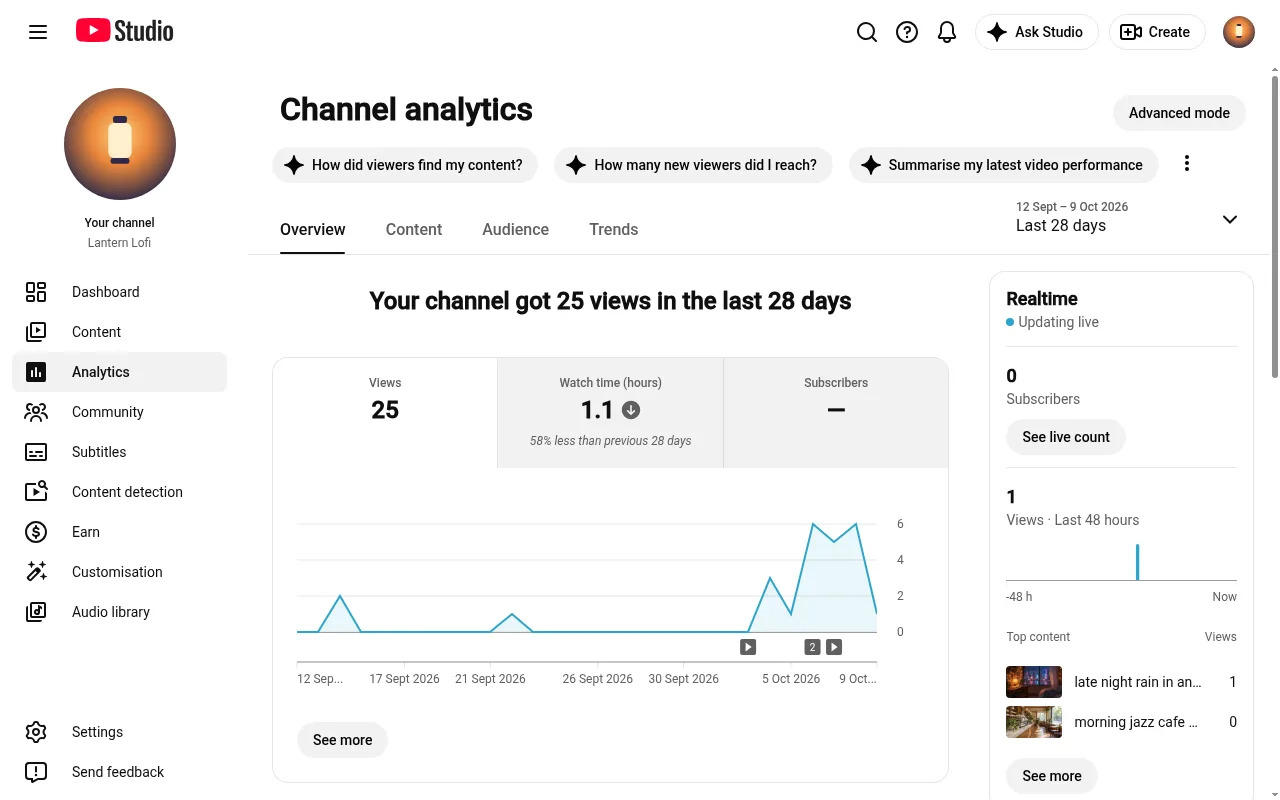
- Double down on what works. As the library grows, put your time and resources into the themes with the highest watch-time and subscriber growth.
Income always varies and depends heavily on audience engagement. A consistent, search-optimized library is the most reliable way to turn your faceless channel into a steady source of semi-passive revenue.
Frequently Asked Questions
How long does it take to get monetized with a faceless lofi channel? The time required to reach the YouTube Partner Program threshold of 1,000 subscribers and 4,000 public watch hours varies with how often you post and how much each video is watched, so there's no fixed timeline. Posting original videos on a steady schedule is what moves it.
Do I need expensive editing software to make faceless videos? No. By using Chillframe, you do not need to purchase or learn a complex video editing suite. The platform generates the music and visuals, assembles the video, and publishes it to your YouTube channel on a schedule you set.
Can I use royalty-free music sites to build my channel? You can, but many other creators use the same tracks, which can lead to your channel being flagged for repetitive or reused content. Generating original music is the safer way to keep your channel eligible for monetization.
How often should I upload to grow my faceless channel? A consistent schedule of 2 to 3 high-quality uploads per week is ideal for keeping your audience engaged and feeding the YouTube recommendation algorithm without overwhelming your subscribers.
Can you make passive income on YouTube without filming? Yes. Faceless lofi, study and ambient music channels earn from ads on long videos that keep getting played for months, and nobody films anything. Chillframe makes the original music and the scene, puts the video together and posts it to your YouTube channel on the days you choose. Approve the first video and from then on it's fully hands-off.
A faceless YouTube channel is one of the most accessible ways to build a recurring income online. Swap manual filming and editing for a systematic, automated workflow, and your energy goes into strategy and optimization. With Chillframe making your original music and visuals, your channel keeps delivering videos to listeners around the world, and your creative ideas become a digital asset that keeps growing.