Guides
The Best AI Music Generator Options in 2026: A Tested Guide
A guide to the top generative audio platforms, licensing frameworks, and open-source alternatives in 2026.

How I Tested (and How to Pick the Right AI Music Generator in 2026)
Choosing an ai music generator in 2026 requires looking past marketing hype to evaluate actual output quality, licensing safety, and production workflow. To find the top platforms, I conducted a structured evaluation of the leading generative audio tools. This testing process measured each platform against six core criteria: vocal quality, instrumental quality, prompt fidelity, commercial licensing terms, pricing structure, and maximum output length.
The test methodology involved running a blind A/B side-by-side comparison using identical text prompts across the top performers of 2026, including Suno v5, Udio v2, ElevenLabs Music, Lyria 3, AIVA, and the open-source model ACE-Step 1.5. Instead of relying on a single overall score, this evaluation uses a decision filter that prioritizes specific use cases. Whether you need realistic vocals, background music for video, podcast intro beds, or full ownership for commercial games, your primary use case should dictate your tool selection.
The 2026 AI Music Generator Landscape at a Glance
The generative audio sector is experiencing rapid commercial expansion. Per Grand View Research, the generative-AI music market reached $569.7 million in 2024 and is projected to grow to $2.79 billion by 2030, representing a 30.5% compound annual growth rate (CAGR) [https://voxbooster.com/blog/ai-music-generation-statistics-2026]. This growth reflects a massive shift in how creative work is produced. A landmark survey of 1,241 music creators by LANDR conducted in September and October 2025 revealed that 87% of musicians use AI somewhere in their workflow, while 29% specifically use a song generator [https://www.landr.com/ai].
This widespread adoption has caused a supply shock on distribution platforms. As of April 2026, approximately 75,000 AI-generated tracks are uploaded daily to Deezer, accounting for 44% of all daily uploads on the platform, a massive increase from just 10,000 daily uploads in January 2025 [https://www.botmemo.com/ai-music-statistics]. With half of all new streaming music originating from AI models, understanding the nuances of these platforms is essential for creators.
Best AI Music Generator for YouTube: The 2026 Comparison Table
YouTube creators judge an AI music generator by a different rubric than musicians do. A working track has to clear three gates the platform quietly enforces. It must be cleared for monetized videos, it must sit correctly in your content (either invisibly beneath a talking-head cut or front and center as a lofi stream), and it has to slot into a workflow you can repeat every week without burning out. The table below scores the leading tools against those YouTube-specific gates, using the same 2026 pricing and licensing facts covered throughout this guide.
| Tool | Best YouTube job | Commercial-use profile | Audio only, or the whole video? |
|---|---|---|---|
| Suno AI | Full vocal tracks, hooks, and channel theme songs | Cleared on the Pro and Premier paid tiers | Audio only |
| Udio | Polished instrumental beds and multi-part cues | Cleared on paid tiers after the 2025 settlements | Audio only |
| ElevenLabs Music | Lowest-licensing-risk background music | Fully licensed training corpus | Audio only |
| AIVA | Owned intros, outros, and cinematic scoring | Full copyright ownership on the Pro tier | Audio and MIDI only |
| Chillframe | Lofi, study, and ambient channels that run themselves | Original, studio-quality tracks (no licensing guarantee) | Music, visuals, and scheduled YouTube publishing |
The right pick depends almost entirely on where the music sits in the frame. When the audio is a bed under commentary, tutorials, gaming footage, or vlogs, ElevenLabs Music carries the lowest licensing risk of any option in this comparison, because it was built from the ground up on a fully licensed corpus. That clean training data is the most valuable property for a channel that plans to run ads, since it removes the ambiguity that makes advertisers and rights-holders nervous. At $5 per month for the Starter tier, it is also the cheapest entry point into monetization-cleared music.
If your videos need original songs with real vocals, such as channel theme songs, lyric videos, or short musical hooks between segments, Suno AI is the fastest way to produce them. Its paid Pro and Premier tiers grant commercial-use rights, and its sub-60-second generation speed lets you iterate on a hook until it lands without watching your credits drain. Udio is the better call when you want instrumental beds with genuine production polish, including extended intros, multi-part cues, and background loops that do not sound thin under a voiceover. Both platforms are now safe for monetized uploads on their paid tiers, provided you never prompt with a real artist's name or try to copy a signature vocal hook.
Creators who want to truly own the music they publish, rather than license it under a platform's evolving terms, should look at AIVA. Its Pro tier grants full copyright ownership of the compositions it generates, plus MIDI and stem exports, which makes it a strong fit for branded intros and outros you plan to reuse across hundreds of videos. The tradeoff is that AIVA is a scoring tool rather than a background-loop factory, so it rewards creators who want to shape a piece rather than generate disposable filler.
For a straightforward background bed under standard uploads, our guide to background music for YouTube covers how to match a track's energy to your content so the audio supports the video instead of competing with it. The short version: pick the quietest option that still holds attention, keep the loop long enough to avoid obvious repetition, and confirm the commercial terms of whichever tool you choose before you publish a monetized video.
The one category this table cannot capture is the channel where the music is the product. If you run a lofi, study, ambient, or sleep stream, the "best generator" question becomes a trap. Choosing Suno over Udio saves you nothing when the real labor is rendering an hour of clean looping video, matching the visuals to the mood, and uploading on a consistent schedule, week after week, so the algorithm learns your channel is active. A raw audio file is maybe a tenth of that job.
That is the gap Chillframe closes. Instead of handing you a track and leaving the video, the visuals, and the upload as your problem, Chillframe generates original, studio-quality lofi music, pairs it with looping visuals tuned to one of seven themes (including study-boombap, rainy-tokyo, and jazzhop), and delivers a finished video that loops cleanly to the runtime you choose. Several themes carry a matched ambient texture, from the patter of rain in rainy-tokyo to a warm cafe hum in jazzhop, so the mood is built into the sound rather than added on afterward. You connect your YouTube channel in a click, set a Series to publish on the days and cadence you want, and the channel keeps feeding itself while you focus on growth.
That end-to-end approach is why creators building a faceless YouTube channel around music increasingly skip the generator-shopping stage. When the destination is a self-sustaining catalog rather than a single track, the deciding factor is not which model has the best vocals, but which tool removes the most manual steps between an idea and a published video. For a deeper look at wiring that hands-off cadence together, see our walkthrough of faceless YouTube automation.
None of this means Chillframe replaces a dedicated song generator for every creator. If you need vocal tracks for a music channel or licensed stems for a film score, the tools above remain the right answer, and Chillframe makes no licensing or ownership guarantee about the tracks it produces. But for the specific, high-volume job of running a lofi or ambient channel that publishes on its own schedule, comparing it against Suno or Udio is really comparing a finished, scheduled YouTube video to a single audio export, which is a different and far larger unit of work.
Best for Full Songs With Vocals & Lyrics
When your goal is to generate complete tracks with realistic singing or rapping, three platforms dominate the landscape.
Suno AI remains a highly popular option for generating full vocal and instrumental songs in under 60 seconds. Following a policy change in November 2025, Suno Pro and Premier subscribers receive commercial use rights for their outputs. In blind A/B coherence tests, Suno leads its nearest competitors by approximately 20%, maintaining a monthly user churn rate under 5% across its creator base [https://wifitalents.com/suno-ai-statistics/]. For a deeper comparison of the two leading platforms, read our head-to-head analysis of Suno vs Udio.

Udio offers exceptional production polish and highly realistic vocal textures. Following major legal settlements with Universal Music Group (UMG) in October 2025 and Warner Music Group (WMG) in November 2025, Udio has established a licensed framework that makes its paid tiers safe for commercial use. It excels at complex arrangements and multi-part songs.
ElevenLabs Music, which launched in August 2025, is built from the ground up on licensed training data through partnerships with the Merlin Network and Kobalt Music Group [https://www.aimagicx.com/blog/suno-vs-udio-vs-elevenlabs-music-comparison-2026]. Because of this clean training corpus, ElevenLabs Music offers the lowest commercial licensing risk in the industry. Its vocal outputs are exceptionally clear and free of the metallic artifacts common in other generators. For a detailed breakdown of this tool, check out our ElevenLabs Music review.
Lyria 3, developed as part of the Google Gemini ecosystem, is the newest major entrant. Lyria 3 allows creators to generate high-quality vocals and instrumentals using either text descriptions or image prompts, offering a highly flexible input method for multimedia designers.
Best for Instrumentals, Beats, and Production Music
For creators who do not require vocals, the ideal AI music generation tool is one that offers precise control over arrangement, tempo, and key.
Udio stands out in instrumental production, delivering cohesive track progression and clean mixdowns. Its v2 engine allows users to extend, remix, and crop instrumental sections with high coherence.
Stable Audio, developed by Stability AI, provides specialized controls for professional production. Users can specify the exact beats per minute (BPM), musical key, and track length. This makes it highly effective for generating sync-library style cues and background loops.
AIVA (Artificial Intelligence Virtual Artist) is a specialized tool for classical and cinematic scoring. Operating on subscription tiers ranging from 15 Euros to 49 Euros per month, AIVA allows users to download MIDI files and individual audio stems. The Pro plan grants full copyright ownership of the generated compositions, making it a preferred choice for game developers and film composers.
Splash and Mubert offer loop-based, catalog-driven generation. Instead of synthesizing audio from scratch, these platforms assemble pre-recorded loops using AI algorithms. This method provides a highly reliable licensing path for video creators who need simple, non-intrusive background tracks.
If your primary goal is to build an audience on YouTube using background music, you do not need to spend hours prompting, rendering, and editing these files manually. Chillframe automates this entire process. It generates original, studio-quality lofi tracks that blend into a gapless, continuous soundtrack, paired with looping lofi visuals tuned to your chosen theme. Rather than fighting with editing timelines, you connect your YouTube channel in a click, and Chillframe publishes finished videos straight to your channel on the schedule you set. It turns video creation into a hands-off process where your watch-time compounds automatically.
Best Free AI Music Generators (and What You Actually Get for $0)
Many platforms offer free tiers, but they come with strict limitations, particularly regarding commercial usage. For a deeper look at these options, read our guide on the best free AI music generator.
Suno and Udio both provide free daily or monthly credits, but all outputs generated on these free tiers are restricted to non-commercial use. Similarly, ElevenLabs Music and Lyria 3 offer limited free access for personal experimentation. If you use a free tier to generate a track, you cannot legally monetize it on YouTube, use it in a commercial podcast, or distribute it to streaming services. Free tiers are best reserved for prototyping, internal demos, and personal hobbies.
For creators who need free music without subscription fees, open-source models are the most viable alternative. Models like Meta MusicGen, Stable Audio Open, and Riffusion generate purely instrumental tracks under permissive research and creative licenses. While they lack the polished web interfaces of commercial platforms, they allow unlimited generation on local hardware without recurring costs.
Commercial Licensing in 2026: What the Suno, Udio, and ElevenLabs Settlements Mean for You
The legal landscape of generative music transformed dramatically between late 2025 and early 2026. Understanding these changes is critical if you plan to use an AI music generator for commercial use.
On October 29, 2025, Udio settled its lawsuit with Universal Music Group (UMG), introducing an opt-in compensation scheme for artists and establishing a walled-garden platform [https://www.botmemo.com/ai-music-statistics]. Shortly after, on November 19, 2025, Udio settled with Warner Music Group (WMG), securing access to an expanded pool of licensed training data. Suno reached a similar settlement with WMG in November 2025, which granted commercial download rights to its paid users.
While Suno remains at a hard impasse in its legal disputes with UMG and Sony Music Entertainment as of April 2026, its outputs remain commercially usable under the terms of its active subscription tiers and the WMG agreement [https://www.botmemo.com/ai-music-statistics].
For creators, the practical takeaway in 2026 is clear: paid-tier outputs from Suno, Udio, and ElevenLabs are legally cleared for use in monetized YouTube videos, TikTok posts, podcast intros, and indie game soundtracks. However, you must never use real artist names in your prompts or attempt to replicate signature vocal hooks, as doing so violates platform terms of service and state-level publicity rights.
Pricing & Cost-Per-Song Breakdown
To help you budget for your production needs, we have compiled the pricing structures of the leading platforms as of 2026. For a more exhaustive look at subscription costs, you can read our AI music generator pricing comparison.
| Platform | Subscription Cost (Monthly) | Key Features & Commercial Rights | Source |
|---|---|---|---|
| Suno AI | Pro: $10 / Premier: $30 | Commercial rights, 2,500 to 10,000 credits | Suno Statistics |
| Udio | Standard: $10 / Pro: $30 | Commercial rights, advanced audio editing | Bot Memo |
| ElevenLabs Music | Starter: $5 / Creator: $22 / Pro: $99 | Fully licensed training corpus, clean vocals | AI Magicx |
| AIVA | Standard: 15 Euros / Pro: 49 Euros | Full copyright ownership on Pro tier | Tracklib Blog |
On a pay-per-song basis, the economics vary depending on track length and generation quality. Data from Soundverse in February 2026 indicates that creators spend between $1 and $10 per finished song when accounting for the credit cost of multiple revisions and extensions [https://www.soundverse.ai/blog/article/cost-per-song-ai-music-generator-pricing-breakdown-1226]. At the enterprise level, the industry is moving toward high-volume licensing, highlighted by Suno's $5 million custom deals with five major record labels to secure safe training inputs and distribution channels.
Use-Case Decision Tree, Which AI Music Generator Should YOU Use?
To simplify your selection process, use this decision matrix to match your specific production requirements with the optimal tool.
| Primary Use Case | Recommended Platform | Primary Benefit |
|---|---|---|
| YouTuber / TikTok Creator | Stable Audio or Suno Pro | Fast instrumental generation with clear commercial rights |
| Musician Prototyping Songs | Udio or Suno | Realistic vocal textures and flexible song extension tools |
| Podcast Producer | ElevenLabs Music | Safest licensing profile with a fully cleared training corpus |
| Indie Game Developer | AIVA Pro | Full copyright ownership of compositions and MIDI file export |
| Enterprise / Brand | ElevenLabs Music | Minimum legal risk with enterprise-grade indemnity options |
| Developer / Hobbyist | ACE-Step 1.5 | Free, open-source generation running on local hardware |
Verdict: If your work requires realistic vocals with a highly secure legal foundation, ElevenLabs Music is the premier choice in 2026. For rapid, high-volume songwriting across multiple genres, Suno Pro offers the best balance of speed and cost. For cinematic scoring where you need to edit individual notes, AIVA Pro remains unmatched. If you are specifically creating video content, you can find more tailored options in our guide on the AI music generator for video YouTube.
The Open-Source Option: ACE-Step 1.5, MusicGen, Stable Audio Open
For developers and technical creators who want to avoid monthly subscription fees and maintain absolute control over their data, open-source models have become highly capable.
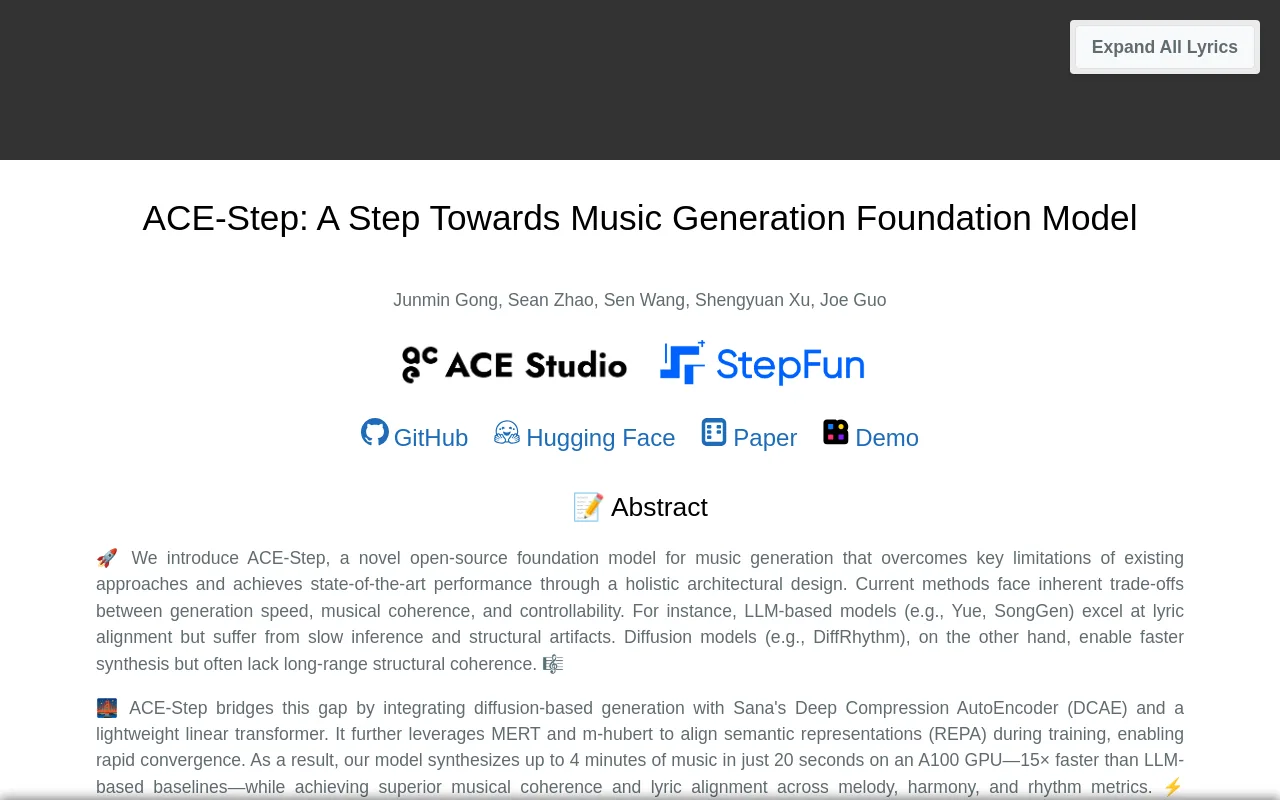
ACE-Step 1.5 is the leading open-source model in 2026. It supports text-to-music generation in more than 50 languages and can compose tracks up to 10 minutes in length [https://dev.to/czmilo/ace-step-15-the-complete-2026-guide-to-open-source-ai-music-generation-522e]. Unlike massive commercial models that require warehouse-scale server farms, ACE-Step 1.5 runs efficiently on consumer-grade GPUs, making local studio deployment highly practical.
Meta MusicGen offers reliable text-to-instrumental generation under a permissive Facebook Research license. It is highly effective for generating short loops and musical fragments.
Stable Audio Open, developed by Stability AI, provides text-to-instrumental synthesis with explicit Apache-style licensing terms, making it safe for integration into third-party software applications.
The primary tradeoff with open-source models is the lack of a managed hosting environment or user-friendly web interface. You must configure the software environments yourself, and these models do not offer commercial licensing guarantees or indemnity.
What the 2026 Stats Say (and What They Don't)
The growth of generative audio is reshaping the music industry's metrics. Suno has established itself as the largest commercial player by revenue, reaching a $2.45 billion valuation in November 2025 and achieving a $300 million annual recurring revenue (ARR) run rate in February 2026, supported by approximately 2 million paid subscribers [https://www.chartlex.com/blog/marketing/ai-music-generator-comparison-2026].
Suno's active user base is roughly 37% larger than Udio's, with Suno recording 5.2 million monthly active users (MAU) in Q1 2026 compared to Udio's 3.8 million MAU in the same period [https://aisongchecker.pro/blog/ai-music-market-statistics-2026].
However, these numbers highlight a clear tension in the market. While 87% of working creators have integrated AI into their production pipelines [https://www.landr.com/ai], general consumer engagement remains cautious. Net listener sentiment toward AI-generated music was measured at negative 13% in May 2025 [https://voxbooster.com/blog/ai-music-generation-statistics-2026]. This gap suggests that while AI tools are highly effective for production, background music, and video soundtracks, creators should focus on transparency and quality rather than flooding platforms with unedited, low-effort uploads.
Frequently Asked Questions
Is there a free AI music generator? Yes. Suno, Udio, and ElevenLabs Music all offer free tiers with limited monthly or daily credits. However, these free tiers restrict usage to personal, non-commercial projects. If you want to use the music for monetized YouTube videos, podcasts, or commercial games, you must upgrade to a paid subscription tier or use open-source models like ACE-Step 1.5.
Are AI-generated songs copyrighted? Under current US Copyright Office guidelines, purely AI-generated music cannot be copyrighted because it lacks human authorship. However, if a human creator contributes significant original input, such as writing original lyrics, arranging specific stems, or performing hybrid editing, those specific human elements may be eligible for copyright protection.
Which AI music generator sounds most human? ElevenLabs Music and Suno AI produce the most realistic vocal performances, capturing natural pitch variations and vocal breathing. For complex instrumental arrangements, realistic production polish, and coherent genre blending, Udio is widely considered the top performer in blind audio evaluations.
Will AI music replace musicians? No. Data shows that AI is acting as an assistant rather than a replacement. According to the LANDR survey, 87% of working musicians use AI tools to speed up their creative workflows, such as generating initial song ideas, mastering tracks, or creating scratch vocals [https://www.landr.com/ai]. The technology is automating tedious production tasks while leaving core creative decisions to human artists.
Building a Channel That Runs Itself
For video creators, the ultimate value of an AI music generation tool is not just the audio file itself, but how it fits into a larger content strategy. If you are building a faceless YouTube channel focused on lofi, ambient, or study music, managing multiple subscriptions, generating tracks, rendering videos, and uploading them manually can quickly become a full-time job.
Chillframe closes that gap end to end. It generates original, studio-quality lofi tracks and pairs them with looping visuals across seven distinct themes, including study-boombap, rainy-tokyo, and jazzhop. Several themes carry a matched ambient texture, from the patter of rain in rainy-tokyo to a warm cafe hum in jazzhop. Instead of spending hours in video editors, you simply set your upload cadence, and Chillframe automatically publishes completed videos directly to your connected YouTube channel. It is a complete, hands-off solution designed to build your channel's library and compound your watch-time while you focus on high-level growth.