Listening
Nap music: what to play for a 20-minute or 90-minute nap
What to play for a quick power nap and a long afternoon sleep, how to wake up without the grogginess, and what helps toddlers settle.

Nap music is calm, steady, mostly instrumental music you put on to drift off during the day. What you play should depend on how long you mean to sleep. A 20-minute power nap wants something that settles you fast and then gets out of the way. A 90-minute nap is closer to a short night, and it suits darker, slower music with nothing in it to catch your ear.
What makes good nap music
Good nap music is predictable. No sudden drops, no key changes, no loud moments, and no words to follow.
The research backs this up. A 2023 study of 985 sleep playlists, with over 225,000 tracks, compared them with a general set of about 3.7 million tracks from people's everyday listening. The sleep music was softer, slower and lower in energy. The two features that stood out most were how acoustic it was and how instrumental it was. Lo-fi was one of the most common genre tags in the sleep playlists, alongside ambient.
What works for you still matters more than any average. In a survey of 651 people, 62% said they used music to help them sleep, and they named everything from Bach to Ed Sheeran. Almost all of the music users (96%) agreed that it helps them relax mentally. An album that always calms you down is a good nap album.
What a nap study found about music
The most direct evidence comes from a 2019 study in Scientific Reports. 27 young women took a 90-minute nap in a sleep lab twice. Once they heard a piece of music written for sleep, and once a spoken text. The music lasted about 14 minutes, played through speakers at 45 to 50 decibels as the lights went off.
Compared with the spoken text, the music made three differences:
- Sleep felt better. On average, the women rated their sleep quality higher.
- Less light sleep. On average, they spent less time in N1, the lightest stage of sleep, where you drift in and out.
- Some got more deep sleep. Women who scored low on a test of suggestibility got 46% more slow-wave sleep. Women who scored high didn't.
I find that last point useful. As a group, the women settled better and felt they had slept better. Deeper sleep was a bonus for some of them, not a promise for all. The piece was billed as using slow "delta" frequencies, but the study compared it with a spoken text, so it can't tell you whether that part did anything. Treat delta labels on nap tracks as names, not measured effects.
Music is a help with sleep, not a treatment. If you're napping because your nights keep going badly, that's worth raising with a doctor.
Nap music for a 20-minute power nap
The Sleep Foundation puts the best nap length for adults at about 20 minutes, and no longer than 30. Nap much longer than 30 minutes and you can wake from deep sleep, which can leave you groggy. It also suggests napping just before or during the post-lunch dip, and at least eight hours before bedtime.
For a power nap, you want music that gets you down quickly:
- Lofi with soft, steady drums. A gentle beat is fine here when it relaxes you. You won't be asleep long enough for it to matter.
- A single ambient pad or slow piano. Nothing that builds or changes.
- Rain or a quiet fan sound under it all. Good if your house or office is noisy.
Give yourself a few minutes to fall asleep, so set your alarm for around 25 minutes rather than 20. Pick one video or track that runs the whole time, so nothing new starts halfway through.
Nap music for a 90-minute nap
A 90-minute nap gives your body time to move through the stages of sleep, so you're less likely to wake in the middle of deep sleep. The Sleep Foundation says this can be refreshing, but can get in the way of your night if you take it too late in the day.
Because you'll go deeper, the music should be quieter and darker than for a power nap:
- No beats. Ambient music, soft strings or low piano. There's more on this in the guides to ambient sleep music and piano music for sleep.
- No bright, sparkly high notes. Warm, soft sounds are easier to sleep through.
- Let it stop. In the nap study, the music played for about 14 minutes and then the room was quiet for the rest. You don't need sound for the full 90 minutes unless you like it. A sleep timer handles this.
I've covered what deep sleep is, and how sound relates to it, in deep sleep music.
Side by side, the two naps look like this:
| 20-minute power nap | 90-minute nap | |
|---|---|---|
| How long | About 20 minutes and no longer than 30, with an alarm at around 25 | About 90 minutes, time to move through the stages of sleep |
| Music | Lofi with soft drums, an ambient pad or slow piano, rain underneath | Ambient music, soft strings or low piano, warm and dark |
| Beats | Fine if they relax you | None |
| How long it plays | One track that runs the whole nap | It can stop after about 14 minutes, with a sleep timer |
| Watch out for | Sleeping past 30 minutes and waking groggy | Taking it too late in the day |
Waking up gently at the end
How you wake up matters as much as how you fall asleep. Researchers at RMIT asked 50 people about the sounds they woke to and how groggy they felt afterwards. In their paper in PLOS ONE, people who rated their alarm as more melodic reported less grogginess.
So for a nap, swap the default beeping alarm for a melodic tone or a song you like. Many power nap videos on YouTube build the alarm in, with 20 minutes of calm music and a wake-up sound at the end. Listen to the last minute before you rely on one, so you know what will wake you.
Nap music for toddlers and preschoolers
For babies, the details are different enough that they have their own guide: newborn sleep music. For lullabies at any age, see lullaby music.
Toddlers usually take one nap a day, and the Sleep Foundation suggests keeping it well before bedtime. Music can be part of the routine around that nap:
- Use the same few songs every time. Soft lullabies, gentle piano or nature sounds. Familiar music becomes a cue that it's time to rest.
- Keep the volume low and the speaker away from the cot. A 2014 study tested 14 infant sleep machines at full volume, and every one went over 50 decibels, the limit recommended for hospital nurseries. Children's Hospital of Philadelphia advises placing a sound machine more than 200 centimeters from the cot and keeping the volume low. The same sense applies to a speaker playing music.
- Avoid anything that startles. No sudden sound effects, no loud song after a quiet one, no ads cutting in. One long video or a downloaded playlist is steadier than autoplay.
For preschoolers who no longer sleep in the day, quiet time works the same way. Soft music with no words marks the time as rest, even if they only lie and look at a book.
If a child naps better in silence, give them silence. Music is there to help, not to be a rule.
Where to find nap music
YouTube
YouTube has a huge range of nap music, including many 20-minute power nap videos with an alarm at the end. Search for the length you want, like "20 minute power nap music with alarm".
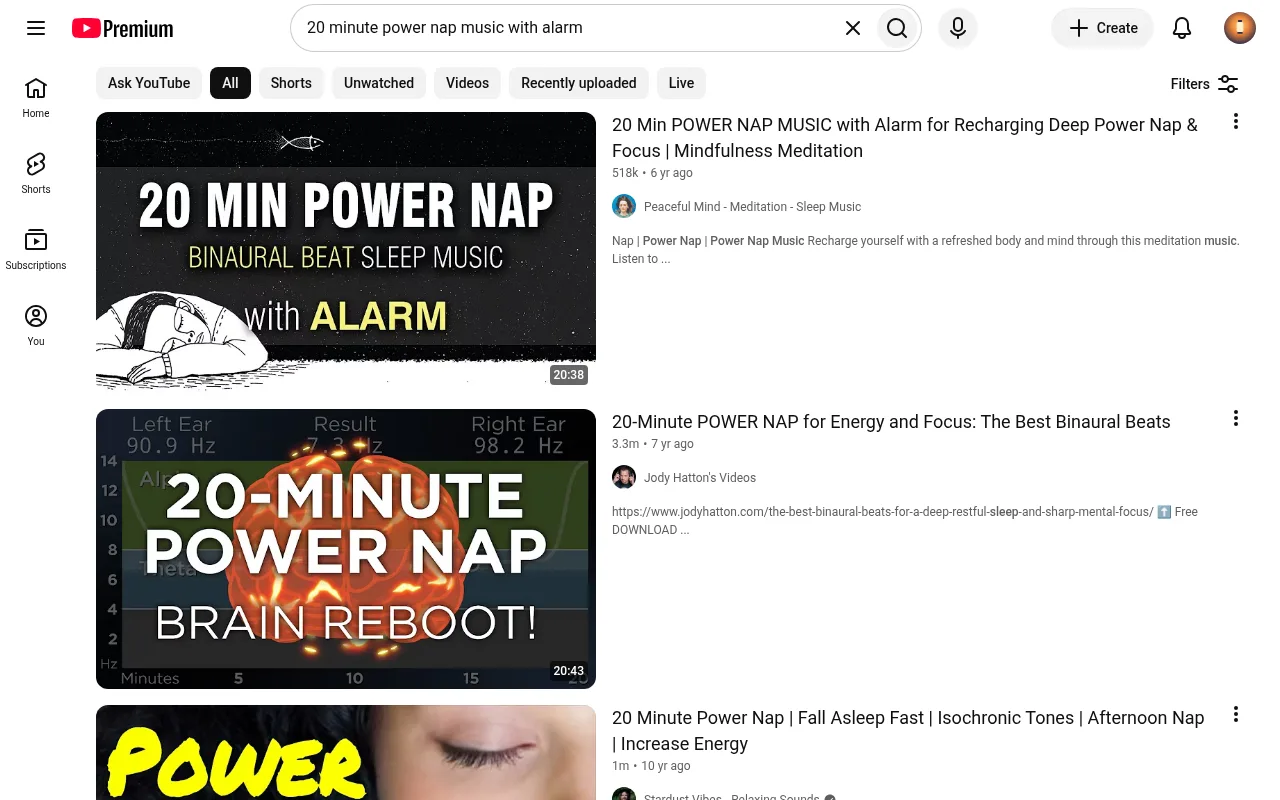
Many of these videos are labeled binaural beats, isochronic tones or delta waves. As with the study above, those are labels. Pick the one whose sound you like. To have the video stop on its own, use YouTube's sleep timer, which pauses it after the time you choose. Open the video, tap Settings in the player, then tap Sleep timer.
Spotify
Spotify has plenty of nap playlists made by listeners, from lofi to rain to soft piano. Search for "nap" and filter by playlists.
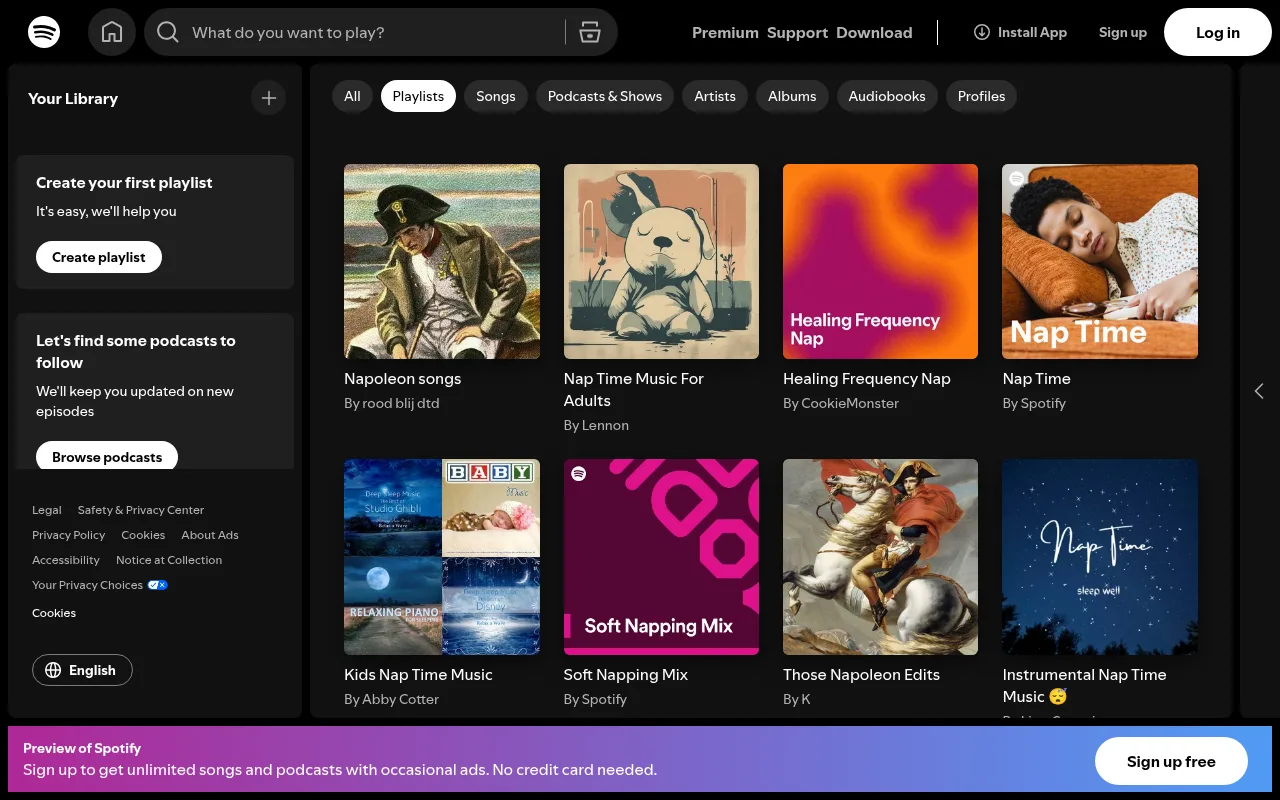
A playlist moves from track to track, so check that the songs stay at a similar volume and mood. Spotify's phone app also has a sleep timer in the menu of the player, which stops the music for you.
Grow a nap music channel with Chillframe
Nap music covers a lot of ground on YouTube: power nap videos, lofi for an afternoon sleep, rain for a noisy office, soft music for a toddler's nap. That range leaves room for new channels, and you don't need to be a musician or an editor to run a faceless channel in it.

Chillframe makes the whole video. It writes original music or makes the sound of the scene, makes a still or gently moving picture to match, puts them together and publishes the finished video to your YouTube channel.
The main decision for a nap channel is matching the length to the nap:
- Power naps: a 30-minute video covers a 20-minute nap with time to fall asleep. Anime Rainy Bedroom from the Lofi Anime style suits it.
- Long naps: a 1-hour video, with a Deep Sleep scene like Moonlit Ridge, near-black with slow pads and one distant piano note.
Instrumental is the default, with no singing. For rain or a fire with no music, choose Ambience only. Or describe your own scene, like a hammock under a shade tree.
For an afternoon channel, set a Series to publish weekdays at 12:30pm, and Chillframe automatically makes a fresh power nap video for each of those days. Approve the first one with auto-publish on, and from then on it's fully hands-off. Each video goes up with a title, description, tags and a thumbnail taken from the video, and Chillframe handles YouTube's AI-content disclosure on upload.
The limit that matters for naps is length. The choices are 1, 10 and 30 minutes or 1 hour, so there's no exact 20-minute or 90-minute video. For a long nap that's fine: as the nap study showed, the music doesn't need to play the whole time.
As a still scene, Anime Rainy Bedroom is on the Starter plan at $19 a month. With the rain running down the window it's a Plus video, from the Creator plan at $49. The guide to sleep music on YouTube covers the creator side.
Nap music FAQ
Is lofi music good for naps?
Yes, especially for a short nap. Lofi with soft, steady drums and no vocals is calm and even, and lo-fi was one of the most common genre tags in a study of nearly 1,000 sleep playlists. For a longer nap, pick a version with no drums, or ambient music, so nothing keeps part of your mind listening.
Should nap music have lyrics or beats?
Leave out the lyrics. Sleep playlists lean strongly instrumental, and words give your mind something to follow. Soft beats are fine for a short power nap when they relax you. For a long nap, drop them too.