Listening
Lullaby music: the classic songs, lullabies from around the world and where to listen
The lullabies worth knowing, where they came from, the words to sing yourself, and the best places to play them at bedtime.

The best lullaby music is still the old songs: Brahms' Lullaby, Twinkle, Twinkle, Little Star and Hush, Little Baby, sung slowly or played on a piano or a music box. Below are the lullabies worth knowing, the ones sung in other languages, the words to sing yourself, and where to play them at bedtime.
For a newborn, the guide to newborn sleep music covers volume and safety. This page is about the songs.
What makes a song a lullaby
The word goes back to Middle English, from "lullen", to lull, and was first recorded around 1560. Lullabies from very different places tend to share a sound. Wikipedia's lullaby article sums up the research on the usual traits:
- A slow tempo, with long pauses between sections.
- Lots of repetition, of words and of the tune.
- A rocking beat. Many are in triple time or 6/8, which gives them a swaying feel, like a cradle.
- Simple, gentle harmony, mostly moving between two chords.
That shared sound reaches babies whatever the language. A Harvard study played babies short clips of songs from other cultures, some lullabies and some not. During the lullabies, their heart rates dropped further and their pupils got smaller, both signs of relaxing. Parents also picked the lullaby as the song they'd use to calm their own baby, though they'd never heard it before.
Classic lullabies to know
These five are the lullabies most English-speaking families know, and each one comes in sung and instrumental versions.
- Brahms' Lullaby. Johannes Brahms wrote it in 1868 for the birth of his friend Bertha Faber's second son. Its proper title is Wiegenlied, Op. 49 No. 4, and in German it opens "Guten Abend, gut' Nacht".
- Twinkle, Twinkle, Little Star. The words come from The Star, a poem by Jane Taylor first published in 1806. The tune is an older French melody from 1761, the same one used for the alphabet song and Baa, Baa, Black Sheep. Mozart wrote 12 variations on it, though the tune itself isn't his.
- Hush, Little Baby. A traditional folk lullaby whose author nobody knows. The folk song collector Cecil Sharp wrote down a version in Virginia in 1918. Each verse promises the baby a gift.
- Rock-a-bye Baby. The words were first printed around 1765 in Mother Goose's Melody, a book of nursery rhymes published in London.
- Golden Slumbers. The words come from a cradle song by the playwright Thomas Dekker, published in 1603. Paul McCartney wrote a new melody for it on the Beatles' Abbey Road in 1969.
Lullabies from around the world
Lullabies turn up all over the world, and the Harvard study suggests a baby doesn't need to understand the words. These make a good change at bedtime, or a way to pass on a song from your family's language. All of them are on the Wikipedia list of lullabies by region or the Carus Lullabies of the World collection.
- Suo Gân, Wales. The title means lullaby, from "suo", to lull, and "cân", song. It was first printed around 1800.
- Hine E Hine, New Zealand. A Māori lullaby from 1907.
- The Edo Lullaby and the Itsuki Lullaby, Japan. Two traditional Japanese lullabies.
- Omanathinkal Kidavo, India. A lullaby in Malayalam, from the south of India, written in 1813.
- Sa Ugoy ng Duyan, the Philippines. A popular lullaby written in 1948.
- Thula Baba, South Africa, Bayu Bayushki Bayu, Russia, and Slaap, Kindje, Slaap, the Netherlands. All three are in the Carus collection.
Search any of these names with "lullaby" on YouTube or Spotify and you'll find sung and instrumental versions.
Music-box and instrumental lullabies
A lot of the lullaby music people play at night has no words at all. The two versions you'll come across most are music box and soft piano.
A music box plays by turning a pinned cylinder or disc that plucks a comb of tuned steel teeth. The design dates from 1796 in Geneva, and its thin, bell-like sound suits a lullaby's simple tune. Search "music box lullabies" and you'll find Brahms, Twinkle and Rock-a-bye Baby in long, repeating versions.
Piano lullabies are a little warmer. Brahms' Lullaby works very well on solo piano, and classical composers wrote their own berceuses, pieces in the style of a lullaby, usually in 6/8. Chopin wrote one for piano. There's a longer list of quiet pieces in the guides to classical music for sleeping and piano music for sleep.
Singing lullabies yourself, with the words
You don't need a trained voice to sing a lullaby. It's meant to be sung slowly and quietly, close to the baby, and a wobbly note won't matter. Start with a song whose words you already half know.
Twinkle, Twinkle, Little Star is the easiest. The first verse goes "Twinkle, twinkle, little star, how I wonder what you are, up above the world so high, like a diamond in the sky", and Jane Taylor's poem has four more for a longer version.
Hush, Little Baby is the other one to learn, because it goes on as long as you need. The words are traditional and free to sing. It opens with "Hush, little baby, don't say a word", and each verse after that promises a gift, then a new one when the last goes wrong. You can make up your own verses and keep singing until your baby settles.
A few things that help:
- Pick one song and keep it. The same lullaby every night becomes part of the bedtime routine.
- Sing slower than feels natural, and get quieter towards the end.
- Hum when you forget the words. The tune does most of the work.
Lullabies for grown-ups
Lullabies aren't only for babies. A study of 985 Spotify sleep playlists, covering over 225,000 tracks, found that the music people choose for sleep is softer, slower and more often instrumental than other music. That's a lullaby's description almost word for word.
So a piano version of Brahms or a music-box playlist is worth a try on a night when you can't switch off. Golden Slumbers works for grown-ups too, and so do the slow pieces in the guide to sleep music for insomnia. For lullaby calm with a soft beat under it, lofi for sleeping is the next step along.
Where to listen to lullaby music
All three of these have plenty of lullabies. The difference is cost and how much choosing they leave to you.
| Where | Cost | Best for |
|---|---|---|
| YouTube | Free | Long lullaby videos, with a sleep timer |
| Spotify | Free with ads, or paid | Ready-made lullaby playlists |
| Apple Music | Paid subscription | Finding one particular recording |
YouTube
YouTube is free, and it's where you'll find the long versions: lullabies that run for an hour or more, often with a dark or slow-moving picture so the screen doesn't light up the room.
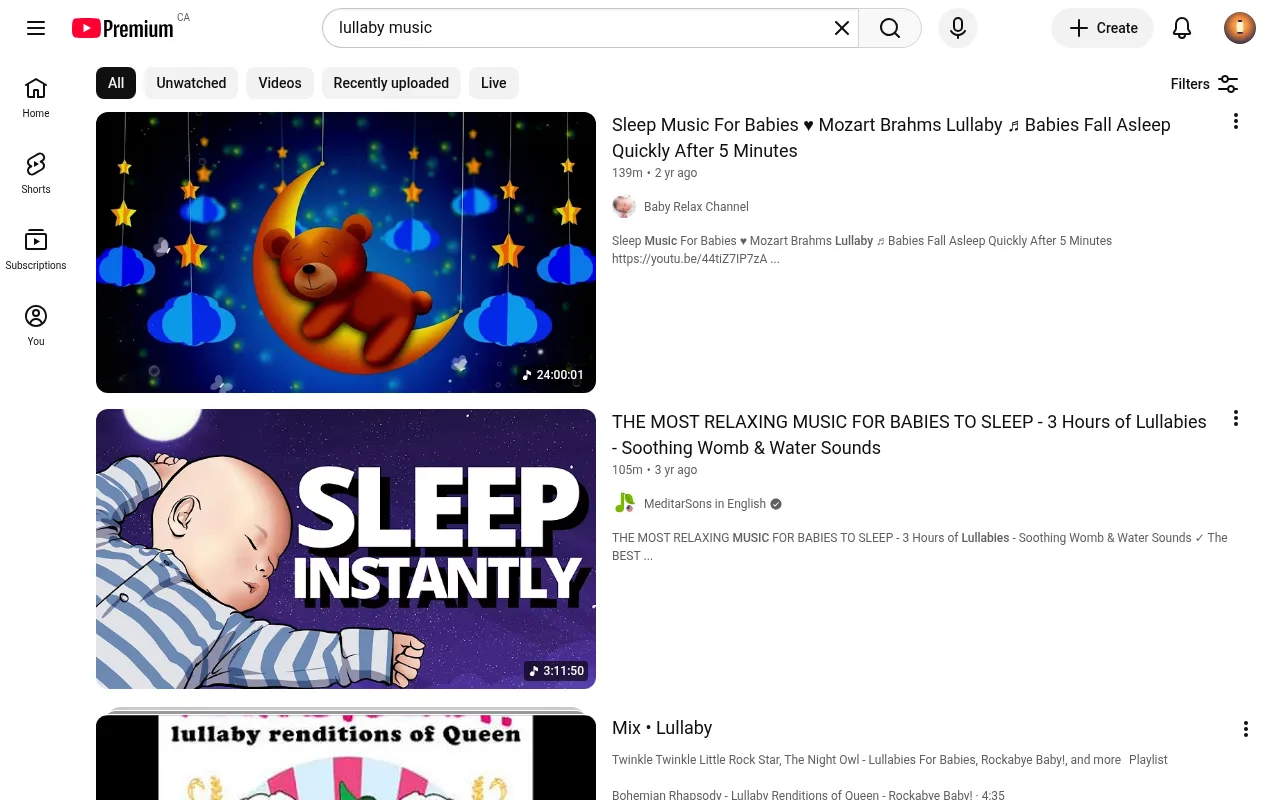
It also has a sleep timer that pauses the video for you. Open the video, tap Settings in the player, tap Sleep timer and choose how long it should run.
Spotify
Spotify is good for playlists. Search "lullabies" and filter by playlists, and you'll see sung lullabies, piano lullabies, music-box lullabies and Disney songs played as lullabies.
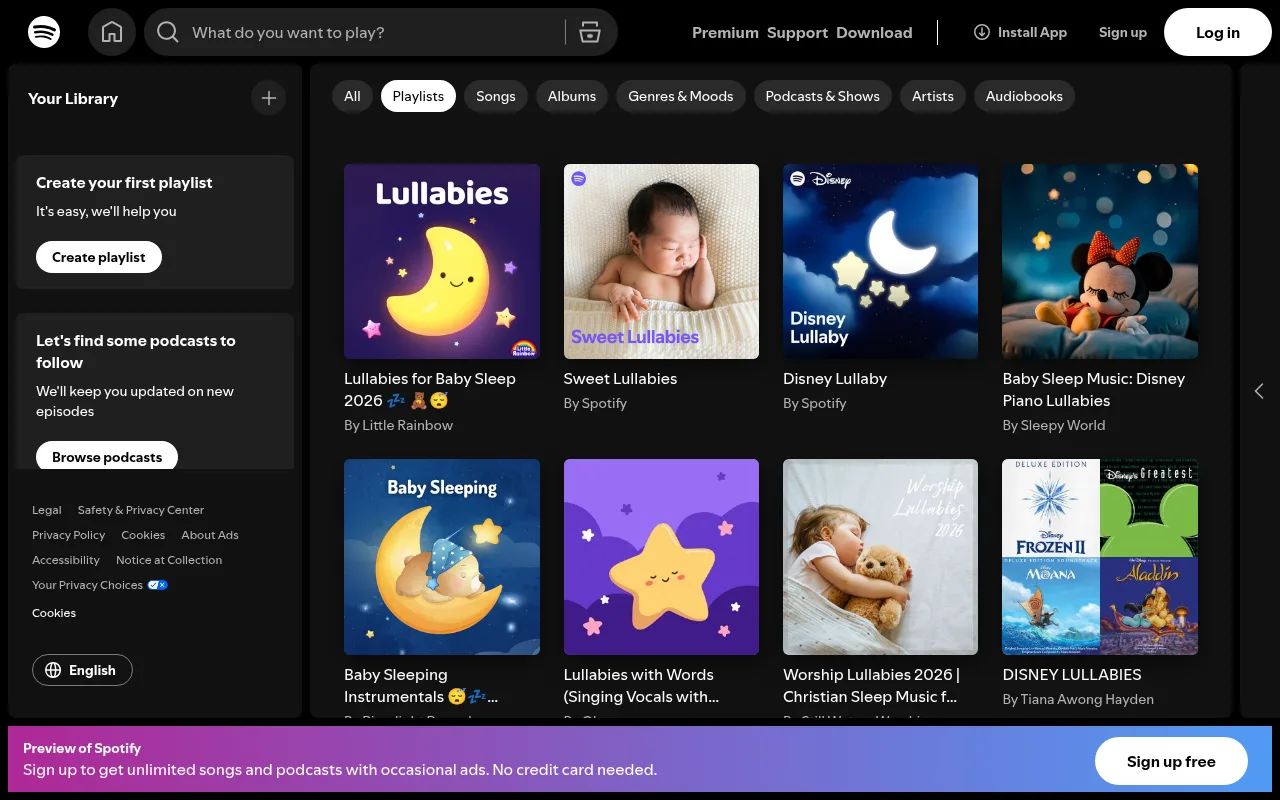
Save one that fits and play it the same way each night.
Apple Music
Apple Music is a paid subscription with over 100 million songs, so it carries a wide range of recordings of the classics, sung and instrumental.
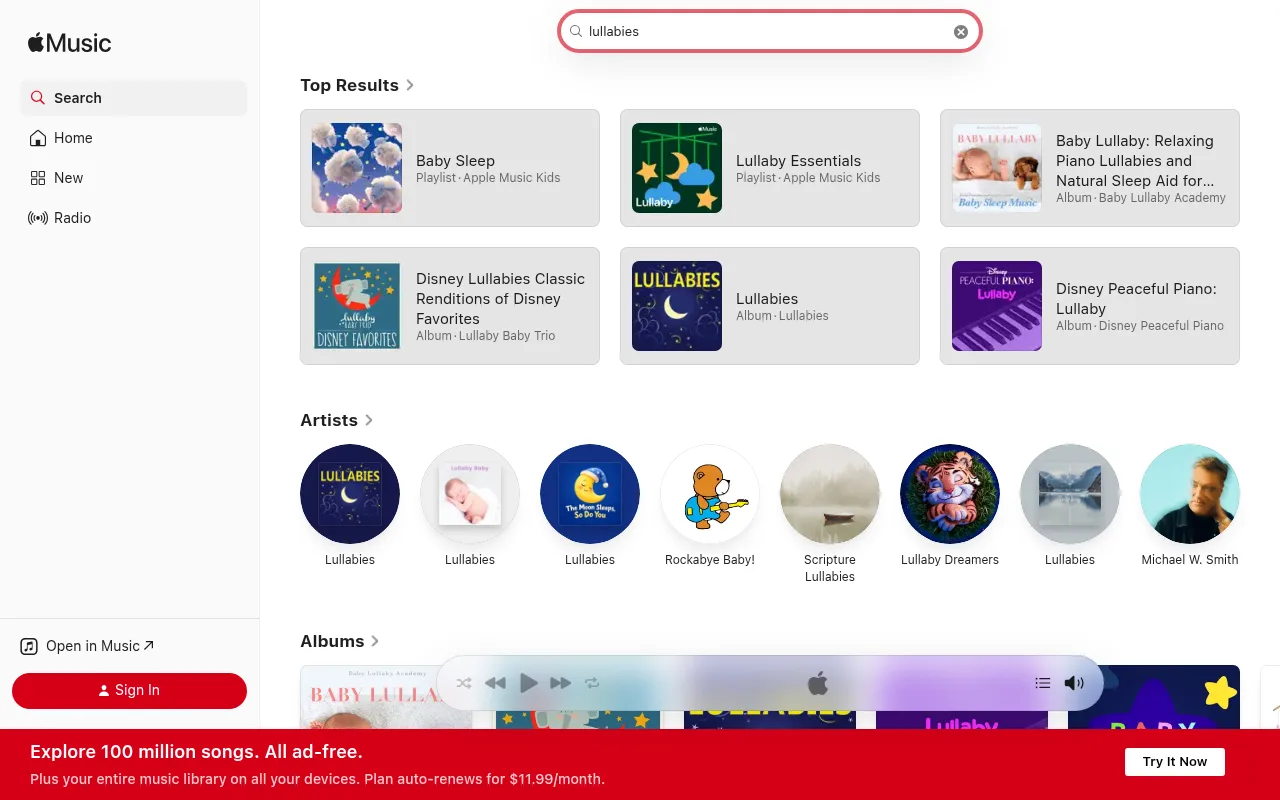
It suits you best when you're after one particular performance, or you already use Apple Music for everything else.
How to make a lullaby video with Chillframe
A lot of those long lullaby videos come from faceless channels: soft music, a calm scene and nobody on camera. Bedtime comes round every evening, so a lullaby channel has a schedule built in. It's a growing niche, and you don't need to be a musician or a video editor to run one.

Chillframe makes the whole video. It writes original instrumental music, makes a scene to go with it, puts the two together and publishes the finished video to your YouTube channel. You set three things once:
- A dark, quiet look. Orbital Bunk is a sleeping cabin on a space station, lit by one warm reading lamp over the pillow. You can also describe your own, like a nursery at night with a music box on the shelf.
- Instrumental audio. It's the default, and like the music-box and piano lullabies above, it has no words.
- A Series that posts in the early evening, ahead of bath and bedtime. Pick any 1 to 7 days a week; every day at 6pm suits a bedtime channel.
From there it's fully hands-off. Chillframe automatically makes a fresh lullaby video for every evening and publishes it with a title, description and tags. The first video is held for you to approve, and with auto-publish on, that approval is the last thing you do.
The limit is the songbook. Chillframe writes new music for every video, so it won't play Brahms' Lullaby or Twinkle, Twinkle, Little Star. What you publish is original bedtime music made for your channel.
Because the music is original, every plan, starting with the Starter plan at $19 a month, includes full commercial rights to it, and the videos stay yours even if you cancel. The guide to sleep music on YouTube goes further into the creator side of bedtime channels.
Lullaby music FAQ
What is the most famous lullaby in the world?
Brahms' Lullaby is probably the best known. Brahms wrote it in 1868 for the birth of a friend's baby, and it has been sung, played on piano and put into music boxes ever since. Twinkle, Twinkle, Little Star runs it close, since its tune is also the one children learn the alphabet song to.
Does a lullaby need to be in a language the baby understands?
No. In a Harvard study, babies heard lullabies from other cultures, sung in languages they had never heard, and relaxed more than they did to other songs from those same cultures. The slow, smooth sound seems to matter more than the words.
Is it better to sing a lullaby or play a recording?
Both work, and plenty of families do both. Singing lets you slow down or repeat a verse when your baby needs it. A recording takes over when you need your hands, or for the long stretch after you leave the room.
Can adults fall asleep to lullaby music?
Yes. A study of 985 Spotify sleep playlists found that the music people pick for sleep is softer, slower and more often instrumental than other music, which is how a lullaby sounds. Brahms' Lullaby on solo piano or Golden Slumbers by the Beatles are good places to start.
Where can I listen to lullaby music for free?
YouTube is free and has lullaby videos that run for an hour or more, plus a sleep timer that pauses playback for you. Spotify's free tier has ready-made lullaby playlists, with ads between tracks. Apple Music needs a paid subscription.