Listening
Deep sleep music: what deep sleep is and what sound can do for it
Delta waves, slow-wave sleep, the lab studies that changed deep sleep with sound, and what to play at night.

Deep sleep music is slow, quiet, mostly instrumental music you play to fall asleep and stay down through the night. No ordinary track has been shown to give you more deep sleep. A few lab studies have changed deep sleep with sound, though, and music clearly helps people fall asleep. The gap between those two facts is the useful part, because it decides what is worth playing.
What deep sleep is
Deep sleep is stage 3 of your sleep cycle, also called N3 or slow-wave sleep. It's the stage where you're hardest to wake up, and the Sleep Foundation notes that experts consider it critical to restorative sleep, supporting the body's recovery and growth.
Two facts about it shape everything below:
- It comes early. You spend the most time in deep sleep during the first half of the night. Later cycles carry less of it and more REM.
- It comes in cycles. A full sleep cycle averages about 90 minutes, so you pass through deep sleep several times a night.
So if you want more deep sleep, the first few hours matter most. Getting to sleep quickly and staying settled through those first cycles is where sound has the most to offer.
Delta waves, the brain rhythm behind the label
Plenty of tracks are labelled "delta waves". The name comes from the brain, not the music. During deep sleep your brain produces a slow, large rhythm called delta waves, and the Sleep Foundation puts them under 4 Hz, the slowest brain waves there are. That's why deep sleep also gets called delta sleep. Deep sleep delta waves are a sign that you've reached the stage, and a track with "delta" in its title doesn't put you there by itself.
Delta-wave tracks don't play that rhythm as a note. Most of them use a binaural beat instead. Your left and right ears hear slightly different tones, and your brain hears the difference between them as a slow pulse. In the 2018 sleep lab study further down, 250 Hz in the left ear and 253 Hz in the right made a 3 Hz beat.
Binaural beats only work through headphones or earbuds, because each ear has to hear its own tone. Online generators put names on the frequencies. myNoise's binaural generator labels 1 Hz "Lethargic", 2 Hz "Deep Sleep" and 3 Hz "Dreamless". Those are labels, not measured effects. If you want to go deeper on beat frequencies and how to use them, I've covered that in the guide to binaural beats for sleep.
What the sound and sleep studies found
This is the part I find most interesting. Researchers have changed deep sleep with sound, more than once, and how they did it matters for what you play at home.
Sound timed to your brain waves
In a 2013 study, researchers played short sounds to 11 people while they slept, timed to land just as each slow brain wave was about to rise. According to the ScienceDaily summary of the study, the sound made the slow waves stronger and longer, and people remembered word associations they had learned the evening before better. Sound played out of step with those waves did nothing.
A Northwestern University study in 2017 tried the same idea on 13 adults aged 60 and over, using pink noise timed to the rising part of each slow wave. Their deep sleep improved, and the memory gain after the sound night was three times larger on average than after a night without it. The team had not yet tested repeated nights.
Both studies watched each sleeper's brain live and fired the sound at the right moment. A video or playlist can't do that. It doesn't know when your slow waves rise.
A 3 Hz binaural beat for one night
A 2018 sleep lab study played a 3 Hz binaural beat to healthy young adults from the start of stage 2 sleep until they reached stage 3. Compared with their own baseline night, the 15 people who heard it got about 35 more minutes of N3, while the 8 in a silent control group showed no significant change. It didn't disturb their sleep either.
It was one night, with one beat, in a lab. The authors say themselves that longer-term effects are unknown, and the Sleep Foundation's overall view is that the evidence on binaural beats for sleep is limited and results vary.
What music does do
Music has a clearer record for getting you to sleep. The Sleep Foundation describes a study where women with insomnia symptoms played an album of their choice at bedtime for 10 nights. Before, they took 27 to 69 minutes to fall asleep. With the music, it took 6 to 13 minutes.
Since your longest stretches of deep sleep come in the first cycles, falling asleep sooner gets you there sooner. That is what deep sleep music does well, and it's a good thing to want from it.
Music is a help at bedtime, not a treatment. Insomnia that keeps going is worth taking to a doctor, and there's more on music for it in the guide to sleep music for insomnia.
What deep sleep music should sound like
A 2024 study by Kirk and Timmers looked at 90 Spotify playlists built for sleep, relaxation and energy, 17,274 tracks in all, with 4,500 of them analysed. The sleep tracks were more acoustic, more instrumental, slower, quieter and lower in energy than the rest. Nature sounds turned up often.
The most useful finding for choosing music is about brightness, part of a sound's tone colour. It was the strongest thing that set sleep tracks apart from merely relaxing ones. Sleep music is darker and softer in colour.
Put that together with the Sleep Foundation's guidance and you get a short checklist:
- Tempo: most studies picked music around 60 to 80 beats per minute. Treat it as a guide, not a rule.
- No lyrics: the sleep playlists in the study leaned instrumental, and with no words there is nothing to follow.
- Dark, soft colour: warm pads, low piano, gentle strings, rain or wind. Less sparkle and fewer bright high notes.
- No surprises: no drops, sudden key changes or loud moments. A long, even track is better than a playlist that jumps between styles.
- Neutral feelings: the Sleep Foundation suggests avoiding songs that cause strong emotional reactions, so skip the one that reminds you of someone.
Ambient music ticks most of these boxes. There's more on that in the guide to ambient sleep music. If you prefer a plain sound with no melody, pink noise is the one the 2017 study used.
Where to find deep sleep music
Three places cover most of what's out there, and each suits a different kind of night:
| Where | What you get for deep sleep | Best if you want |
|---|---|---|
| YouTube | A huge free library of long videos made for a full night, some with dark screens, plus a built-in sleep timer | Free, all-night music with no app to install |
| Calm | Sleep Stories, sleep meditations, sleep music and soundscapes, including white, green and brown noise | A guided wind-down before the music takes over |
| Brain.fm | Functional music with Deep Sleep, Wind Down, Sleep and Wake and Power Nap modes, using modulation rather than binaural beats | Music made for one job, without binaural beats |
YouTube
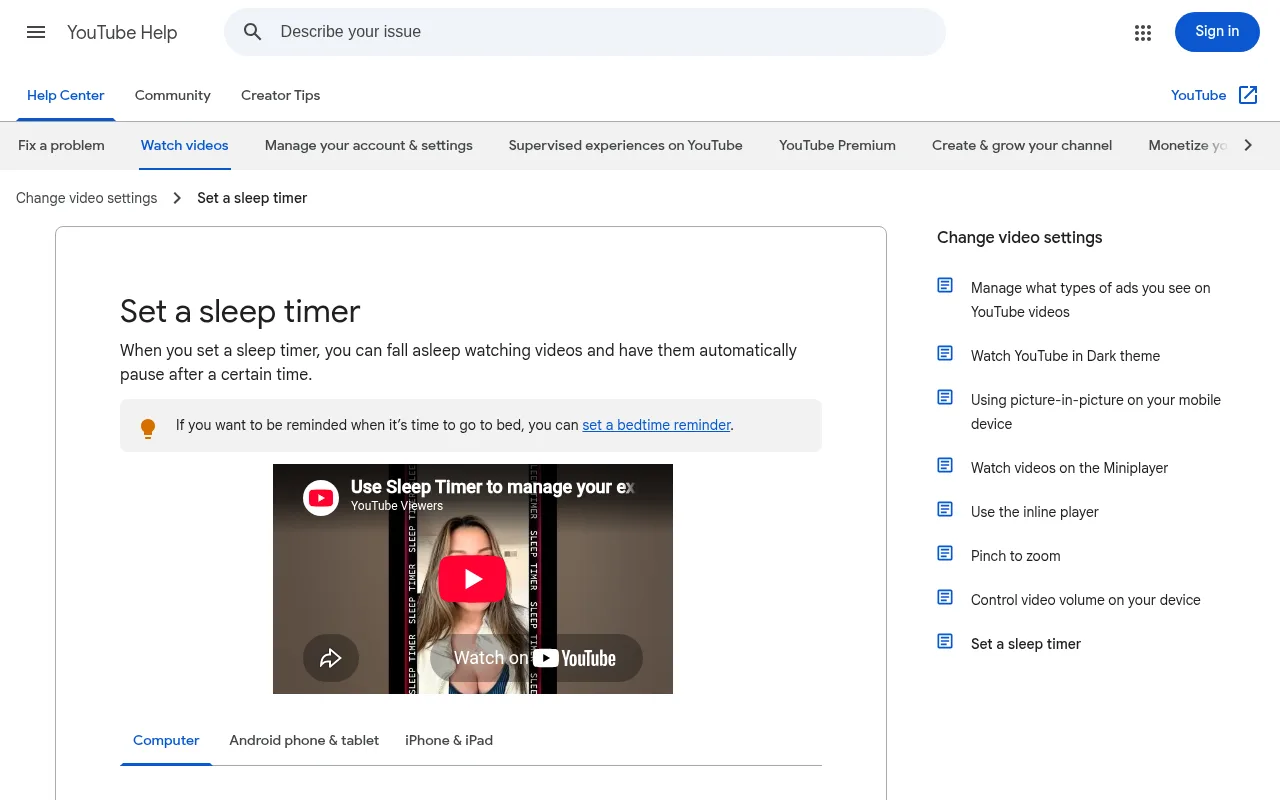
YouTube has a huge free library of deep sleep music, with long videos made for a full night, some with dark screens so the light doesn't bother you. Its sleep timer pauses a video after a set time, so you don't have to choose between silence and a whole night of sound. Open the video, tap the Settings icon in the player, tap Sleep timer and choose how long it should run.
Calm
Calm is a meditation and sleep app with a large sleep section. Alongside its Sleep Stories and sleep meditations, it has sleep music and soundscapes, including white, green and brown noise and a 432 Hz piano collection.
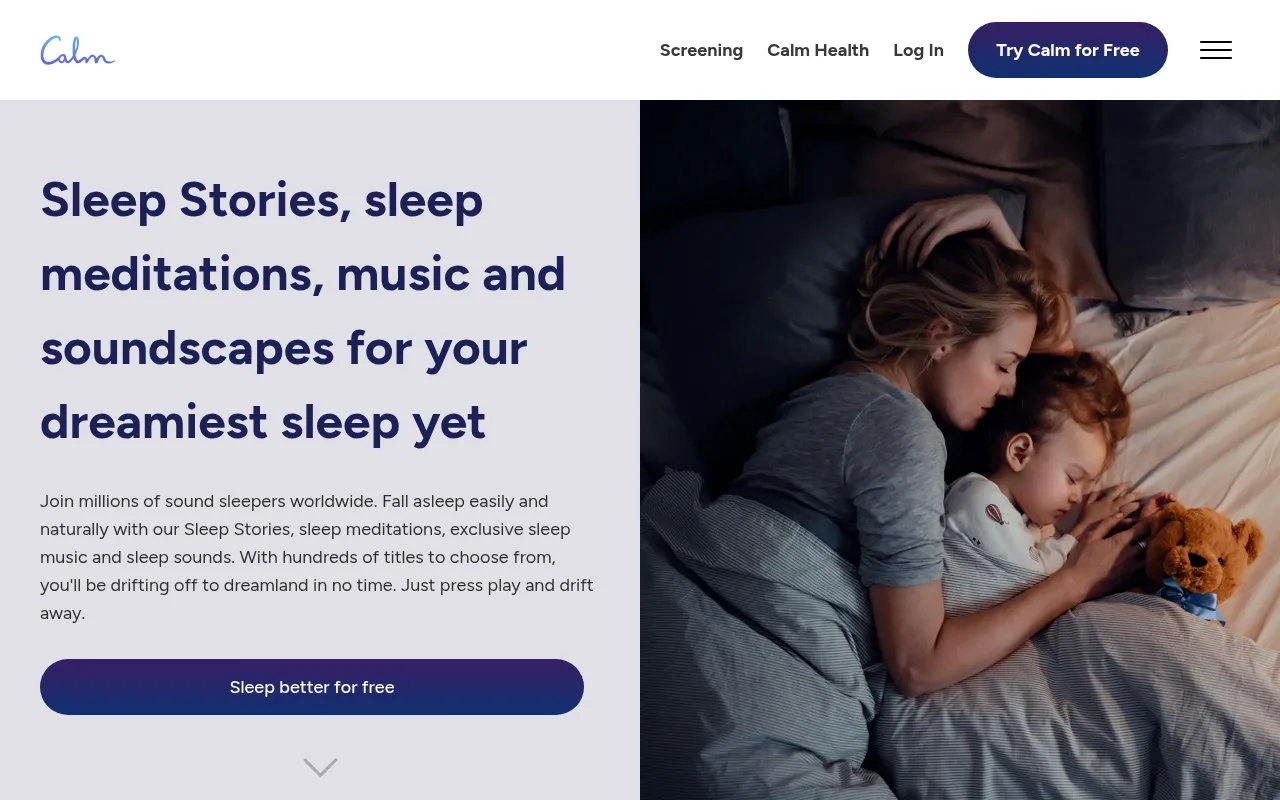
It suits you if you like a guided wind-down before the music takes over.
Brain.fm
Brain.fm makes functional music, with modes including Deep Sleep, Wind Down, Sleep and Wake and Power Nap. It says it isn't binaural beats: it builds modulation directly into each stereo channel instead.
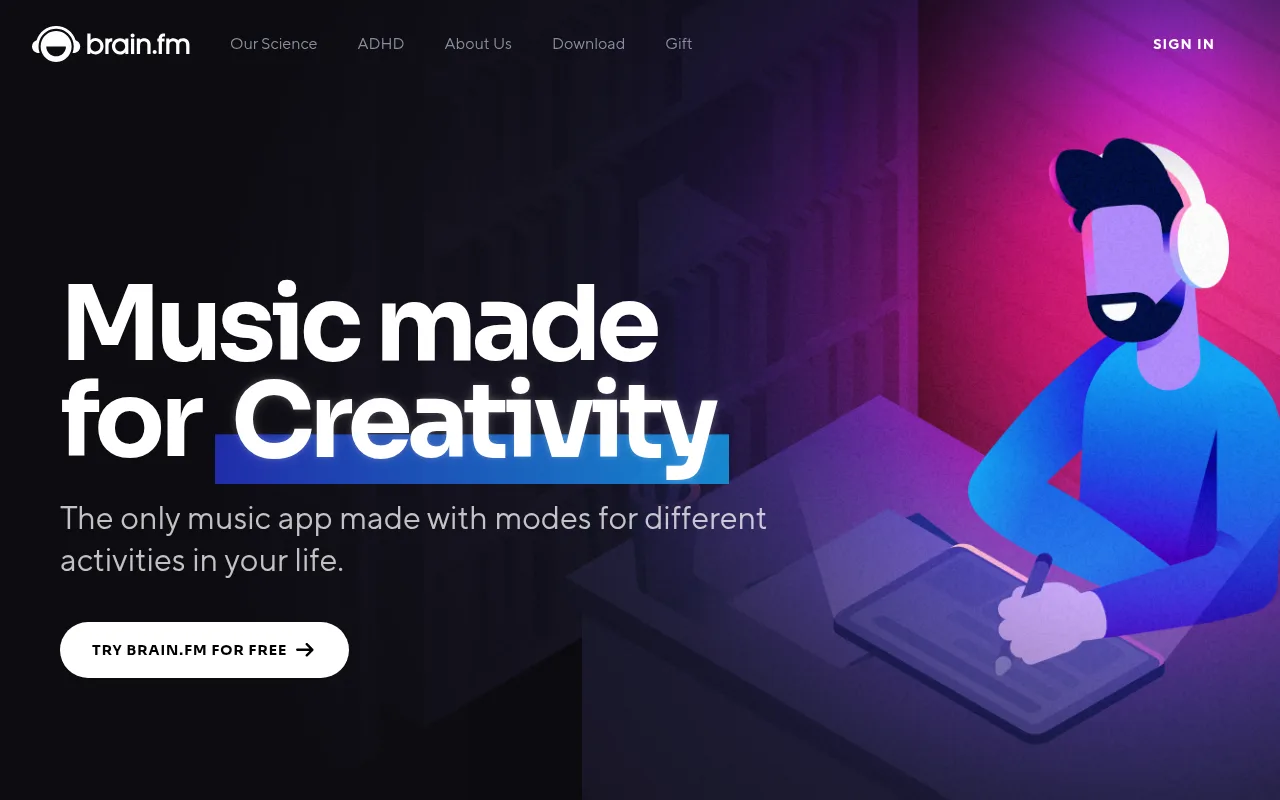
Brain.fm states on its blog that its sleep audio is engineered to increase slow-wave sleep activity by up to 29%. That's the company's own figure, so weigh it as one.
How to set up a night of deep sleep music
- Start before bed. The Sleep Foundation notes that adults who listened to 45 minutes of music before going to sleep reported better sleep quality. Put it on as you wind down.
- Use a speaker for music. Earbuds worn all night can hurt your ear canal at high volume and build up earwax. A small speaker near the bed does the same job. Binaural beats are the exception, since they need headphones, so keep the volume low if that's what you play.
- Keep the volume low. Loud enough to hear, quiet enough to fade into the room.
- Pick one track and stay with it. One long, even track avoids the jolt of a new song starting at 2am.
- Set a timer, or don't. About three hours covers your first two cycles, in the half of the night when deep sleep is most common. If silence or traffic wakes you, leave it running all night.
Start a deep sleep music channel with Chillframe
Many of the long deep sleep videos on YouTube come from faceless channels: slow music, a dark scene and no presenter. It's a growing niche, and you can run a channel in it without being a musician or an editor.

Chillframe makes original music fresh for each video, the scene to go with it and the finished file, and publishes it straight to your YouTube channel. Its Deep Sleep style already has the dark, soft colour the checklist above asks for. Moonlit Ridge, for example, is a near-black night sky with a low drone, slow pads and one distant piano note, and no voices anywhere.
For a sleep channel I'd post a new hour every night. To set that up:
- Choose Moonlit Ridge or Orbital Bunk, or describe your own scene in plain words, like a still lake under the stars.
- Keep Instrumental for slow music with no singing, or switch to Ambience only for rain or fire with no music. A video carries one or the other.
- Make it a Series on all 7 days, at 9pm or whenever your listeners go to bed.
- Approve the first video. From then on the Series is fully hands-off: Chillframe automatically makes a fresh hour each night and publishes it with a title, description and tags written for search.
One limit matters for an all-night niche: videos run up to 1 hour on every plan, so there's no single 8-hour file. A Series of hour-long videos builds a library instead, and for one overnight upload you can join several hours together in an editor first.
The Starter plan is $19 a month and makes still scenes in 4K. A fresh hour every night uses more than an occasional upload, and the Creator plan, at $49, has 5x the Starter plan's monthly usage and gently moving scenes too. The guide to sleep music on YouTube covers the rest of the creator side when you're ready for it.
Deep sleep music FAQ
Should you leave deep sleep music on all night?
You don't have to. Deep sleep is most common in the first half of the night, so a timer of about three hours covers your first two cycles. If silence or traffic wakes you, leave it running all night, low, on a speaker rather than earbuds.
What is the best BPM for deep sleep music?
Most studies picked music around 60 to 80 beats per minute, and the Sleep Foundation suggests trying that range. Treat it as a guide, not a rule. A slow, even track with no lyrics and no sudden changes matters as much as the exact number.
Do delta wave tracks give you more deep sleep?
Not by themselves. Delta waves are the slow rhythm your brain makes in deep sleep, and most delta tracks use a binaural beat that only works through headphones. A 2018 lab study found a 3 Hz beat added about 35 minutes of N3 in one night, but the Sleep Foundation calls the evidence on binaural beats for sleep limited.
Can deep sleep music help with insomnia?
It can help you fall asleep sooner. In one study, women with insomnia symptoms went from 27 to 69 minutes to fall asleep down to 6 to 13 minutes with an album of their choice. It's a help at bedtime, not a treatment, so insomnia that keeps going is worth taking to a doctor.
What should you do if the music keeps you awake?
Change it. Try something darker and quieter, drop anything with words, or switch to rain or pink noise with no melody at all. There's no single best genre for sleep, so go with whatever you find calm.