Listening
Ambient sleep music: drones, long albums and apps that never repeat
Beatless drones and slow pads, from Brian Eno to Max Richter's eight-hour Sleep, and the apps that keep the music changing all night.
Ambient sleep music is beatless music made of long tones, drones and slow pads, with no rhythm to follow and no tune to hum. It changes so slowly that it fades into the room, which makes it easy to fall asleep to. This guide covers where the genre came from, the long albums worth starting with, the apps that make it fresh all night, and how it differs from noise and from lofi.
What ambient sleep music is, and what it isn't
Ambient music is built from texture rather than songs. A chord might hold for a minute. A sound swells, sits there and fades, and another one arrives under it. There are no verses, no drops and usually no drums.
That puts it between two other things people play at night.
- Noise is a steady hiss with no notes in it. White, pink and brown noise spread sound across many frequencies, so there's no melody or harmony at all. It's good at covering traffic and snoring. I've covered it in the guide to pink noise for sleep.
- Lofi has a soft hip-hop beat under warm chords. The beat is gentle, but it's still a pulse. If you like that, the guide to lofi for sleeping is the place to go.
| Sound | What's in it | Beat | Best at |
|---|---|---|---|
| Ambient | Long tones, drones and slow pads | None | Fading into the room as you fall asleep |
| Noise | A steady hiss with no notes in it | None | Covering traffic and snoring |
| Lofi | Warm chords | A soft hip-hop beat | Sleep, if you like a gentle pulse |
Ambient has notes and chords like lofi, but no beat. It's as steady as noise, but it has harmony you can sink into. For sleep, that's a good middle ground.
Where ambient came from
The name comes from Brian Eno. His album Ambient 1: Music for Airports is credited with coining the term ambient music. As the title says, he made it for airports.
His liner notes set out the goal: ambient music should "induce calm and a space to think" and be "as ignorable as it is interesting". That second line is also a good description of what you want from sleep music. You can listen closely if you want to, and when you stop listening, nothing in it pulls you back.
Eno made the album by layering tape loops of different lengths. Because the loops don't line up, the parts keep meeting in new combinations. He said the album "was essentially made by machines", an idea that comes back later in this guide.
Three long ambient works to start with
These are good first albums for a night of ambient. All three are calm from start to finish, with no loud moment waiting in the middle.
Brian Eno, Music for Airports
Four slow pieces built from piano, wordless voices and synthesiser, overlapping as the loops drift. It's the shortest of the three, so put it on as you wind down, or set it to repeat.
Stars of the Lid, And Their Refinement of the Decline
Stars of the Lid, the Austin, Texas, duo of Brian McBride and Adam Wiltzie, made what has been called "divine, classical drone without the tedious intrusion of drums or vocals". And Their Refinement of the Decline is a double album from 2007. Their earlier double album, The Tired Sounds of Stars of the Lid, is just as good for sleep. Both are long enough to carry you well past the point where you stop noticing.
Max Richter, Sleep
Max Richter's Sleep runs for 8 hours, 24 minutes and 21 seconds across 31 tracks. He calls it an eight-hour lullaby, and he talked to the neuroscientist David Eagleman about how the brain works during sleep while he was writing it.
Its premiere was played live from midnight to 8am at the Wellcome Collection in London, broadcast on BBC Radio 3, with the audience in beds instead of seats. If eight hours sounds like a lot, From Sleep is the one-hour companion album and a good first night.
Ambient that never repeats
Eno's tape loops pointed somewhere. If music is made by rules rather than recorded once, it can play differently every time. That is generative music, and it's a good fit for sleep, because the music doesn't have to end and doesn't come round to the same bar twice.
Eno released his album Reflection with an app for iPhone, iPad and Apple TV. In his words, it "creates an endless and endlessly changing version of the piece of music." Two other places to hear this kind of music:
myNoise
myNoise is a site of sound generators run by the sound engineer Stéphane Pigeon. It has nature sounds and noise, and a set of ambient and drone pieces too.
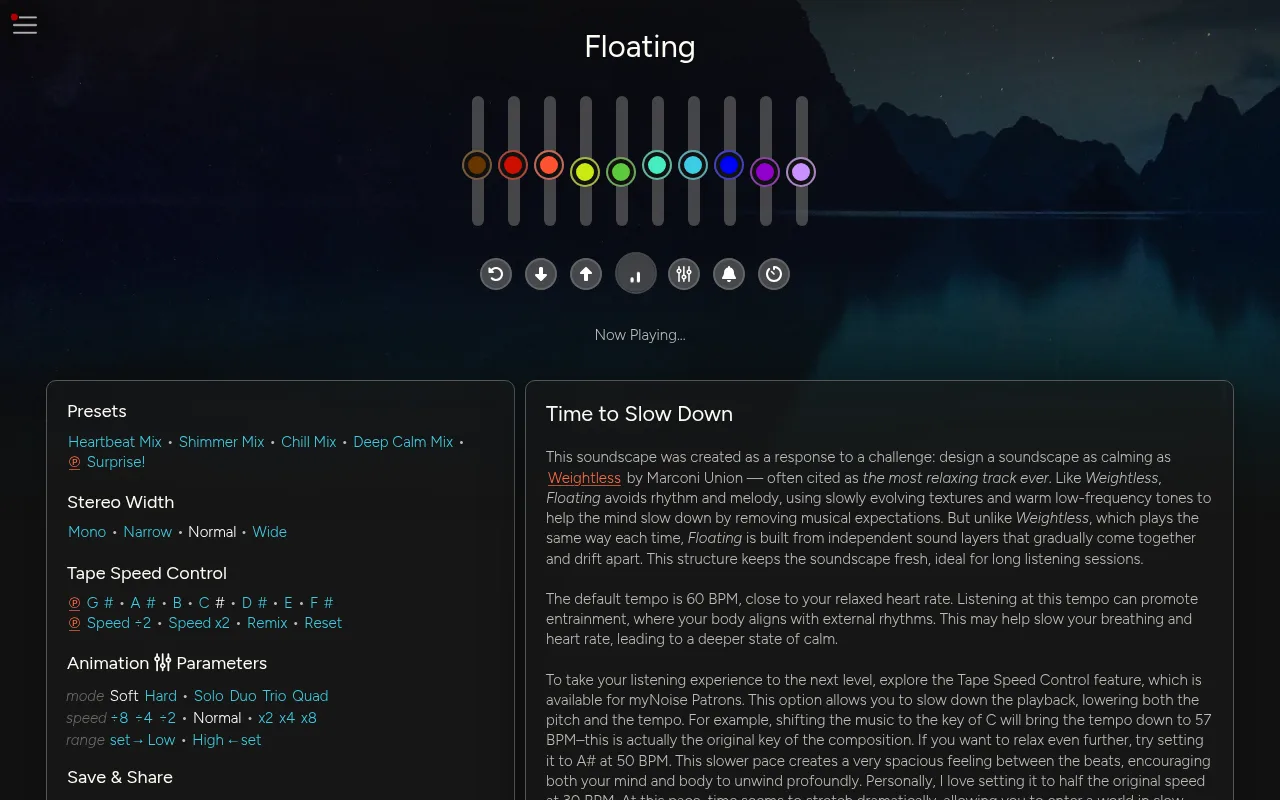
Floating is the one I'd try first for sleep. myNoise says it avoids rhythm and melody, using slowly evolving textures and warm low tones, built from separate layers that come together and drift apart so it doesn't play the same way each time. Each layer has its own slider, so you can turn down anything that bothers you. It plays in your browser, and some extras are for supporters who donate.
Endel
Endel is an app of personalised soundscapes for focus, relaxing and sleep. It says its sounds adapt in real time to the time of day, the weather, your heart rate and where you are.
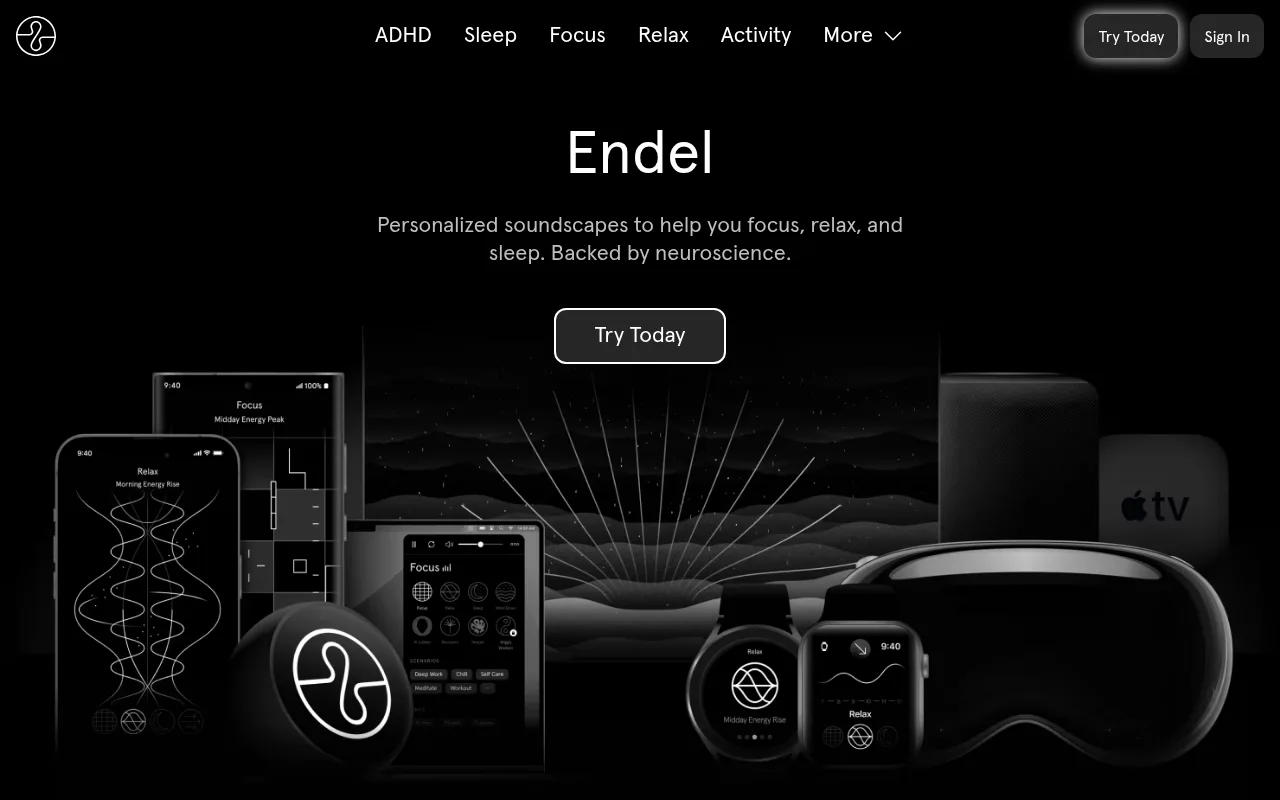
Its Sleep mode uses soft, gentle sounds, close to ambient in feel. Endel is a paid subscription, on phones, Apple Watch, Alexa, Apple TV, Fire TV and Mac.
Where to listen to the classic albums
The long works above live on the big streaming services. Two that suit a night of ambient:
Spotify
Spotify has the classic ambient albums and a lot of sleep playlists made by listeners. Search for any of the albums above by name, From Sleep included.
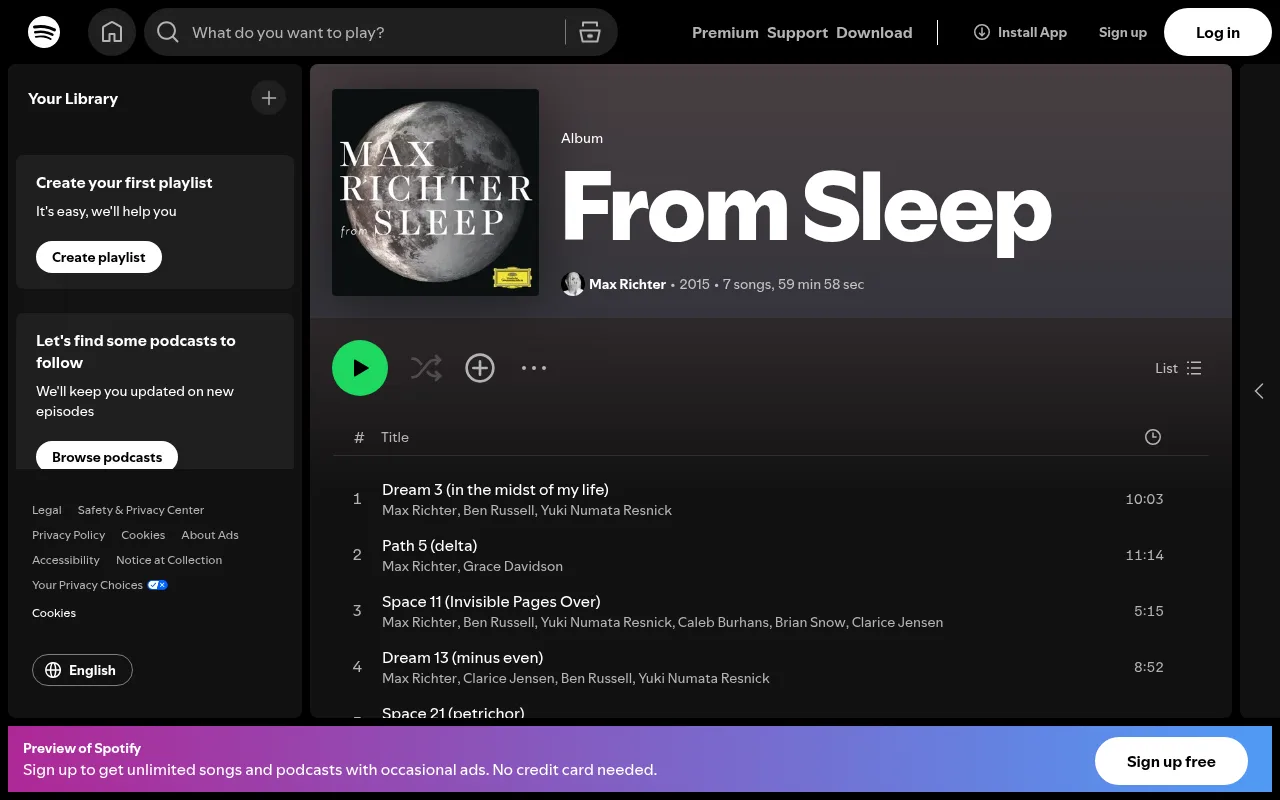
Pick an album over a mixed playlist where you can. An album keeps one sound all the way through, while a playlist can jump from a soft drone to something much brighter.
YouTube Music
YouTube Music has the official albums and the long ambient mixes uploaded to YouTube, in one app. Search for ambient sleep music and you'll find albums alongside mixes that run for hours.
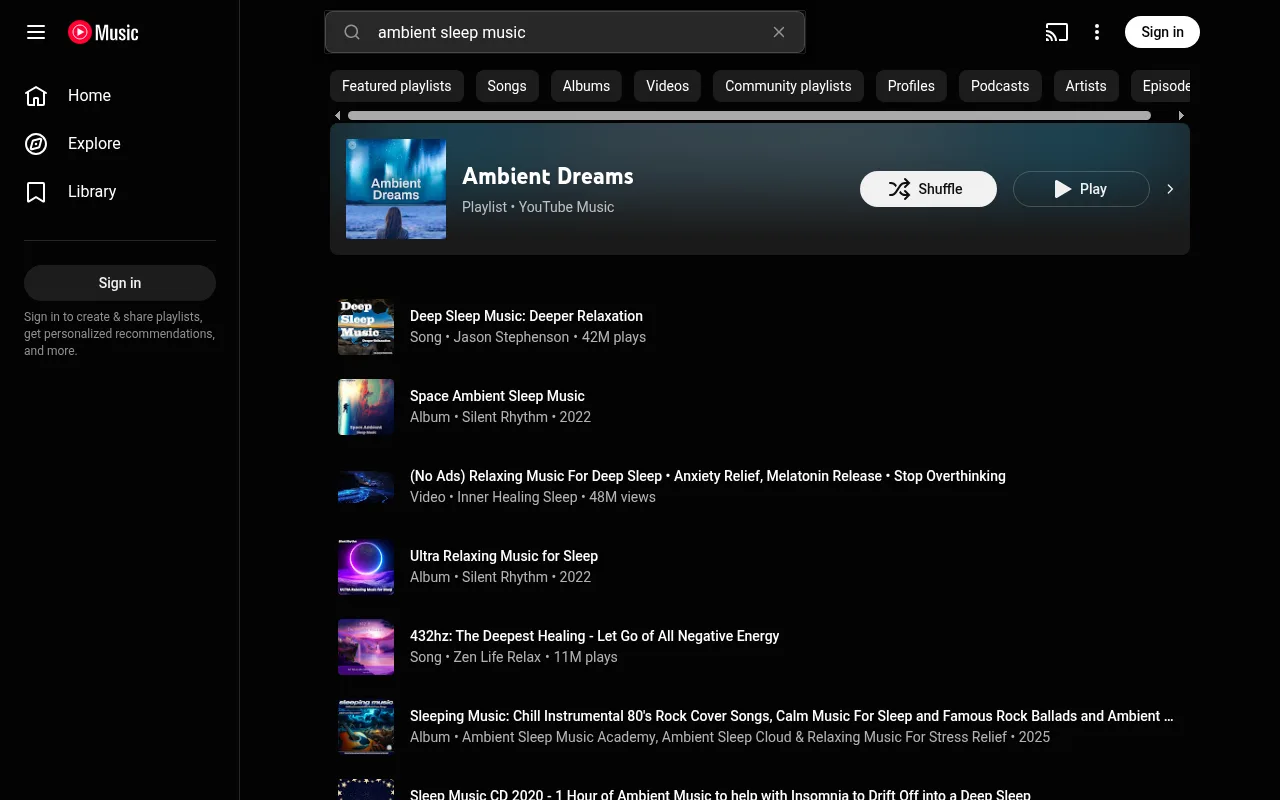
The long mixes are handy because one video covers the whole night with no gaps between tracks.
What the research says about ambient sleep music
The research points the right way, with a few honest limits.
- Music in general. A Cochrane review of 13 studies with 1,007 adults with insomnia found that music probably gives a large improvement in sleep quality, compared with no treatment or usual care. The evidence on how fast people fall asleep was weaker.
- Ambient music in particular. A 2023 study gave 138 college students with poor sleep four weeks of sleep ambient music: instrumental tracks with rain, waves or other soft sounds, slow and quiet, played for the 30 minutes before bed. Their sleep quality scores were better than at the start in every one of the four weeks, and activity trackers showed them falling asleep faster. There was no control group, and all the students were medical students, so it's a promising start rather than proof.
- Music versus noise. A 2025 paper in the journal Sleep says music-based relaxation has shown it improves sleep quality, while the findings on white and pink noise are inconclusive.
It's also what people already reach for. A 2023 study of 985 Spotify sleep playlists, with 130,150 different tracks, found that ambient music was the largest group by far. That group, which also takes in meditation tracks, healing music with nature sounds and drones, held about half of all the track entries.
Music is a help at bedtime, not a treatment. If sleep stays hard for weeks, see a doctor, and the guide to sleep music for insomnia has more on that side.
How to listen to ambient at night
- Use a speaker, not earbuds. The Sleep Foundation warns that earbuds worn all night can hurt your ear canal at high volume and build up earwax. A small speaker near the bed is enough.
- Keep it quiet. Set it loud enough to hear and quiet enough to fade into the room, so it soothes rather than disturbs.
- Choose one long piece. A single album or generative app means no gaps and no new track starting at 2am. If silence or outside noise wakes you later in the night, let it run until morning.
- Skip music that stirs you up. The Sleep Foundation suggests music that feels neutral or positive. If an album brings up strong feelings, save it for the daytime.
- Give it a week. In the 2023 student study, people fell asleep faster within the first week, and their sleep quality scores stayed better than at the start for all four weeks.
Ambient pairs well with natural sound too. The tracks in the student study mixed instrumental music with rain or waves, and plenty of long videos do the same. It's worth trying if pure music feels too empty. There's more on slow, dark music for the first hours of the night in the guide to deep sleep music.
Make your own ambient sleep videos with Chillframe
Ambient was the largest group by far in that study of Spotify sleep playlists, and YouTube is full of long ambient videos from faceless channels: a slow drone, a dark scene and nobody presenting. It's a growing niche, and the albums above show how far one mood can carry a whole body of work.

So think of an ambient channel as one mood, released on a steady schedule. Chillframe makes each piece. It writes original music, makes the scene, puts the two together and publishes the finished video to your YouTube channel.
- Choose the scene for the mood. Aurora Desk is a near-black arctic study with an aurora rippling over the snow, scored with wide, shimmering pads and no pulse. Moonlit Ridge pairs a full moon behind a ridgeline with a slow drone and one distant piano note. Or describe your own in plain words.
- Decide between music and weather. Instrumental gives you the drone. Ambience only gives you rain or surf with no music.
- Set a weekly release. A Series on Sunday nights at 10pm automatically makes a new hour in the same mood for every slot, each with its own title, description and tags.
- Watch the first one. It's held for your review. With auto-publish on, approve it and every Sunday after that is fully hands-off.
One limit matters for ambient. A video plays music or ambience, not both at once, so for the music-with-rain mix from the student study you'd layer the two yourself in an editor. Each video also runs up to 1 hour, so Chillframe won't make an eight-hour piece like Sleep.
The rippling aurora is what makes Aurora Desk work, and moving scenes like it are Plus videos, which start on the Creator plan at $49 a month. Still scenes start on the Starter plan at $19. The guide to sleep music on YouTube covers the creator side of running an ambient channel.
Ambient sleep music FAQ
Is instrumental music better than music with lyrics for sleep?
For most people, yes. Words give your mind something to follow, and Calm's sleep guide suggests instrumentals, or songs in a language you don't speak, to avoid the stimulation lyrics bring. Ambient has no words at all, which is part of why it suits the last hour of the day.
What tempo should ambient sleep music have?
The Sleep Foundation says most studies have used music at around 60 to 80 beats per minute, close to a resting heart rate. A lot of ambient has no beat at all, so the pace you feel comes from how slowly the sounds swell and fade. If a track does have a pulse, keep it in that slow range.
How loud should ambient sleep music be?
Low, steady and just loud enough to hear. Calm warns that music that's too loud or keeps changing volume can disrupt sleep, and the Sleep Foundation says to find a volume that soothes rather than disturbs. A speaker you can only just hear from the pillow is about right.
Is ambient sleep music better than white noise?
The research leans towards music. A 2025 paper in the journal Sleep says music-based relaxation has been shown to improve sleep quality, while the findings on white and pink noise are inconclusive. Noise is still the better choice for covering traffic or snoring, so it comes down to what keeps you awake.
Can ambient sleep music help with racing thoughts?
It can. The Sleep Foundation says music can distract from troubling or anxious thoughts, and a slow drone gives your mind something gentle to rest on. If worry keeps you awake most nights for weeks, talk to a doctor as well.