Listening
Rain ASMR: Tent, Tin Roof and Window Rain, Close Up
Rain recorded up close sounds nothing like rain across the street. Here is what changes with the mic and the surface, and how to pick the version that relaxes you.

Rain ASMR is rain recorded up close, with the microphone near the surface the drops hit, so you hear each one land. That surface sets the sound: the soft patter of a tent, the hollow drum of a car roof, the bright rattle of tin, the tick of drops on a window. The way it is recorded matters as much. A binaural recording on headphones puts the rain around your head instead of across the room. Below is what to listen for, which surface suits which mood, and how to set it up so it relaxes you rather than keeping you listening.
What makes rain ASMR different from rain sounds
Ordinary rain sounds are usually recorded from a distance. The drops blur into one steady wash, which is great for masking noise and easy to ignore. Rain ASMR goes the other way. It keeps the detail, so there is always something small and gentle to hear.
ASMR itself is a feeling, not a genre. A 2015 study of 475 people who experience it described ASMR as a tingling, static-like sensation across the scalp and the back of the neck, usually with a deep sense of relaxation. In the same study, 64% named crisp sounds as a trigger, and 82% said they used ASMR to help them sleep.
Close rain is full of crisp sounds, which is why it fits. Worth knowing: the Sleep Foundation notes that sounds made by human activity are more likely to trigger ASMR than sounds in nature. So rain ASMR gives some listeners tingles and gives many more a slow, heavy calm. Both are good reasons to play it, and knowing that helps you pick the right recording.
Close-mic and binaural rain ASMR recordings
Two recording styles do most of the work in this corner of YouTube, and they sound quite different.
Close-mic recordings put a microphone a short distance from one surface: under a tent flap, inside a car, beneath a tin roof. You hear the texture of that surface in fine detail. These recordings sound good on headphones and on a speaker.
Binaural recordings use two microphones placed where ears would be. Splice describes the classic setup as a rubber head with a small microphone inside each ear, sometimes with a neck and torso too, so the sound reaches the mics the way it would reach you. Played back on headphones, rain falls to your left, to your right and above you, as if you were sitting in the tent yourself.
A quick way to tell them apart: put headphones on and close your eyes. If you can point to where individual drops land, it's binaural. If the rain feels detailed but sits in front of you, it's a close-mic recording.
Binaural recording is not the same thing as binaural beats, which are tones rather than recorded sound. My guide to binaural beats for sleep covers those.
Rain ASMR by surface
The surface is the biggest choice you make. Each one has its own rhythm and brightness.
- Rain on a tent: soft, quick patter on taut fabric, with the occasional heavier drip from a branch above. It's close and enclosed, which many listeners find cosy. A good first pick if you're new to rain ASMR.
- Rain on an umbrella: the same taut-fabric patter, but right above your head and a little brighter. Walking recordings can add footsteps and a street around you, so it suits relaxing or reading more than sleep.
- Rain on a car roof: a deep, hollow drum, with drops ticking on the glass in front. It's heavier and more rhythmic than a tent, and the sealed car makes everything outside sound far away.
- Rain on a tin roof: loud, bright and full of rattle. It's the most energetic of the five, which some people love for focus and others find too busy for bed.
- Rain on a window: gentle ticks and the slide of water down glass, usually with softer rain behind it. It's the quietest and most even, which makes it an easy sleep sound.
If you want to choose by what you're doing, this is a fair starting point:
| What you want | Try first | Why |
|---|---|---|
| Sleep | Window or tent | Soft and even, with nothing sharp |
| Focus or study | Tin roof or car roof | Steady rhythm that covers background noise |
| Tingles | Tent or umbrella, binaural | Close, crisp taps all around your head |
| Reading or winding down | Umbrella or window | Detailed but not demanding |
If you like your rain with a storm in it, that's a different choice again, and my guide to rain and thunder sounds for sleeping is about picking thunder that won't wake you.
Why headphones change rain ASMR
Headphones send the left side of a recording only to your left ear and the right side only to your right. That's what makes a binaural recording work. On a speaker both sides reach both ears, and the sense of rain falling around you collapses into ordinary stereo. Splice makes the same point: headphones keep the left and right channels apart the way your ears hear the real world.
Close-mic rain also gains a lot on headphones. You hear the small sounds between the drops, like fabric settling or water running off an edge, that a speaker in a room tends to lose.
For sleep, though, a speaker is often the better choice. A few things to keep in mind if you do fall asleep in headphones:
- Pick earbuds that don't seal. A New York Times piece on sleeping in earbuds suggests a pair that doesn't seal off the ear canal completely, since sealed buds can trap moisture, and buds in general can lead to wax building up.
- Keep it quiet. The same piece notes that sustained loud sound can cause hearing damage, and that sound loud enough to hide an alarm is a risk in itself.
- Try a sleep headband. The same piece points to headbands with speakers built in, which keep everything out of the ear and may trap less moisture than buds.
A good routine is headphones for winding down and a speaker across the room once the lights go out.
Where to find rain ASMR on YouTube
YouTube has the widest choice of rain ASMR, from short binaural clips to long overnight recordings of one surface. Searching the surface and the recording style together, such as "rain on tent ASMR binaural" or "rain on car roof ASMR no music", gets you to the right corner fast.
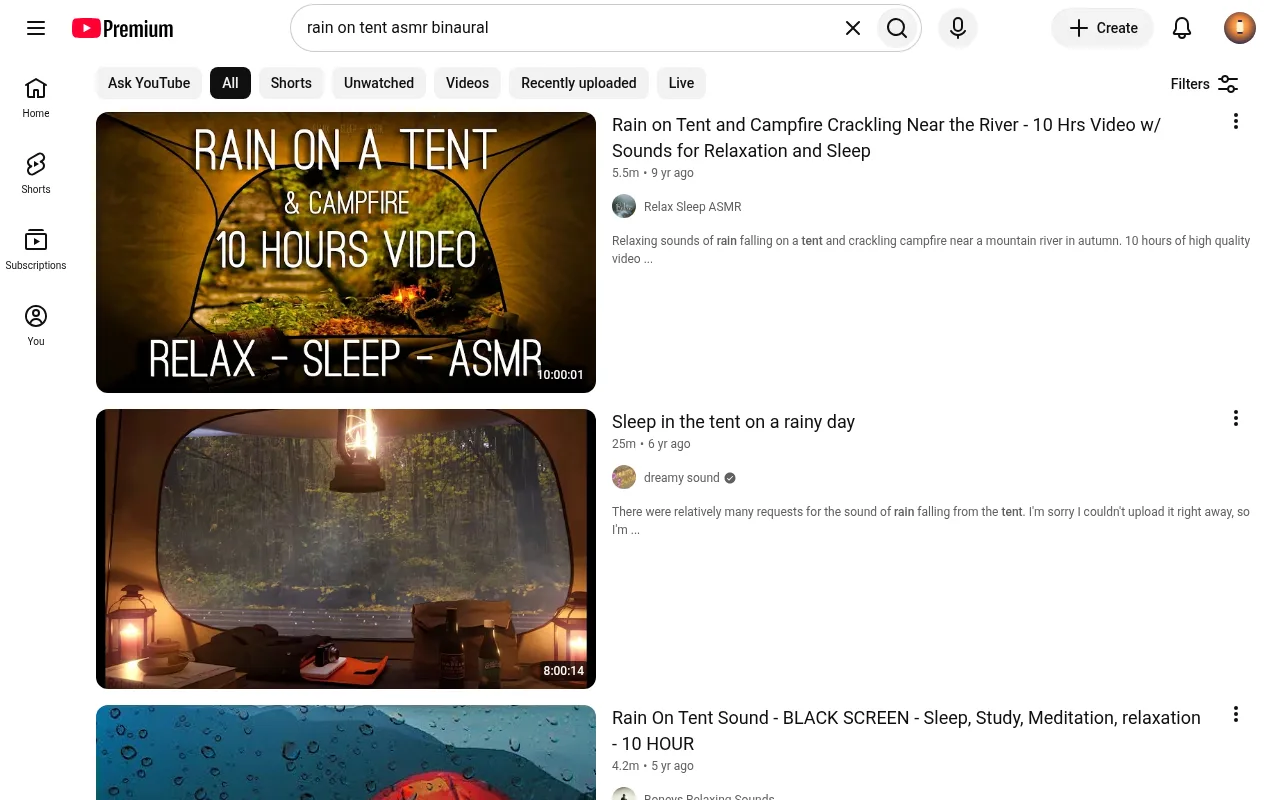
The channels that do rain ASMR best tend to share a few habits, and they're worth looking for in a title or description:
- They name the surface and the setting, such as a canvas tent, a car at night or a tin shed roof, so you know what you're getting before you press play.
- They say how it was recorded. Binaural, close-mic, or the mic they used. Channels proud of their sound tend to tell you.
- They keep music out, or say clearly when there is some, because music changes what you're listening to.
- They post long single recordings, not a short clip on repeat. A loop that restarts every few minutes is easy to hear once you notice it.
- They keep the screen dark or still, so the video doesn't light up the room.
Two practical points for a night of listening. Free YouTube can play ads during a long video, so a paid plan or an ad-free player keeps the rain unbroken. And turn off autoplay, so a louder video doesn't start when yours ends. My guide to 10 hour rain sounds covers making rain last all night, and rain sounds for sleeping with a black screen is about keeping the room dark.
How to set up a rain ASMR session
A few minutes of setup turns a good recording into one you can relax into for hours.
- Pick the surface for the moment. Window or tent for bed, tin roof or car roof for work. The table above is a starting point.
- Decide on headphones or a speaker. Binaural needs headphones. For sleep, a speaker across the room is easier on your ears.
- Set the volume on the loudest part. Skip to a heavy patch of rain and set the level there, so a downpour later in the night doesn't wake you.
- Listen for the restart. Play the last minute and the first minute. If you hear a jump, look for a longer recording.
- Set a timer if you want silence later. If you sleep through once you're out, a timer lets the rain fade after you've fallen asleep.
If you'd rather have plain, distant rain without the close detail, my guide to rain sounds for sleeping covers that side.
Start a rain ASMR channel with Chillframe
Rain ASMR has a simple shape on YouTube: a rainy scene, the sound of rain up close and a long runtime, with nobody talking. That makes it a natural faceless channel, and the surface sections above are a ready-made plan for one, since rain on a tent and rain on a car roof each have their own listeners.

Chillframe makes these videos for you: the rain sound, the scene on screen and the finished video, published to your YouTube channel. Say you build a channel around rain on canvas:
- Describe the scene in plain words: a cosy tent at a forest campsite, rain beading on the nylon, a lantern by the door. For rain on glass, Storm Against the Cabin Glass is ready to use.
- Set the audio to Ambience only. That gives you the sound of the scene with no music, which is what this audience comes for.
- Make a Series for Tuesday, Thursday and Saturday at 10pm. Chillframe automatically makes a fresh tent video for each of those nights and posts it with an optimised title, description and tags.
- Watch the first video while it's held for review. With auto-publish on, approving it is the last thing you do, and the Series is fully hands-off after that.
One limit matters for sleep listeners. Videos run up to 1 hour on every plan, so Chillframe doesn't make a single 10-hour file. You can join hours together in an editor before you upload, or let the Series build a library of hour-long rain videos, each one another title for people to find in search.
A rain channel with one Series fits the Starter plan, which is $19 a month. For a few extra videos on top of the schedule, say a run of storm uploads, a usage pack adds usage with or without a plan and lasts 2 years.
Rain ASMR FAQ
Does everyone get tingles from rain ASMR?
No, and that's fine. In a 2015 study of 475 people who experience ASMR, 64% named crisp sounds as a trigger, and close rain is full of them. The Sleep Foundation notes that sounds made by people trigger ASMR more often than sounds in nature, so plenty of listeners get a slow, heavy calm from rain instead of tingles.
Do you need headphones for rain ASMR?
Only for binaural recordings. Headphones keep the left and right channels apart, which is what puts the rain around your head. Close-mic recordings sound good on a speaker too, and for sleep a speaker across the room is easier on your ears.
Is rain ASMR good for sleep?
For a lot of people, yes. In the same 2015 study, 82% of people who experience ASMR said they used it to help them sleep. Pick a soft, even surface like a window or a tent, and set the volume on the loudest patch of rain so a downpour later in the night doesn't wake you.
Is a binaural rain recording the same as binaural beats?
No. A binaural recording is real rain picked up by two microphones placed where ears would be, so on headphones it sounds like you're sitting in it. Binaural beats are tones rather than recorded sound.
How long should a rain ASMR video be for sleep?
Long enough that it never restarts while you're asleep. Look for one long single recording, like the 10 hour rain videos on YouTube, rather than a short clip on repeat. Turn off autoplay too, so a louder video doesn't start when yours ends.