Listening
Deep Sleep Hypnosis: How It Works, What Studies Found and Where to Listen
What a sleep hypnosis track does, what the research found, and where to start tonight.
Deep sleep hypnosis is a recording of a calm voice that relaxes you, then repeats the idea that you are sinking into deeper, more restful sleep. In a small lab study, a 13-minute track like this raised deep sleep during a nap by 81% in people who respond strongly to hypnosis. It doesn't work that way for everyone, so the best approach is to try a free track for a week, keep the volume low, and switch to plain sleep sounds if the voice keeps you awake.
What is deep sleep hypnosis?
Deep sleep hypnosis is self-hypnosis made for bedtime. You lie down, press play and follow a voice, usually over soft music or rain.
The Sleep Foundation describes a hypnotherapy session for sleep in a few steps, and a good recording follows the same order:
- Induction. The voice starts you on a calming image or thought, often with slow breathing.
- Deepening. More instructions narrow your attention on that image, for example by counting you slowly down a staircase.
- Suggestion. The voice repeats ideas aimed at sleep: your body is heavy, your thoughts are slowing, you are going deeper.
- Ending. A daytime session guides you back to full alertness. A sleep track should leave this out and trail off into music instead.
Check that last step before you use a track at night. A recording that counts you back up to wide awake is the opposite of what you want at midnight.
It helps to know how hypnosis differs from its close relatives:
- Guided sleep meditation asks you to notice your breath and body. Hypnosis goes further and gives you suggestions to take on.
- Sleep stories are slow readings of a calm story, with no suggestions.
- Sleep music and sleep sounds have no voice at all.
What the studies found about hypnosis and deep sleep
Hypnosis helps some people sleep better, and the clearest result is about deep sleep itself.
In a 2014 study in the journal Sleep, Cordi, Schlarb and Rasch played young women a 13-minute tape before a 90-minute midday nap. The hypnosis tape described a fish swimming deeper and deeper into the sea, with the repeated suggestion to sleep deeper. On another day, the same women heard a neutral 13-minute text about mineral deposits.
- In women who respond strongly to hypnosis, slow-wave sleep (the deepest stage) went up by 81% after the hypnosis tape. Time spent awake fell by 67%, though that result was only borderline.
- In women who respond weakly, slow-wave sleep went down by about a third.
That second result matters. The Sleep Foundation says roughly 15% of people are highly receptive to hypnosis and about a third are resistant, so a track that works well for one person can do little for another.
The wider research points the same way. A 2018 systematic review by Chamine, Atchley and Oken included 24 studies:
| Result on sleep | Share of the 24 studies |
|---|---|
| Hypnosis helped | 58.3% |
| Mixed results | 12.5% |
| No benefit | 29.2% |
The authors were clear about the limits. The studies were small, mostly middle-aged women, and only about a third recruited people who actually had sleep problems. The same review describes an earlier analysis of 13 studies with 503 participants, 11 of them of low quality. In that analysis, hypnosis-style treatments helped people fall asleep faster than waiting with no treatment, but not faster than a sham version.
Two things are worth keeping apart here. Falling asleep faster and feeling you slept better are things you can notice yourself. More slow-wave sleep is measured in a lab with sensors on your head. The 81% figure belongs to that lab, during a nap, so treat it as a promising sign rather than a promise for your night.
How to use a deep sleep hypnosis track safely
The 2018 review found little sign of harm: only two of its studies checked for side effects, and neither found any. These habits keep it that way and give the track its best chance:
- Only play it lying down in bed. Never in the car or while doing anything that needs your attention.
- Pick a voice you like. You'll be listening to it every night, so if it grates after two minutes, try another one.
- Check the length and the ending. Choose a track that runs longer than you usually take to fall asleep, and that fades out rather than waking you up.
- Keep it quiet. Set the volume lower than feels right while you're alert. A small speaker by the bed saves you sleeping in earbuds all night.
- Keep the screen dark. On YouTube, a black-screen video or locking your phone stops the light from waking you. Ads can cut in at a different volume, and YouTube Premium removes them.
- Give it a week. One night tells you little. Try the same track for a week and see whether you fall asleep sooner or wake less.
The Sleep Foundation suggests talking to a doctor or therapist before you start any hypnosis recording or app, and says people with mental health conditions such as PTSD should be careful. If you've slept badly most nights for weeks, a doctor is the right person to see. The American Academy of Sleep Medicine recommends cognitive behavioral therapy for insomnia (CBT-I) as the first treatment for long-term insomnia, and a hypnosis track can sit alongside it as part of winding down.
Where to find deep sleep hypnosis tracks
These five cover free videos, apps and podcasts. Most mix hypnosis with plain guided meditation, so look for "hypnosis" in the title.
| Where | Cost | Good for |
|---|---|---|
| YouTube | Free, with ads unless you have Premium | Long tracks over a black screen, some running 4 hours |
| Insight Timer | Free | Filtering tracks by length |
| BetterSleep | Paid, after a free try | A hypnosis track, then your own mix of sounds |
| Sleep Cove on Spotify | Some episodes free, some paid | Listening in a podcast app |
| Reveri | Paid, after 7 days free | Short sessions of about 10 minutes |
YouTube
YouTube is the easiest free place to start, and Michael Sealey is one of the best-known voices there. His Just Sleep deep sleep hypnosis track plays over a black screen, which keeps the room dark.
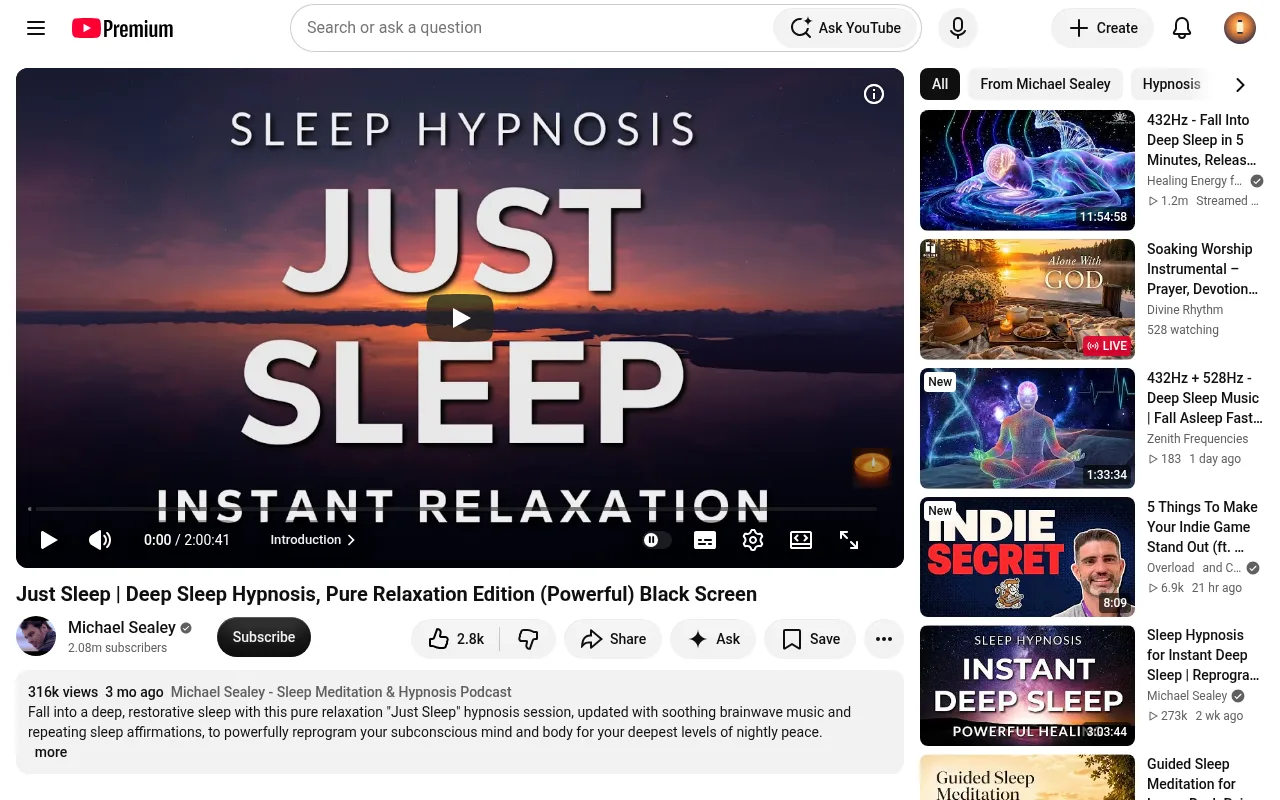
Many of his tracks are long. Sleep Hypnosis Calm Your Mind runs for 4 hours, so there is still something playing if you wake in the night. Search "sleep hypnosis" and sort through a few voices until one fits.
Insight Timer
Insight Timer calls itself the largest free audio library for everyday wellbeing, and it has its own sleep hypnosis section.
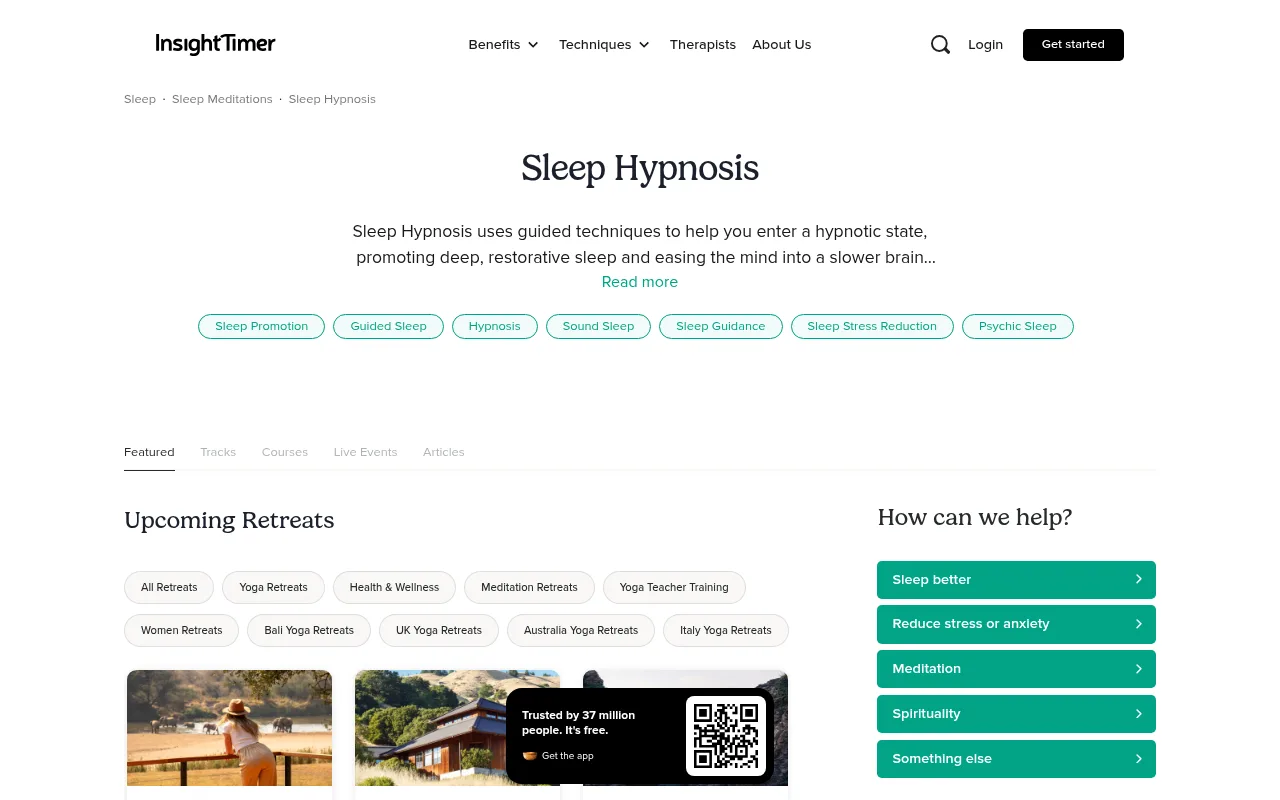
The length filter is the useful part. Short is up to 5 minutes, Long is 5 to 30 and Extended is over 30. Its hypnosis topic page lists tracks like Back To Sleep Quickly by Heather Deane, a 30-minute session for getting back to sleep after you wake.
BetterSleep
BetterSleep is a paid app that you can try free first. It's known for sleep sounds you mix yourself, and it also has hypnosis meditations such as Sweet Dreams Hypnosis and Deep Forest Hypnosis.
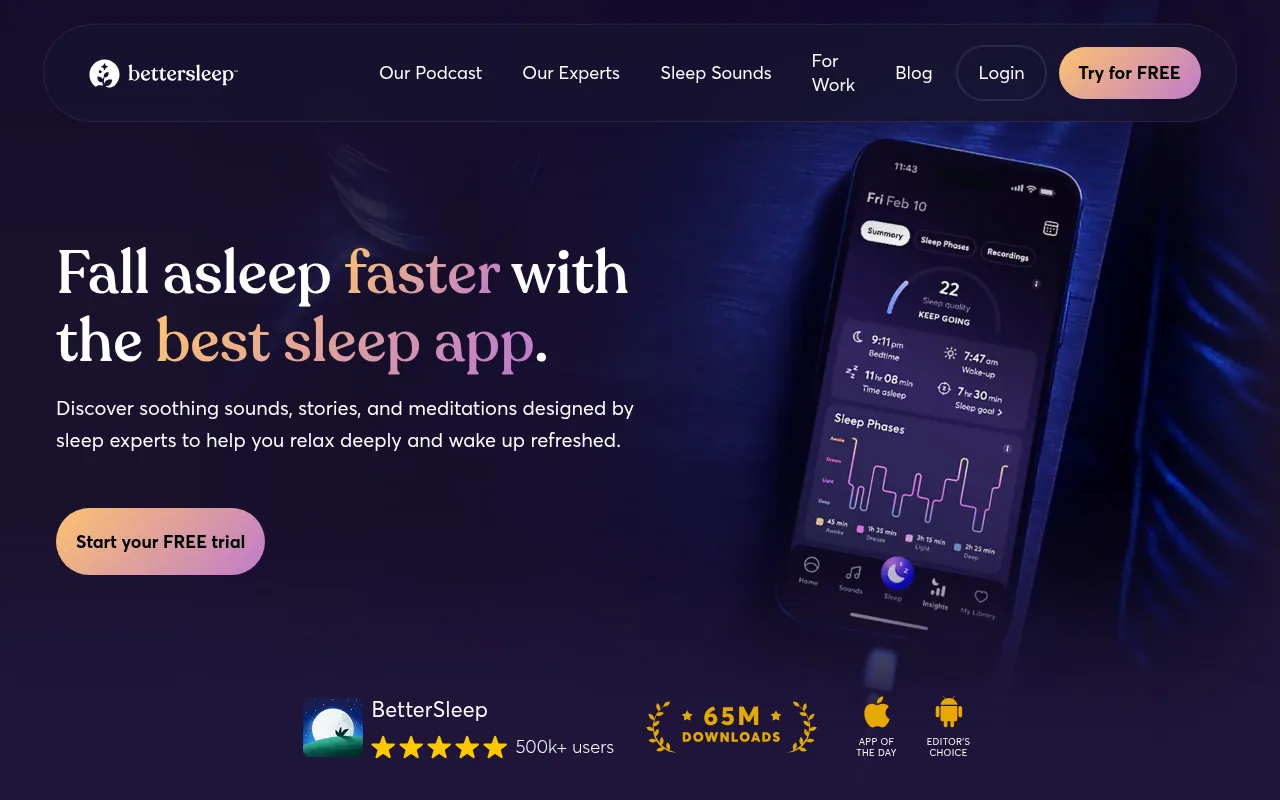
That mix is its strength. You can follow a hypnosis track to start the night, then leave your own blend of sounds running after it ends.
Spotify
If you'd rather use a podcast app, Guided Sleep Meditation and Sleep Hypnosis from Sleep Cove is on Spotify and the other big podcast apps. It's hosted by Christopher Fitton, a clinical hypnotherapist from Nottingham.
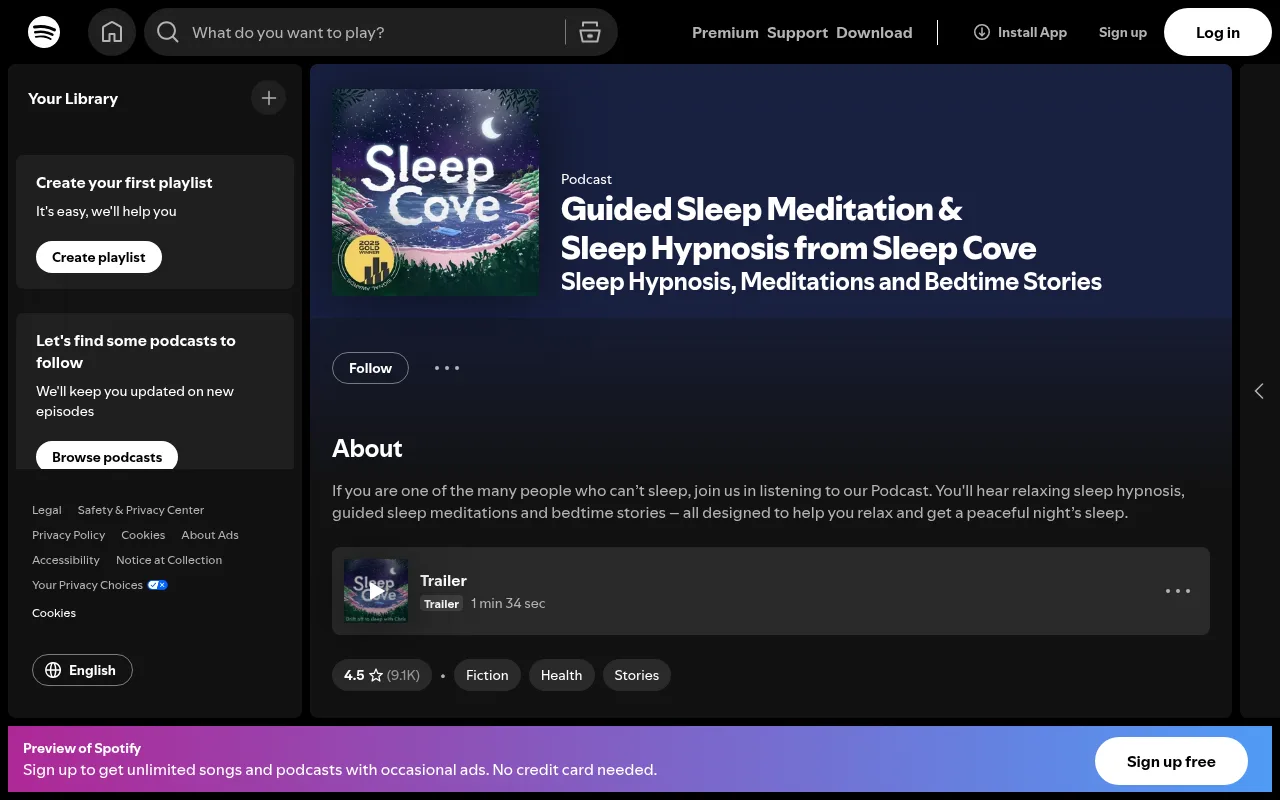
Episodes mix sleep hypnosis, meditations and bedtime stories. Some are free and some sit behind a paid subscription.
Reveri
Reveri is a self-hypnosis app from Dr David Spiegel, Associate Chair of Psychiatry at Stanford School of Medicine. Sleep is one of its topics, along with stress, focus and habits.
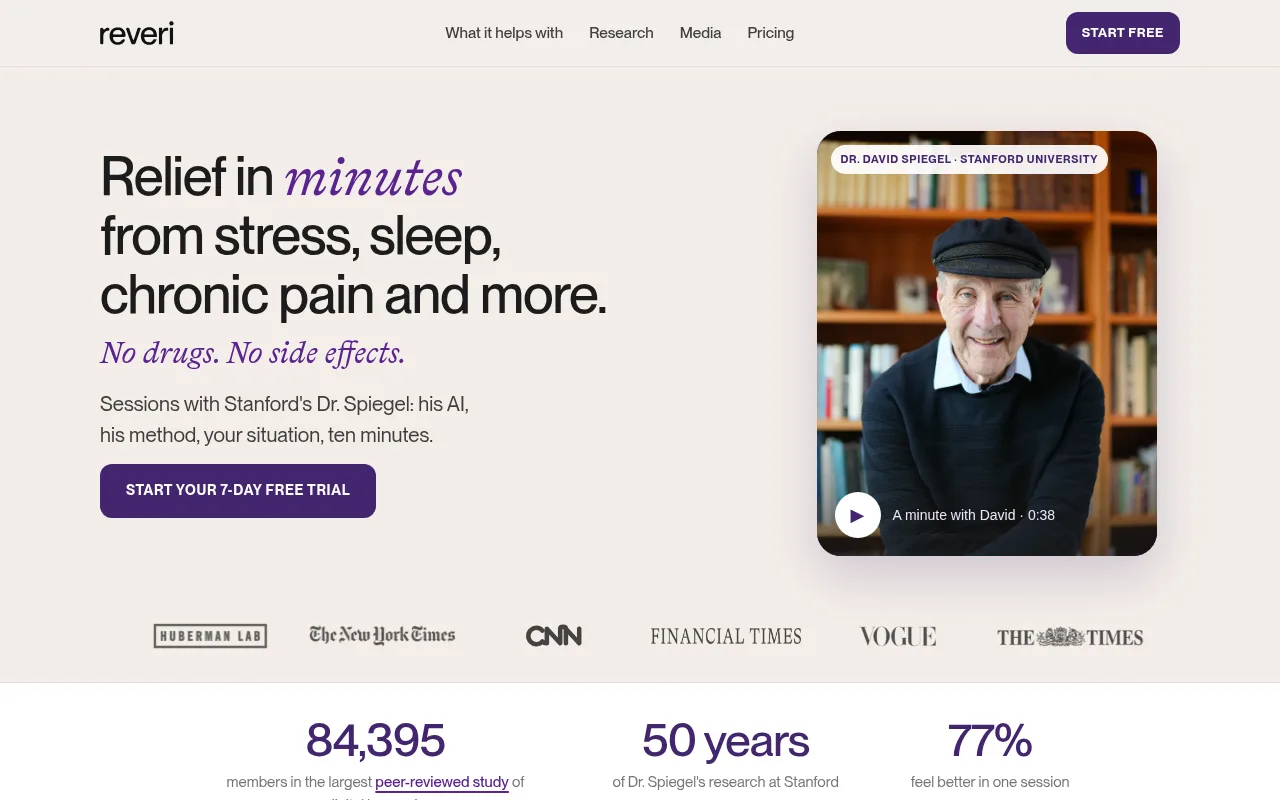
Sessions are about 10 minutes and are guided by an AI built on Dr Spiegel's method. It describes itself as a wellness product rather than medical care, and you can try it free for 7 days before choosing a paid plan.
If you're not sure where to begin, start with one of the free tracks above, Michael Sealey on YouTube or the sleep hypnosis section on Insight Timer, and give it the same quiet spot in your evening for a week. If you fall asleep sooner, keep it. If the voice keeps you listening, the options below are calmer.
Deep sleep hypnosis alternatives if a voice keeps you awake
Some people find any voice keeps them listening. If that's you, these are calmer options to try.
Sleep stories
A sleep story is a slow reading of a calm story, with no suggestions to follow. Calm has a large library of them, called Sleep Stories, read by voices like Matthew McConaughey and Idris Elba.
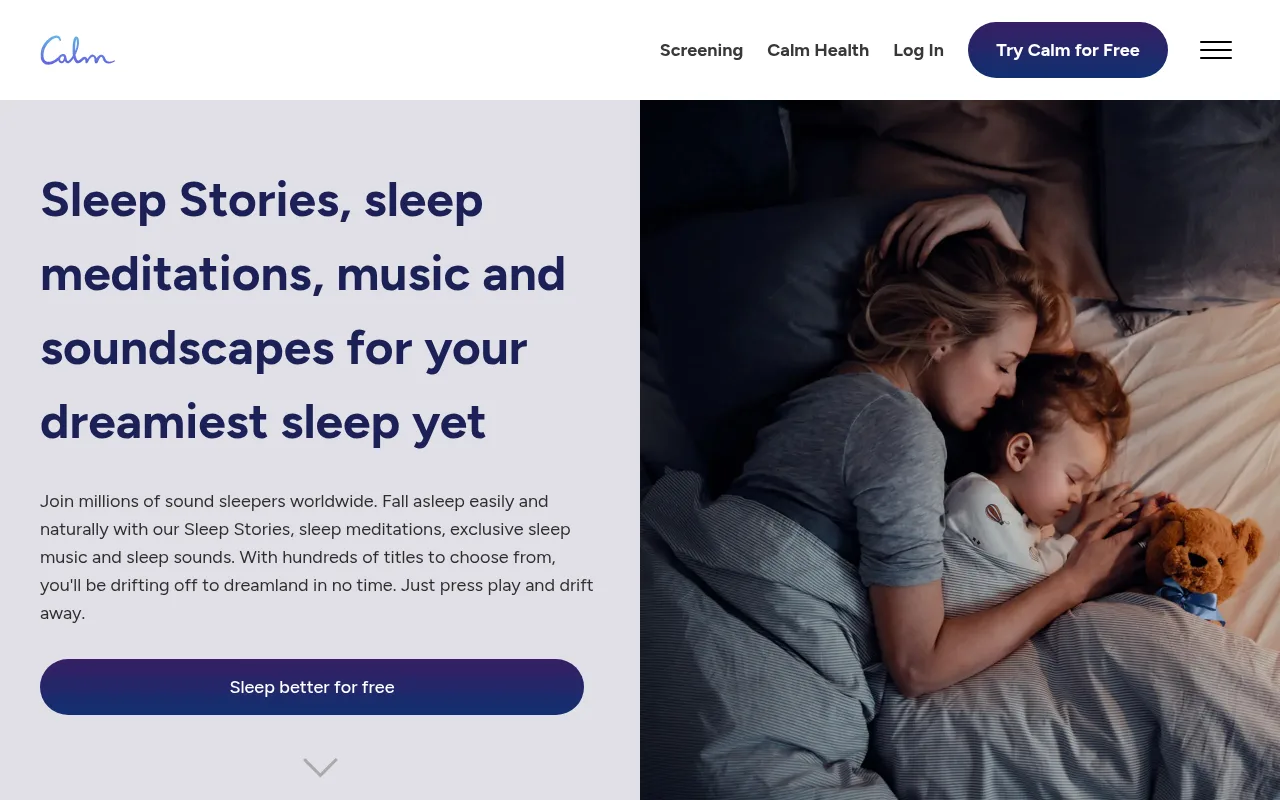
There's still a voice, but nothing asks anything of you. Calm is a paid app, and its sleep section also has soundscapes and music for after the story ends.
Meditation music
Guided meditation with a short voice section, then music on its own, is a gentler step down from hypnosis. My guide to meditation music for sleep covers breath-paced and body-scan tracks.
Steady sound
Rain, fan or brown noise for sleeping has no words and no tune, so there's nothing to follow. It also covers traffic and a partner's snoring. If you've seen tracks sold as tuning your brainwaves, my binaural beats sleep guide looks at what the studies found.
Wordless sleep music
Slow ambient music or soft lofi with no vocals is easy to leave on all night. The guides to deep sleep music and ambient sleep music go into what to look for.
Make wordless deep sleep videos with Chillframe
Not everyone wants a voice at bedtime, and long, wordless deep sleep videos are a growing part of YouTube. Many come from faceless channels with slow music, a dark scene and nobody talking, and you don't need to be a musician or an editor to run one.
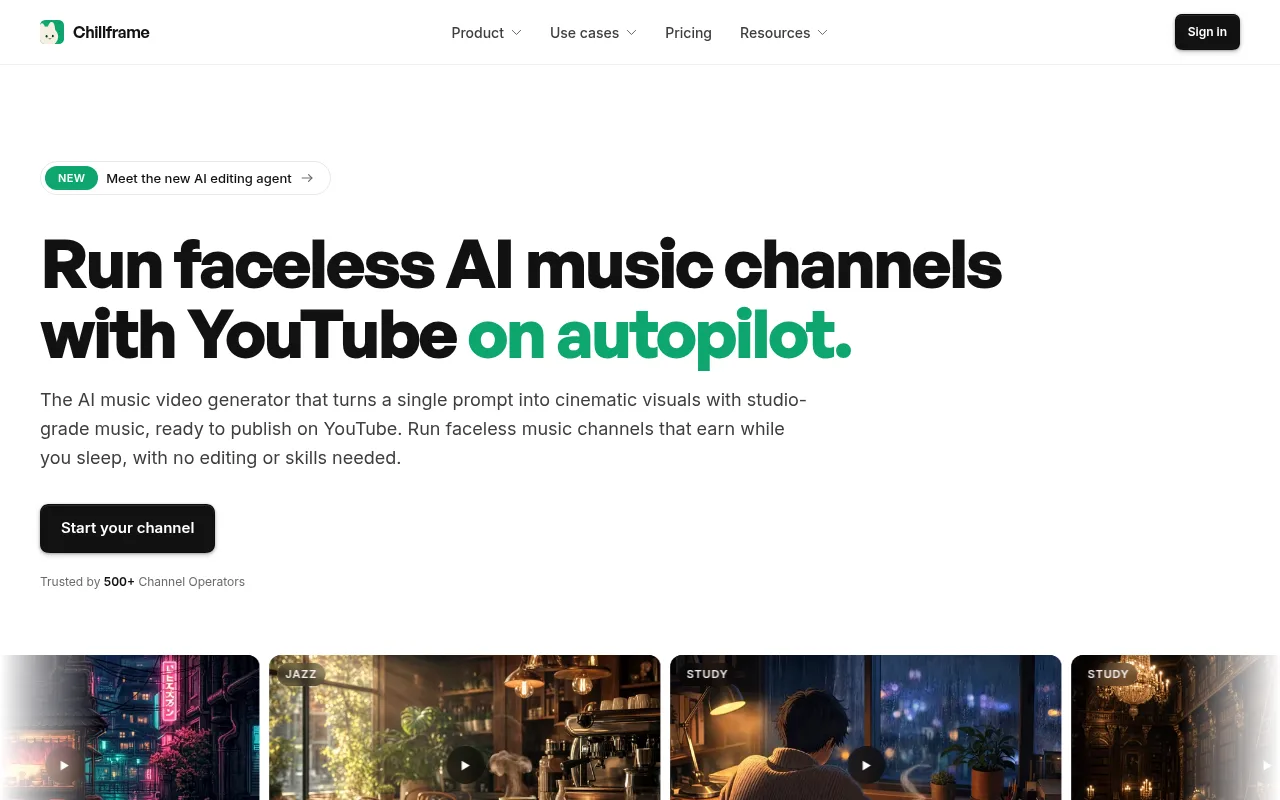
Chillframe makes the whole video. It writes original music for each one, masters the audio to YouTube's loudness target, makes a scene to match and publishes the finished video to your YouTube channel.
The Deep Sleep looks are built for this listener. Moonlit Ridge is a near-black night with a full moon low behind a ridge, set to a slow drone with no voices. Orbital Bunk is a dark sleeping cabin aboard a space habitat. You can also describe your own scene, like a lighthouse staircase lit by small lamps. Keep the audio on Instrumental, or choose Ambience only for listeners who settle better to steady rain or a fire.
A wordless channel can start at a gentle pace. I'd begin with a Series on two nights a week, Sunday and Wednesday, each video an hour long, and add nights as the channel grows. You look over the first video before it publishes. Once you approve it, with auto-publish on, Chillframe automatically makes and posts every video after it, fully hands-off.
The limit to know in this niche: Chillframe makes music and ambience, not hypnosis. There's no spoken voice and no suggestions to follow, so it suits the listener a voice keeps awake. Each video also runs up to 1 hour, shorter than the 4-hour hypnosis tracks above.
Orbital Bunk and Moonlit Ridge both work as still scenes on the Starter plan, at $19 a month. Their slow movement, the drifting nebula and the cloud across the moon, comes with Plus, from the Creator plan at $49. If you're curious about running a sleep channel, lofi for sleeping is a good place to see what works.
Deep sleep hypnosis FAQ
Does deep sleep hypnosis actually work?
It works for some people. In the 2018 review, 58.3% of the 24 studies found hypnosis helped sleep, and in the 2014 nap study deep sleep rose by 81% in women who respond strongly to hypnosis. In women who respond weakly it fell, so the honest answer is to try a track for a week and judge by your own nights.
Can everyone be hypnotized?
Not to the same degree. The Sleep Foundation says roughly 15% of people are highly receptive to hypnosis and about a third are resistant. Most people sit somewhere in between, which is why one voice can knock you out while another does nothing.
Is it safe to listen to sleep hypnosis every night?
For most people it looks safe. Only two studies in the 2018 review checked for side effects, and neither found any. The Sleep Foundation suggests talking to a doctor first if you have a mental health condition such as PTSD, and you should never play a track while driving.
How is sleep hypnosis different from guided sleep meditation?
Guided meditation asks you to notice your breath and body as they are. Hypnosis goes a step further and gives you suggestions to take on, like your body getting heavier or you sinking deeper. Many tracks mix the two, so the title is the best clue to which one you're getting.
What happens if I fall asleep before a sleep hypnosis track ends?
That's the point, so you haven't missed anything. Pick a track that fades into music at the end rather than counting you back up to wide awake. A long one, like Michael Sealey's 4-hour track, keeps playing if you wake in the night.