List
The Best AI YouTube Channels to Follow in 2026
The essential video guide to mastering machine learning, generative tools, and the automated channels driving the creator economy.

The best ai youtube channels are the quickest way to keep up with how fast machine learning and generative media are moving. Traditional courses can go out of date within weeks, so video has become the main up-to-date source for developers and creators. Whether you want to study deep learning architectures or build an automated media business, these channels are the most reliable places to learn.
They fall into two camps: academic research hubs and practical tutorials. A lot of people now watch them for more than study. They use them to learn how to build their own channels, and the top creators show the exact workflows that take you from viewer to channel owner with the generative tools available now.
Why AI YouTube Channels Are the Fastest Way to Catch Up in 2026
AI research and tooling move faster than any university course can follow, so channels have become the place to keep up. You get weekly breakdowns of new models, API updates and open-source codebases, and live demos of tools like Claude, Stable Diffusion and automated video engines, instead of waiting for a textbook to catch up.
The platform rules are changing alongside the technology. As BSWEN documents, YouTube added a July 2025 policy aimed at AI-generated content, so the guidelines on what creators can publish keep moving. With fewer than 3% of all YouTube channels ever reaching monetization, knowing how to stay within those policies while you automate is what keeps a channel earning over the long run.
Interest in this space shows up as a long tail rather than a few big searches. People look for the best AI channels overall, then narrow down:
- to learning a specific skill
- to a specific model
- to a specific tool
Each of those searches has modest volume on its own. That is exactly why a channel that covers the tail consistently can build real traffic without competing for one big head term.
The Best AI YouTube Channels in 2026, Grouped by What They Actually Teach
To help you find the right content fast, we grouped the leading channels by what they mainly teach.
Research and Academic Papers
If you want to follow the research itself, these channels break down the papers:
- Two Minute Papers: the most-cited channel across every list, at 1.52M subscribers, known for short, animated explainers of the latest AI research papers.

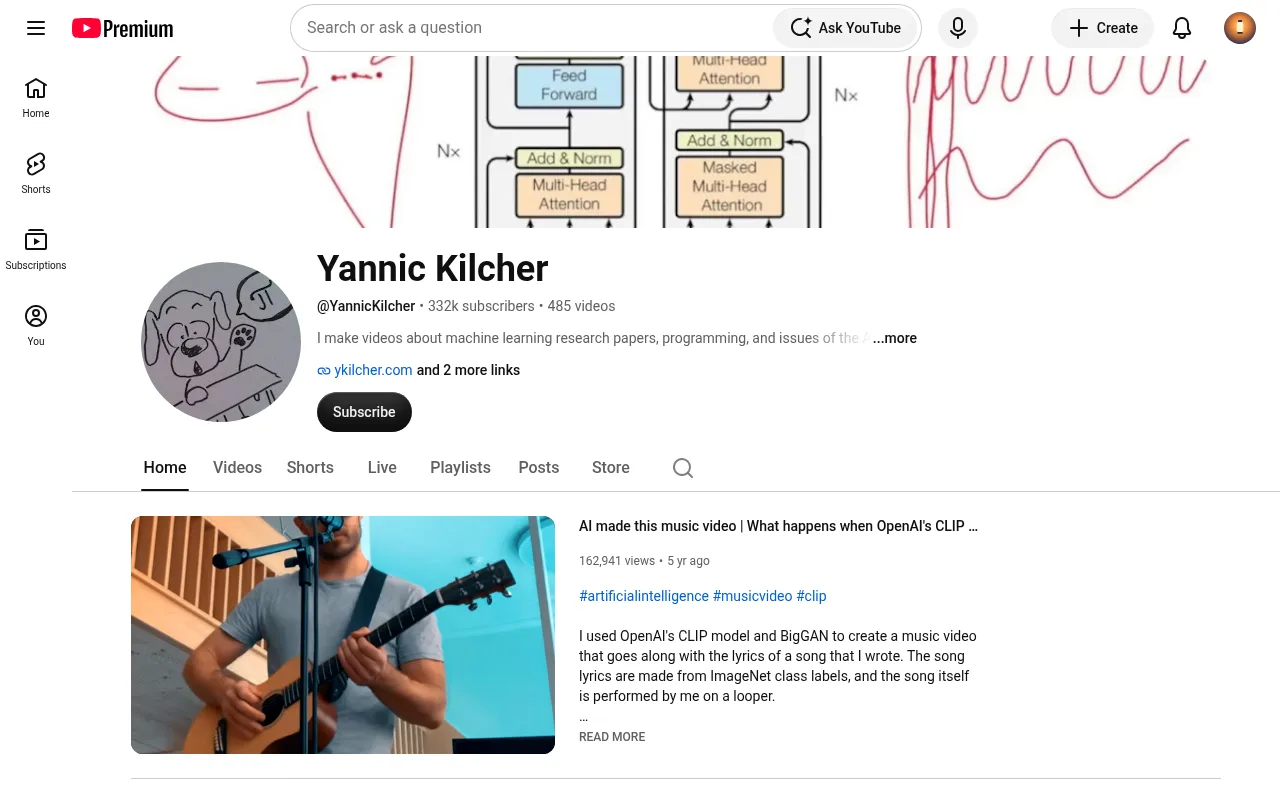
- Yannic Kilcher: at 319K subscribers, Kilcher covers machine learning research papers, programming and the AI community.
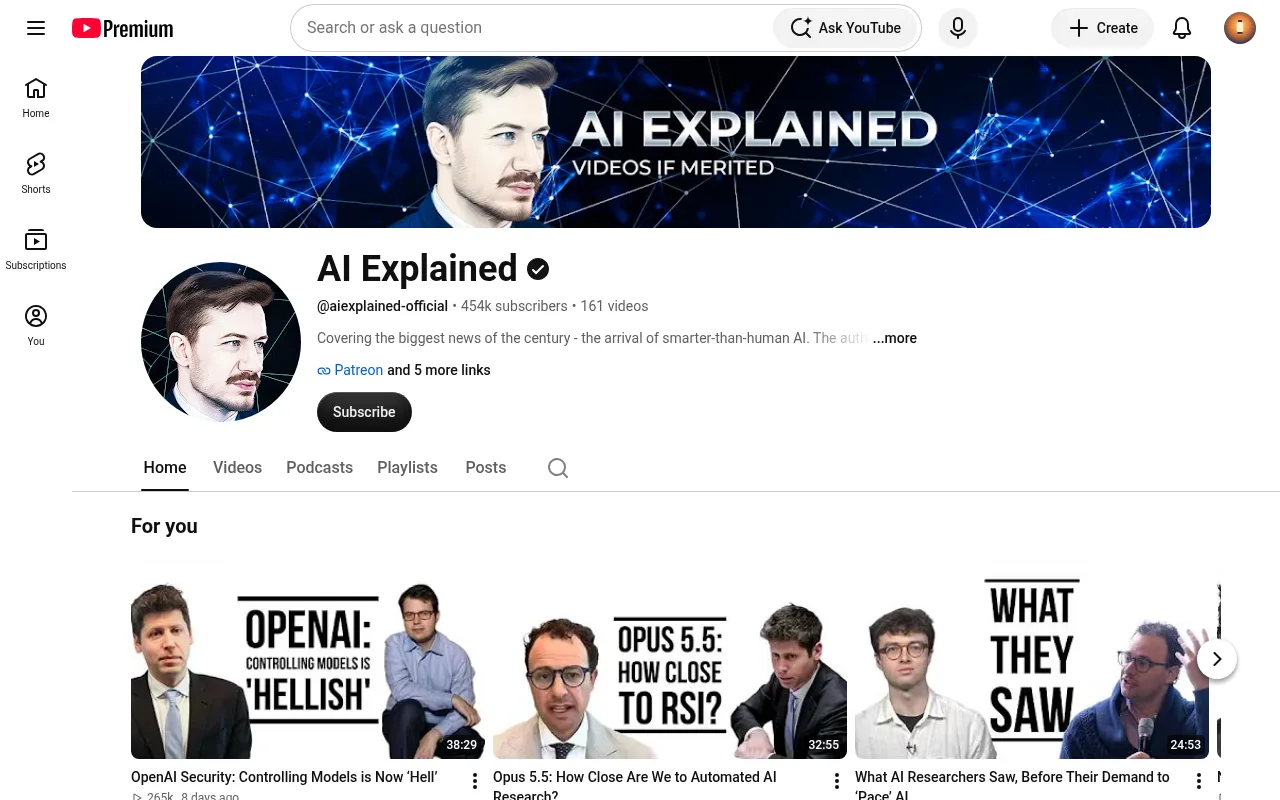
- AI Explained: at 222K subscribers, AI Explained covers smarter-than-human AI and the latest research developments.
Beginner-Friendly and Structured Learning
If you're starting from scratch and want a structured path, start here:
- DeepLearning.AI: led by Andrew Ng, with 279K subscribers. It offers free machine learning courses, guest lectures and recorded events.

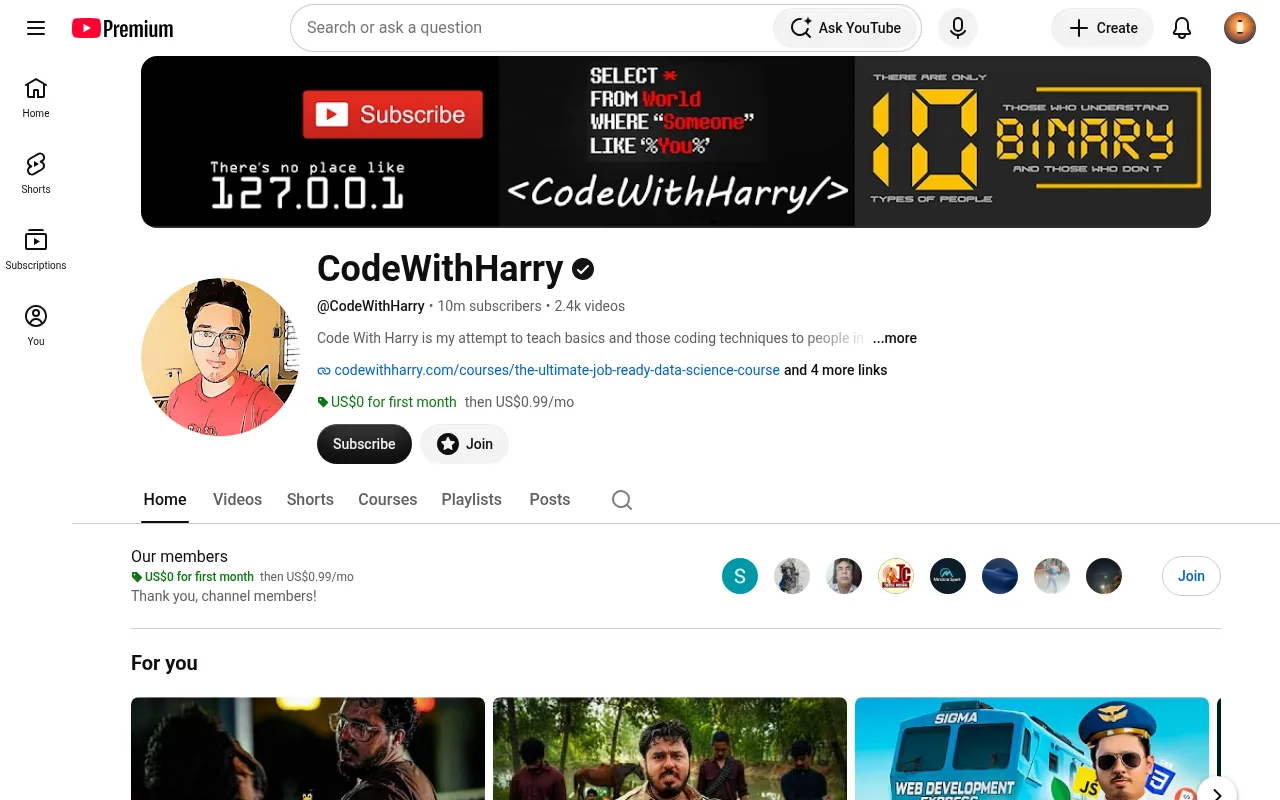
- CodeWithHarry: approachable generative AI and coding tutorials aimed at newcomers.
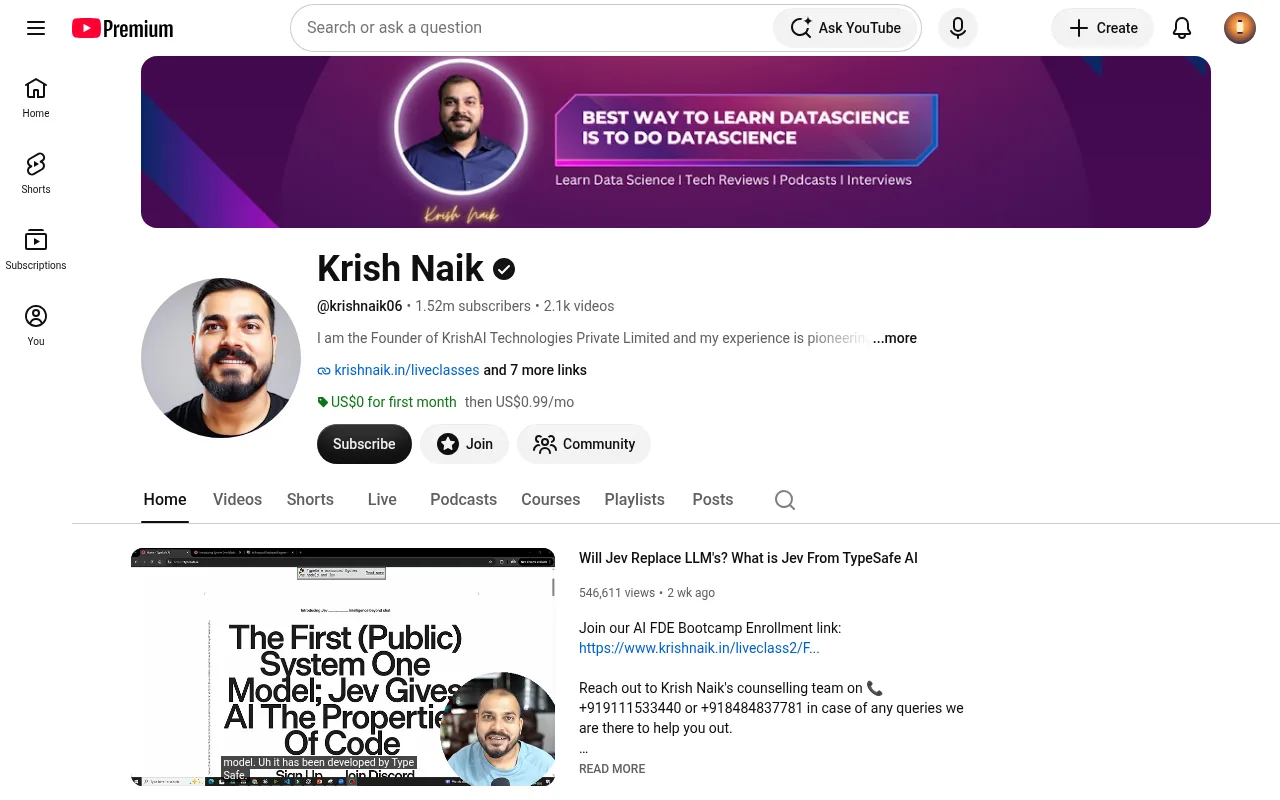
- Krish Naik: a structured, beginner-friendly learning channel for people new to the field.
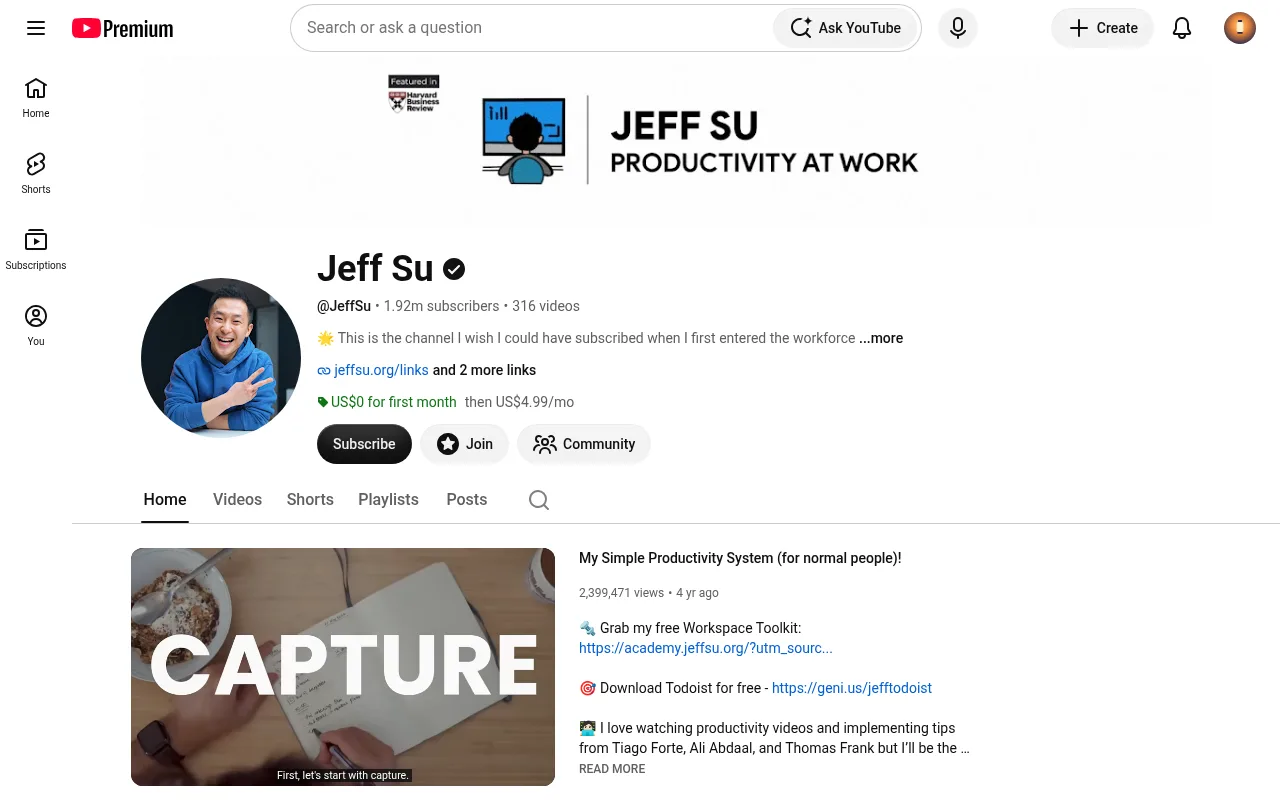
- Jeff Su: beginner-friendly, structured guidance for getting started with AI tools.
AI News and Market Analysis
To keep up with model releases and industry shifts, follow these analysts:
- Wes Roth: at 318K subscribers, Roth covers AI news, emerging tech and major AI breakthroughs.

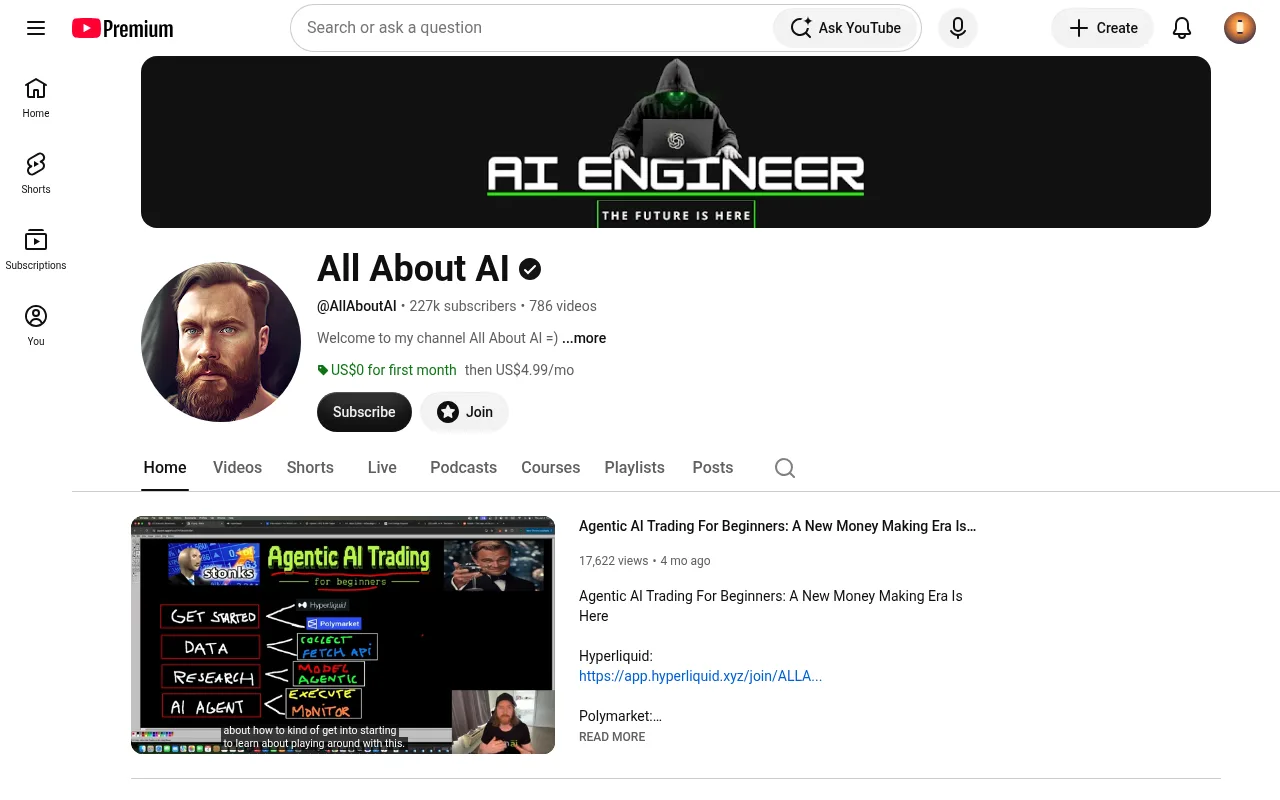
- All About AI: Kristian Fagerlie's channel, at 222K subscribers, focuses on generative AI tutorials, AI marketing and SEO.
Tools, Demos, and No-Code Workflows
These channels show how to use AI tools on real projects:
- Matt Wolfe: at 525K subscribers, Wolfe covers AI, no-code and futurism, including AI tool reviews.

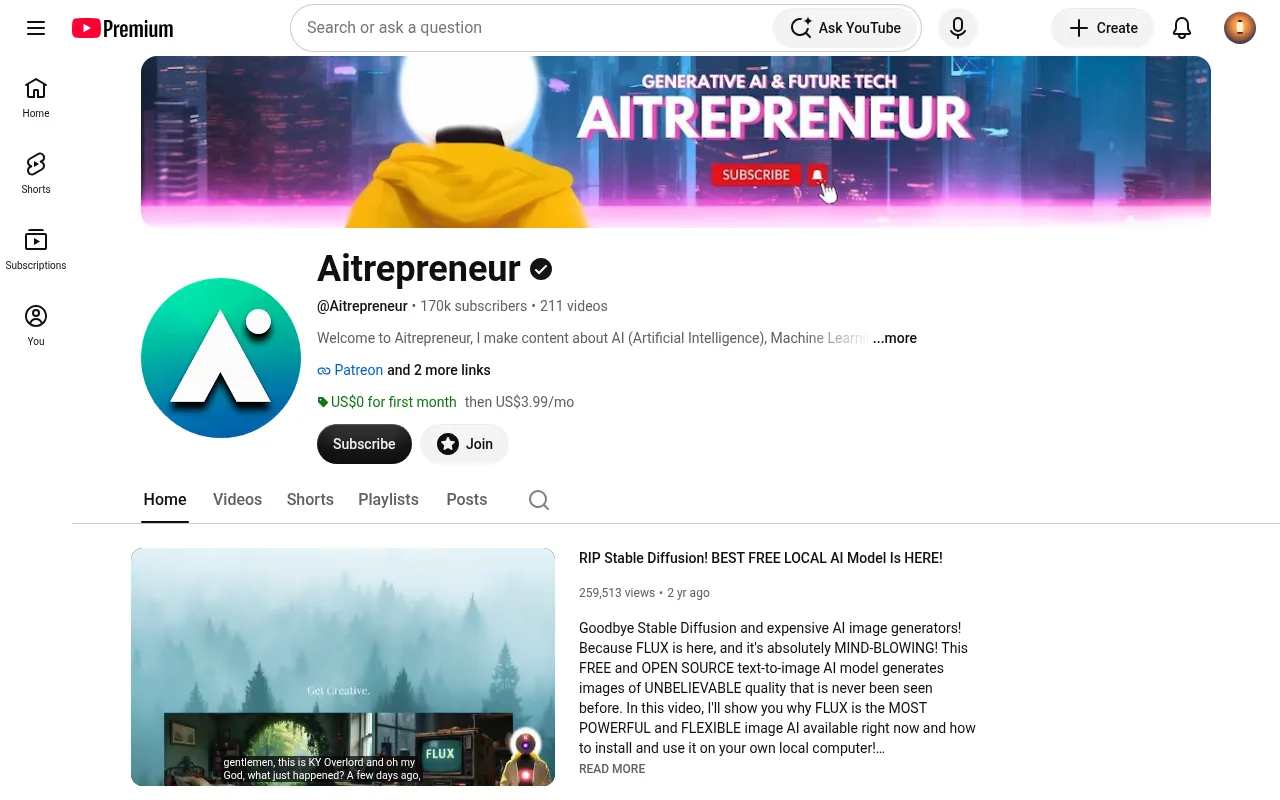
- Aitrepreneur: hands-on tool demos and no-code AI workflows.
AI Safety and Alignment
These creators focus on AI safety and alignment:
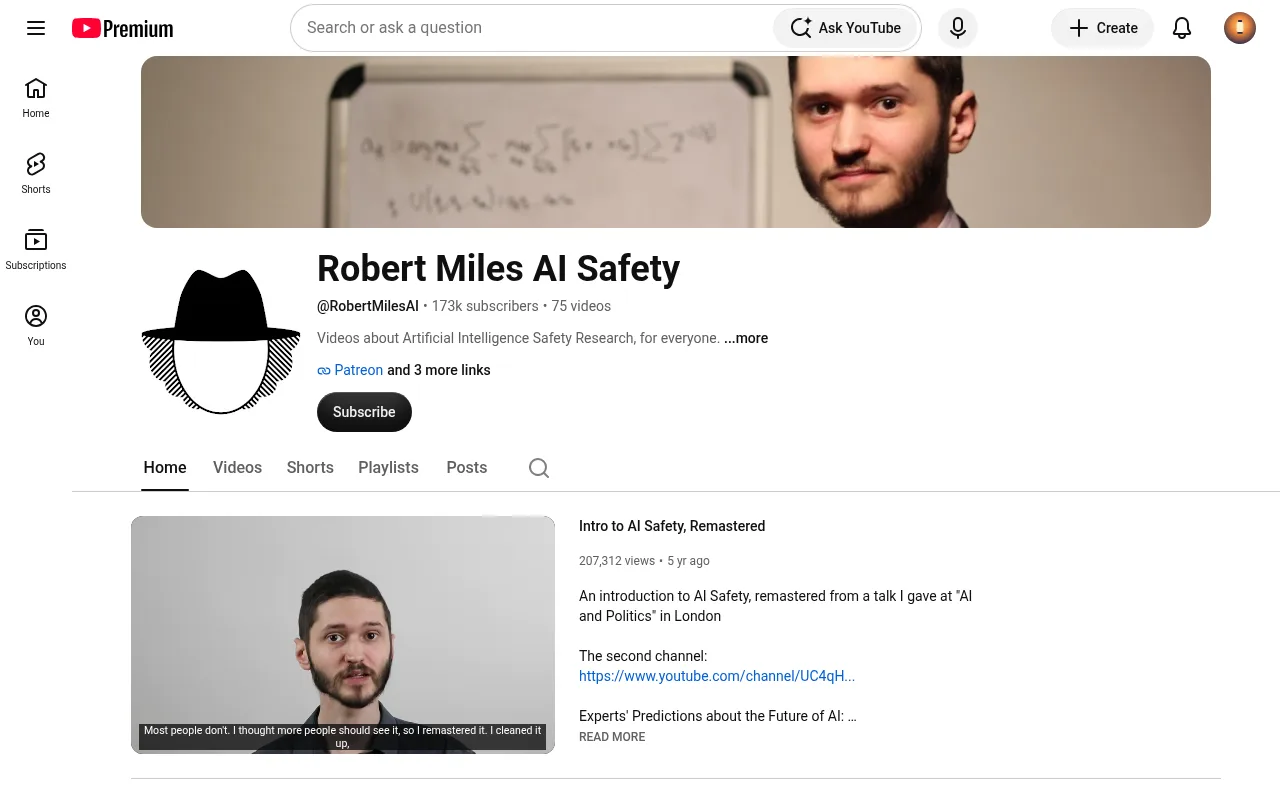
- Robert Miles: at 147K subscribers, Miles focuses on AI safety and alignment.
- David Shapiro: at 128K subscribers, Shapiro covers AI safety and alignment topics.
- Jeremy Howard: at 148K subscribers, another widely followed voice grouped in this space.
Enterprise and Applied Technology
For applied and enterprise-scale AI, these channels lead:
- IBM Technology: at 1.43M subscribers, a leading enterprise and applied AI channel.
- Google Cloud Tech: enterprise and applied AI content from the Google Cloud team.
- NVIDIA Developer: enterprise and applied AI content for developers.
- HuggingFace: an open-source, applied machine learning channel.
Creative and Niche Applications
These channels apply AI to specific creative fields:
- Dr Tommy Thompson (AI and Games): at 231K subscribers, Thompson explores how AI is used in video games.

- Murtaza Hassan: a computer vision resource.
- Jordan Harrod: at 89.5K subscribers, a creative and niche AI channel.
AI Creator Channels: Who to Watch If You're Building, Not Just Following
The groups above sort channels by subject. AI creator channels are a different cut of the same list: the ones to watch when you want to ship content with AI, not only stay informed about it. Three filters pick them out:
- They cover generation workflows end to end. Matt Wolfe and Aitrepreneur walk through AI video and music tool pipelines from prompt to published video, not only feature announcements. All About AI pairs its generative tutorials with the marketing and SEO side, which most build-focused channels skip.
- They publish builds you can reproduce. The channels that show the actual tools, prompts and settings they used, the same filter our selection criteria below applies, are the ones you can learn from directly. A polished demo you can't reproduce teaches you nothing about your own stack.
- They ship, as well as explain. Research channels like Two Minute Papers tell you what has newly become possible. AI-native channels that publish automated content show you what holds up at a weekly cadence.
If you're building, split your watch time between the two kinds, then move on to the tool stack in the next section. Running a channel of your own is the fastest way to learn AI-native publishing.
Subscribers at a Glance: Who Actually Wins the AI YouTube Lane
Channel sizes in AI YouTube vary a lot. The academic and enterprise giants lead on sheer numbers, while mid-tier specialists own the daily workflow and tool-review space.
Here's how the audience spreads across the top channels:
- The Academic and Educational Giants: channels like Grant Sanderson's 3Blue1Brown, at 8.3M subscribers, and IBM Technology at 1.43M subscribers lead the field. They focus on foundational math and enterprise infrastructure.
- The Research Specialists: Two Minute Papers leads the research-summary niche with 1.52M subscribers, proof that highly technical paper summaries can reach a mainstream audience.
- The Mid-Tier Workflow Experts: creators with 200K to 320K subscribers give the most consistent coverage of daily tools and tutorials. They include Wes Roth with 318K subscribers, Yannic Kilcher with 319K subscribers, and Kristian Fagerlie's All About AI with 222K subscribers.
- The Niche Indie Creators: channels under 100K subscribers are often where the most specific, newest workflows get documented first. They're the testing ground for new automation stacks.
How the leading channels compare on subscribers and focus:
| Channel Name | Core Focus | Subscriber Count | Primary Source |
|---|---|---|---|
| Grant Sanderson | Mathematics & Neural Networks | 8.3M | FeedSpot |
| Two Minute Papers | AI Research Summaries | 1.52M | YourDreamAI |
| IBM Technology | Enterprise AI & Cloud | 1.43M | AWisee |
| Matt Wolfe | AI Tools & No-Code | 525K | YourDreamAI |
| Yannic Kilcher | ML Papers & Deep Learning | 319K | FeedSpot |
| Wes Roth | Daily AI News & Breakthroughs | 318K | FeedSpot |
| All About AI | GenAI Tutorials & SEO | 222K | FeedSpot |
Verdict: big educational channels like 3Blue1Brown give you the math you need for a deep understanding. For creators who want to use AI tools in real workflows, mid-tier channels like Matt Wolfe and Wes Roth are far more useful.
What About AI-Generated YouTube Channels?
Every channel above is made by a person who covers AI. AI-generated YouTube channels are the mirror image: the content itself, meaning the music, the visuals and the uploads, is made by automated tools, often with no one on camera at all.
If you came here for a list of AI-generated YouTube channels to study, it helps to know the category is defined by its workflows, not its stars. The channels change fast, while the production stack behind them stays recognizable.
The platform rules matter more on this side. As covered earlier, YouTube added a July 2025 policy aimed at AI-generated content, so anyone running an AI-generated YouTube channel has to keep up with changing guidelines while publishing on a regular cadence.
Building one is more practical than hunting for examples. Chillframe runs this exact model for lofi channels: it makes original music and matching visuals, puts the finished video together, and publishes it to your connected YouTube channel on the schedule you set. The next section covers the wider tool stack these automated channels are built on.
From Watching to Creating: The AI Tools These Channels Actually Use
Going from watching AI content to making it has never been easier. The same technology these channels cover now powers highly automated, faceless channels. According to the BSWEN 2026 case study, a typical modern faceless channel stack uses:
- Claude to write scripts
- ElevenLabs for realistic voiceovers
- Magic Hour to render video assets
- CapCut to put the final timeline together
This creator-side technology is growing fast. Market data from Grand View Research, cited by Frameloop, projects the global AI video generator market will reach $946.4M in 2026 and grow to $3.44B by 2033, a compound annual growth rate of 20.3% CAGR. That growth has made room for specialized platforms that handle the whole production process end to end.
Chillframe: the music, visuals and publishing layer
If you want a channel that runs itself, Chillframe is the music, visuals and auto-publishing layer of that stack. You skip the hours in editing timelines: Chillframe makes complete lofi videos and publishes them to YouTube on a set schedule, so your catalog and watch-time keep building. You don't download, edit or upload anything by hand.
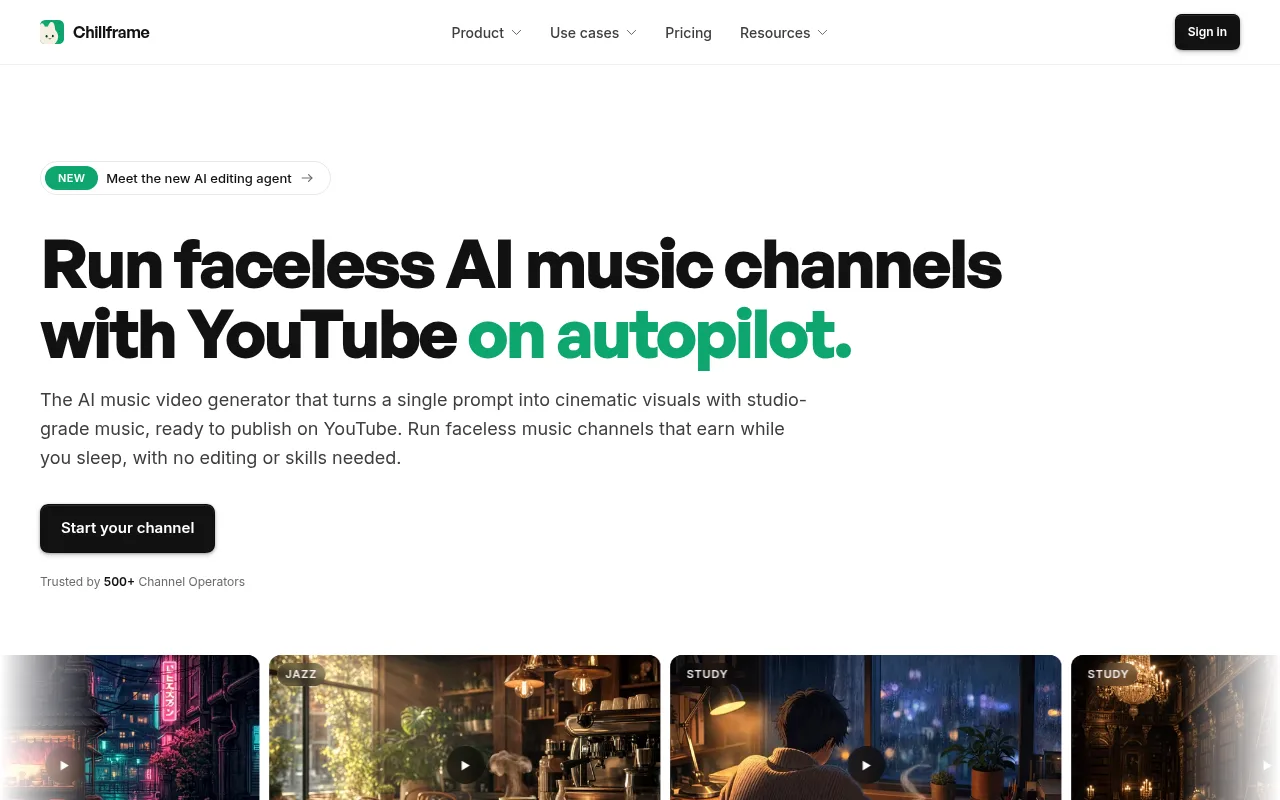
What goes into each video:
- Music: original, studio-quality lofi tracks made for your channel. When a video has more than one track, they crossfade into one continuous soundtrack with no gaps.
- Looks: a catalog of preset styles in 14 groups, from Lofi Anime and Jazz Coffeeshop to Synthwave and Dark Academia, with scenes like Rainy Tokyo and Campfire Night. Or describe your own scene in plain words.
- Visuals: Lite gives you a still scene, and Plus gives you a gently moving one. Motion videos come with Creator, Pro and Max.
- Ambience: choose Ambience only for rain, fire or cafe sound with no music.
- Resolution: still scenes are made in 4K. Motion clips come in Standard or Premium quality, and on Creator and up they can be upscaled to 1440p or 4K.
How a Series publishes for you
A Series automatically makes fresh videos on a cadence of 1 to 7 a week, on the days and times you pick.
- Connect your YouTube channel once and set the titles, descriptions and release days.
- Approve the first video.
- From then on it's fully hands-off. Chillframe writes an optimized title and description for each episode, uses a thumbnail taken from the video, and publishes each finished episode straight to your connected channel on schedule.
Built-in creator analytics show your channel's watch-time and performance, right in the dashboard.
Plans
Every plan makes videos up to 1 hour, and Creator, Pro and Max can make motion videos. What changes is how much usage you get each month and how many Series can run at once. It all runs on one monthly pool of usage, which pays for everything a video needs, from visuals and motion to music and finishing, and resets every month:
- Starter: $19 a month and 1 active Series.
- Creator: $49 a month, 5x Starter's usage and 3 active Series.
- Pro: $99 a month, 11x usage and unlimited active Series.
- Max: $199 a month, 25x usage and unlimited active Series.
Chillframe starts from $19 a month.
To look at the AI tools these channels cover, read our guide to AI music video generators and our roundup of the best AI music generators.
How We Picked These Channels (and What We Skipped)
We started with FeedSpot's index of the top 100 AI YouTubers, which ranks creators on subscriber numbers, audience engagement and influence in the industry. Then we checked those rankings against several curated lists from 2026, so the list includes both established giants and rising indie creators.
Three editorial filters kept the list useful:
- Main-Lane AI Focus: we left out general tech channels that only cover AI as a passing trend. Every creator here makes AI their main focus.
- Original Analysis: we skipped news-aggregator channels that read out press releases or recycle stock footage. Every channel here gives original commentary, code demos or research breakdowns.
- Actionable Workflows: we favored creators who show the actual tools, code or prompts they use, so you can reproduce their results.
To build your own automated channel, start with our guide to how to start a faceless YouTube channel, then learn how to make lofi music to understand the craft these tools automate.
Frequently Asked Questions
What is the #1 AI YouTube channel in 2026? The top AI-specific YouTube channel is Two Minute Papers, which has 1.52M subscribers and provides short, visual breakdowns of complex research. If you expand the scope to mathematics and foundational machine learning concepts, Grant Sanderson's 3Blue1Brown is the largest relevant channel with 8.3M subscribers.
Which channel is best for beginners? For structured academic learning, DeepLearning.AI is the gold standard for free, well-sequenced machine learning courses. For practical tool tutorials and no-code workflows, Matt Wolfe provides excellent beginner-friendly reviews. If you want to learn coding and API integration, CodeWithHarry is highly recommended.
Which channel covers the latest AI research? Two Minute Papers, Yannic Kilcher, and AI Explained are the three most reliable channels for research papers. Yannic Kilcher provides academic, deep-dive reviews of model architectures, while AI Explained focuses on testing frontiers and evaluating smarter-than-human AI developments.
Can I use AI to run my own AI-themed channel? Yes. Many creators use AI tools to produce and manage their channels. Platforms like Chillframe allow you to connect your YouTube channel and automate the entire production process. By setting up a Series, the system generates original lofi music, pairs it with custom visuals, and publishes the finished videos straight to your channel on schedule. Approve the first video and from then on it's fully hands-off, so you keep a consistent publishing cadence.
Whether you watch research summaries to stay ahead or practical tutorials for your next project, AI YouTube is a great place to learn. Study these creators, get to know the tools, and when you're ready to go from viewer to channel owner, Chillframe makes and publishes the videos for you.