Listening
Rain and Thunder Sounds for Sleeping: Pick Thunder That Won't Wake You
The rain is the easy part. The thunder decides whether a storm track sends you to sleep or jolts you awake, so here is how to pick the right kind.
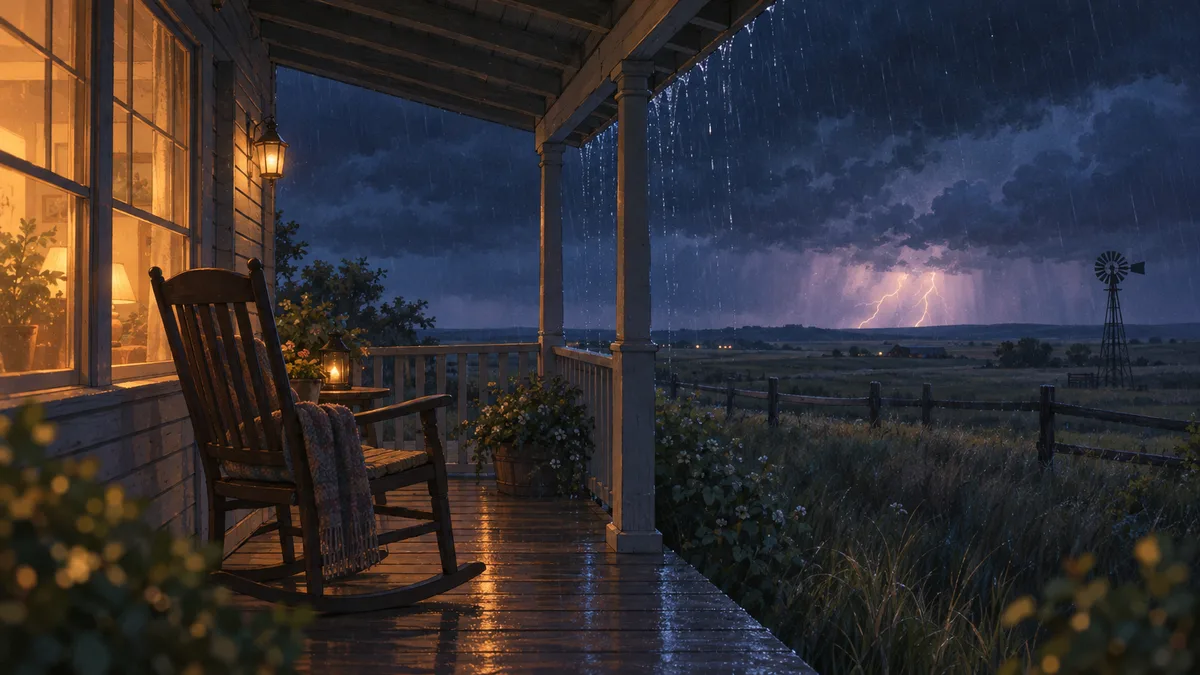
Rain and thunder sounds for sleeping work best when the thunder stays far away. Distant thunder is a low, rolling rumble that sits under the rain and never really stops. Close thunder is a sharp crack that arrives out of nowhere, and that is the kind of sound that wakes people. So the choice that matters isn't rain or no rain. It's which thunder you let into the room. Below is how to tell them apart, who each one suits, what to do for children and pets who fear storms, and where to find tracks with steady thunder.
Distant rumble or close cracks
Real storms already sort thunder into two kinds. The National Weather Service puts it plainly: a sharp crack or click means the lightning passed nearby, while a rumble means it was at least several miles away. Recorded storms keep that difference, so you can hear it on a track before you ever sleep to it.
The distance changes how your body treats the sound:
- Distant rumble: low, slow and continuous. It blends into the rain and becomes part of the background, which is exactly what a sleep sound should be.
- Close cracks: loud, sudden and spaced out. Each one is a new event your brain notices. The Sleep Foundation notes that unexpected noises can easily disturb sleep, and a thunderclap is about as unexpected as sound gets.
Calm makes the same point in its sleep sounds guide: steady, consistent sound masks sudden changes that can pull you out of sleep. Rain gives you the steady part. Distant thunder adds depth without breaking it. Close thunder is the sudden change.
Who rain and thunder sounds for sleeping suit
A good guide is how you react to a real storm at night, because a recording tends to land the same way.
Distant thunder tends to suit you if:
- a storm outside makes you feel cosy and safe indoors;
- you like a deep, bassy sound and find plain rain a bit thin;
- you want something heavier to cover traffic, a neighbour's TV or a partner's snoring;
- you fall asleep easily once you're settled, and only need help winding down.
Thunder of any kind may startle you if:
- you're a light sleeper who wakes at small noises;
- storms make you anxious, or you have astraphobia, the fear of thunder and lightning;
- you share a room with someone who doesn't like storms;
- you wake easily in the second half of the night.
If you're in the second group, rain on its own is the better start, and my guide to rain sounds for sleeping covers that side in full. You can add a faint rumble later once rain alone feels familiar.
What the research says about storm sounds and sleep
The research on sleep sounds is mostly about white and pink noise rather than storms, so it's worth being clear about what is known. A 2022 systematic review in the Journal of Clinical Sleep Medicine looked at 34 studies of white noise, pink noise and mixed audio. Nineteen of them found an improvement in sleep. The authors concluded there was no strong evidence overall, but also that none of the studies reported any adverse effects from short-term use.
So sound can help, it doesn't help everyone, and your own reaction is the best guide. A storm track that relaxes you is doing its job. One that makes you listen for the next crack isn't, however good it sounds while you're awake.
Children and pets who fear storms
A storm track at bedtime affects everyone who can hear it. Two groups need a different plan.
Children who are scared of storms
For a child who already fears storms, a thunder track in a dark bedroom is more likely to keep them alert than calm them. Rain without thunder is the safer bedtime choice.
Getting used to storms works better in the daytime, with you there. The children's hospital at Boys Town suggests keeping your cool and explaining how thunder and lightning work, so a child focuses on what's happening instead of the fear. A recorded storm on a sunny afternoon, with a parent talking through the rumble, is a very different thing from the same track alone at night.
For babies and young children, keep any sleep sound low and well away from the cot. A report from the AAP, a body of children's doctors, points out that infants and young children must rely on adults to remove them from noisy situations, and that the effects of noise build up over time. My guide to newborn sleep music goes into the details for babies.
Dogs and other pets afraid of thunder
Pets hear your sleep sounds too, and a dog that fears storms doesn't know the thunder is recorded. Don't leave a thunder track running overnight in a room with a storm-phobic dog.
Thunder recordings do have a role in helping dogs, but a careful one. A guide from AVSAB, a society of vets who specialise in animal behaviour, describes desensitisation that starts with a thunderstorm sound at the lowest volume, paired with a high-value treat, and raises the volume only after the dog stays relaxed over several sessions. It also says these programmes usually need direct guidance from a behaviourist. If your dog panics in storms, start with your vet. For calmer sounds to play for a pet, see soothing dog sounds.
How to pick a track with steady thunder
Thunder tracks are labelled loosely, so a few minutes of checking saves a broken night.
- Search for the distance. Words like "distant thunder", "rolling thunder" or "calm storm" find recordings where the rumble stays far off. "Heavy thunderstorm", "close thunder" or "lightning strikes" usually mean cracks.
- Skip through the whole track. Play a minute from the start, the middle and near the end. A storm can build as a recording goes on, so a gentle opening doesn't promise a gentle middle.
- Test it lying down. Play 10 minutes in bed, at the volume you'll sleep with. If one rumble makes you flinch, it will do the same at 3am.
- Check the restart. A short file on repeat can jump in volume each time it loops. A long single recording avoids that, and my guide to 10 hour rain sounds covers where to find them.
- Remove the ads. A loud advert halfway through the night is worse than any thunderclap. Use an ad-free player or a paid plan.
Then set it up for the night:
- Volume: there's no official level for sleep sounds. The Sleep Foundation suggests about a background conversation or light rustling, and notes that noise of 70 decibels or more can become harmful over time. Set it on the loudest rumble, not the quietest rain.
- Placement: a speaker across the room spreads the sound and keeps it out of your ear. The Sleep Foundation also suggests moving a sound machine to a corner of the room.
- Timer: BetterSleep's guide suggests a fade-out after about 45 to 60 minutes if you sleep deeply once you're out, and rain all night if you're a light sleeper.
Where to listen to rain and thunder at night
Each of these gives you a different kind of control over the thunder, from a full mixer to picking the right recording.
| Where | How you control the thunder | Cost |
|---|---|---|
| myNoise | Sliders and presets like Calm Storm, built to avoid sudden thunderclaps | Free, runs on donations |
| Rainy Mood | One-click rain in the browser; the app adds a mixer, a sleep timer and 400+ thunder claps | Free in the browser, a one-off purchase on iPhone |
| YouTube | The widest choice of long recordings; you pick the storm | Free with ads; Premium removes them |
| Calm | Sleep sounds such as heavy rain, plus soundscapes and sleep music | Free to download, optional paid subscription |
| BetterSleep | Over 15 rain variations you stack with thunder, then a timer and fade-out | Paid subscription, with a limited free selection |
myNoise
myNoise has a free in-browser generator called Distant Thunder, and its notes say it is deliberately designed to be calm, avoiding sudden thunderclaps or lightning strikes that could unsettle people with anxiety or astraphobia. That makes it one of the safest places to start if cracks are your worry.
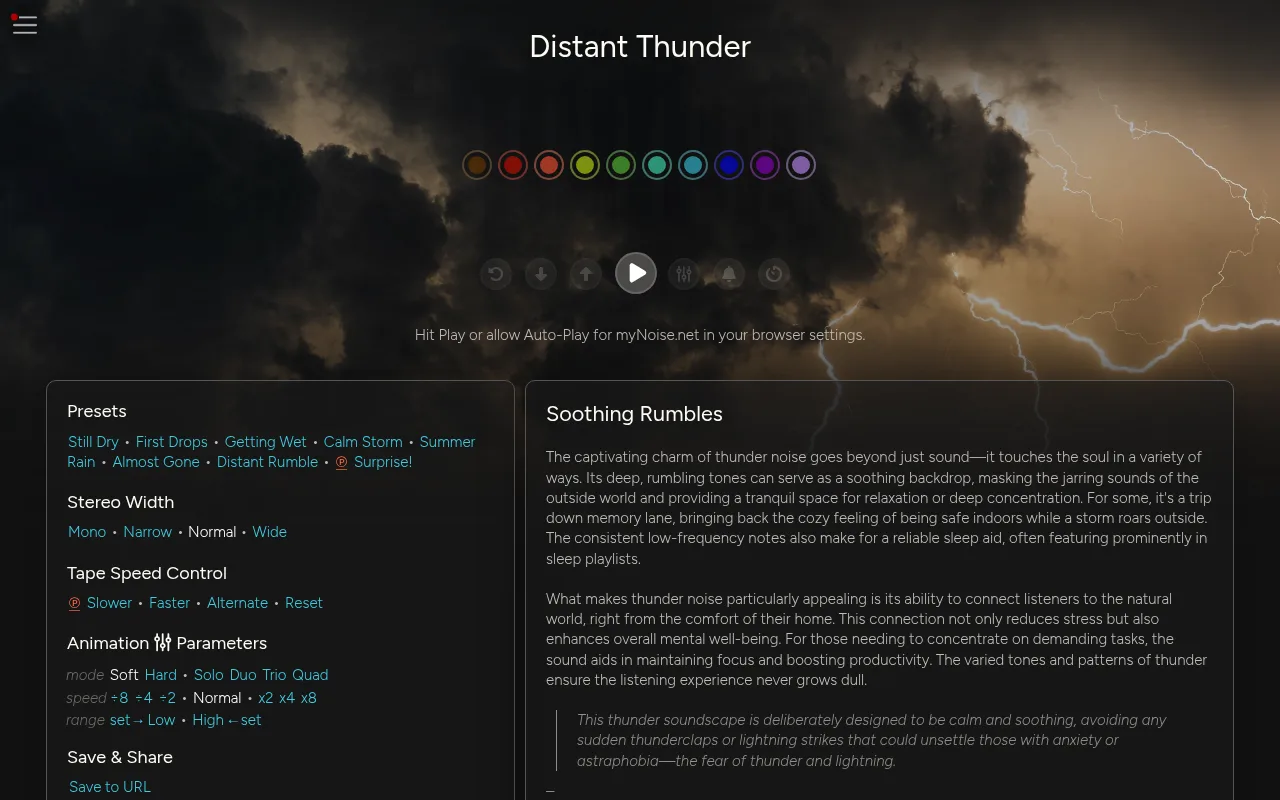
Its sliders let you shape the storm yourself, and presets such as Calm Storm and Distant Rumble give you a quick starting point. The site runs on donations.
Rainy Mood
Rainy Mood is a rain player you start with one click, free in the browser. It's simple and quick to put on.
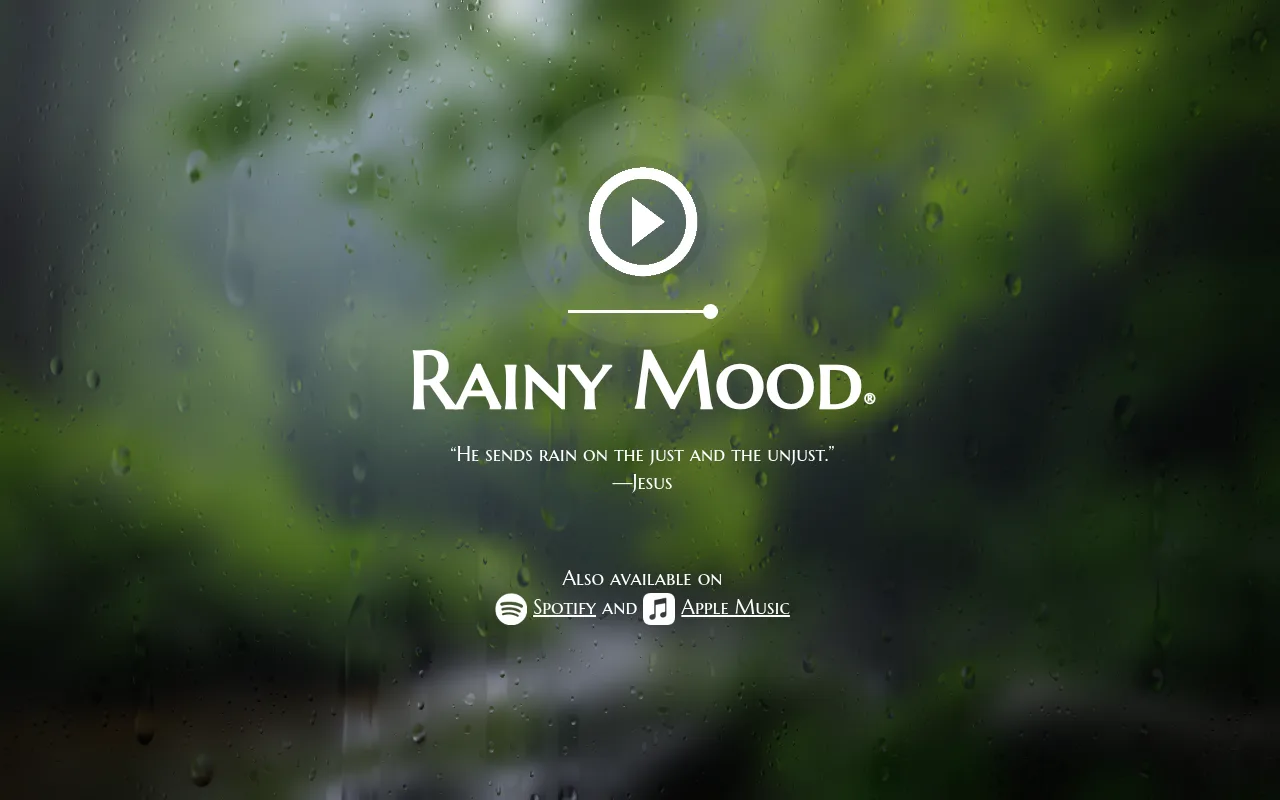
For more control over the thunder, its app adds a sound mixer and a sleep timer, and the App Store listing mentions a library of more than 400 thunder claps and other effects. On iPhone it's a one-off purchase rather than a subscription.
YouTube
YouTube has the widest choice of long rain and thunder videos, from gentle window rain to full storms. Searching for distant thunder narrows it to the softer end.
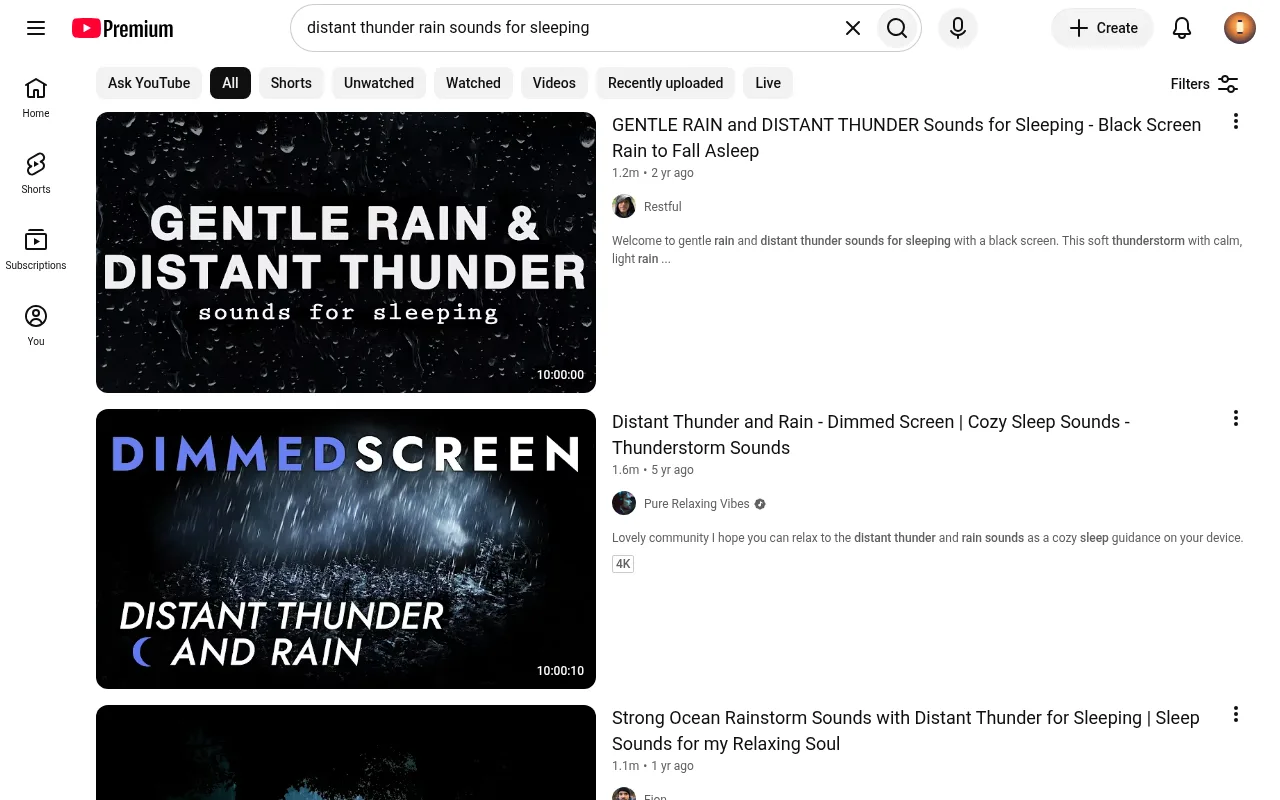
The catch is the ads, which can play during a long video on the free version. YouTube Premium removes them and lets you download a video to play offline. Turn off autoplay too, so a different, louder storm doesn't start when yours ends.
Calm
Calm is a sleep and meditation app with sleep sounds such as heavy rain, along with full soundscapes and sleep music. It's free to download, with some content behind an optional paid subscription.

One useful tip from Calm's own guide: it describes brown noise as a deep, low roar like the distant rumble of thunder. If you love the rumble but not the cracks, brown noise gives you that depth with nothing sudden in it.
BetterSleep
BetterSleep is built around mixing your own sound. Its guide says the app has over 15 rain-sound variations, from light drizzle to thunderstorms, and you can stack them with other sounds.

That makes it easy to keep rain as the main layer and add thunder at a low level, then set a timer and fade-out. Full access needs a paid subscription, and a limited free selection stays available without one.
If thunder keeps waking you
When a storm track wakes you, the cause is usually a close crack, a jump in volume where a short track restarts, or an ad. Work down this list, one change a night, until you sleep through:
- Turn the volume down, setting it on the loudest rumble.
- Switch to a track with distant thunder only.
- Move the speaker further away, or off the bedside table.
- Set a timer so the storm fades out after you fall asleep.
- Drop the thunder and keep the rain.
- Try brown noise for sleeping for the deep rumble without any cracks.
- Swap the storm for soft music, such as lofi for sleeping.
If you're struggling to sleep most nights whatever you play, that's worth a conversation with your doctor rather than a louder storm. My guide to sleep music for insomnia covers what sound can and can't do there.
Start a rain and thunder sleep channel with Chillframe
The long storm videos on YouTube share a simple shape: a rainy scene on screen, a storm sound bed and a long runtime, with no one talking. That makes them a natural fit for a faceless channel, and there's plenty of room for new channels with a look of their own.

Chillframe makes the whole storm video for you, the sound and the scene, and publishes it to your YouTube channel. A storm channel suits a nightly rhythm, with a new hour of rain going up each evening before people go to bed. This is how I'd set that up:
- Open the Storm Against the Cabin Glass preset. Heavy rain drums on a cabin window, a fire crackles beside the bed, and the thunder stays distant, low and rolling, the kind of storm this guide recommends. You can also describe your own rainy scene in plain words.
- Set the audio to Ambience only, so the storm plays with no music over it. The sound is mastered to YouTube's loudness target on export.
- Choose 1 hour as the length.
- Make it a Series that runs 7 days a week at 9pm.
The first storm is held for you to look over before it goes out. Approve it with auto-publish on, and Chillframe makes and posts a fresh storm every night from then on, fully hands-off, each with a title, description, tags and a thumbnail taken from the video.
The limit worth knowing for sleep is length. Every video runs up to 1 hour, on every plan, so Chillframe won't make one 8-hour storm. A nightly Series builds a library of hour-long storms instead, or you can join several hours together in an editor before you upload.
A still cabin storm is on the Starter plan, at $19 a month. For rain that runs down the glass while the fire moves, choose Plus, which starts on the Creator plan at $49.
Rain and thunder sounds for sleeping FAQ
Is thunder good for sleep?
It depends on the kind. A distant, rolling rumble blends into the rain and can make a storm track feel deeper and cosier. Close cracks are sudden, and sudden noises are the ones that wake people. If you're not sure, start with rain alone and add a faint rumble later.
Is rain or white noise better for sleeping?
Nobody has shown that one beats the other. Most sleep sound research tested white and pink noise rather than rain, and in the 2022 review 19 of 34 studies found better sleep, without strong evidence overall. Pick the one you find relaxing. If you like the rumble but not the cracks, brown noise sits in between.
Can I play rain and thunder sounds all night?
You can, as long as the volume stays low. BetterSleep suggests rain all night for light sleepers and a fade-out after about 45 to 60 minutes if you sleep deeply once you're out. Keep it around the level of a quiet background conversation, because the Sleep Foundation notes that noise of 70 decibels or more can become harmful over time.
Should I use headphones for rain and thunder sounds?
A speaker across the room is usually better for a whole night. It spreads the sound and keeps it out of your ear, and the Sleep Foundation suggests putting a sound machine in a corner. If you need headphones so you don't wake a partner, keep the volume low and set a timer so the storm fades out.