Listening
Lofi Jazz: What Makes a Beat Sound Jazzy and Where to Listen by Mood
Why some lofi sounds like a late-night jazz club, and the streams and playlists I'd put on for each part of the day.
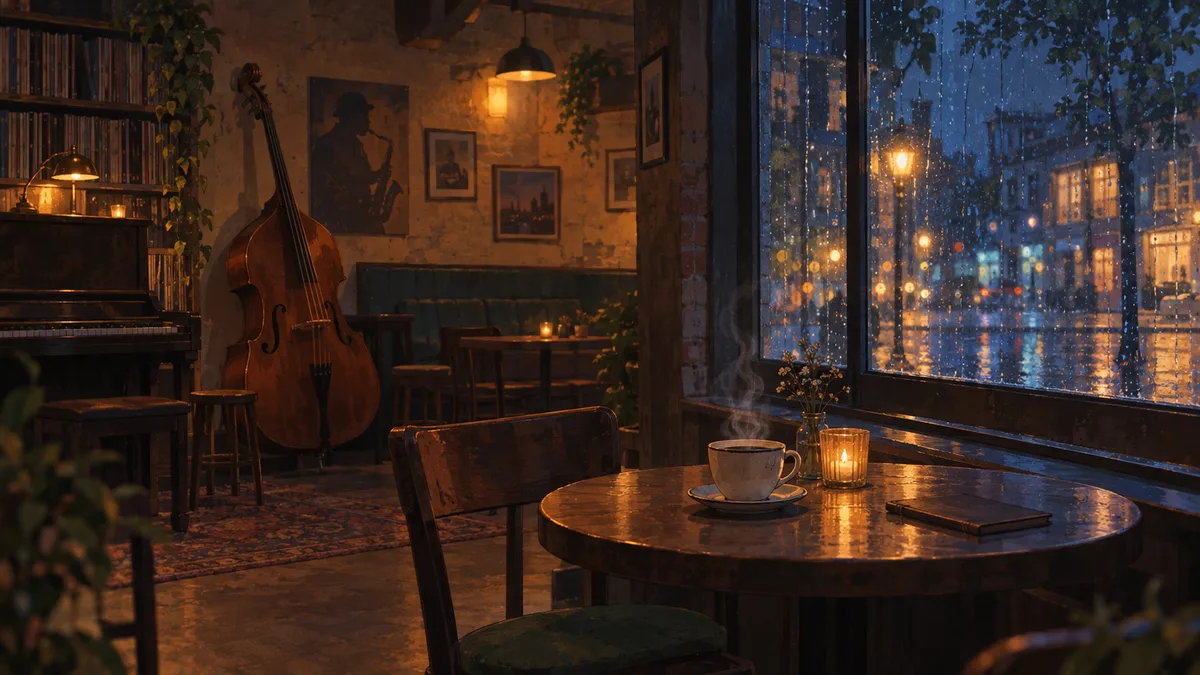
Lofi jazz is lofi with the jazz turned up: warm Rhodes chords, brushed drums, a round upright bass and the odd loop from an old jazz record, slowed down and softened with tape hiss. It is jazzier than most lofi and still quiet enough to keep on while you work. The best places to hear it are Lofi Girl's jazz lofi radio on YouTube and the lofi jazz playlists on Spotify, and the right mix depends on whether it's a cafe morning, a rainy study session or a late night.
What lofi jazz sounds like
Lofi jazz takes more from jazz than the rest of lofi does. You hear it in the chords first, then in the instruments: real-sounding keys, bass and brushes rather than synths and big electronic drums.
It is still built like a beat. A short phrase of two or four chords repeats under a steady groove, with no long solos and no big build-ups. That repetition lets it sit behind your reading or your emails, where a live jazz record would keep pulling your attention.
It helps to place it next to its neighbours:
- Lofi hip hop is the wider family. Some of it is jazzy, some leans on synths, guitar or ambient pads.
- Chillhop and jazzhop overlap heavily with lofi jazz. Chillhop leans smooth and warm, jazzhop puts the hip hop drums up front. My guide to chillhop beats covers that side and the label behind the name.
- Traditional jazz is played live, swings harder and gives players room to stretch out. If that's what you want at bedtime, my guide to jazz music for sleeping is the one to read.
What makes a beat sound jazzy
Seven ingredients make a beat sound jazzy. Once you know them, you can pick them out in most lofi jazz tracks.
- Extended chords. Lofi harmony is built on "major sevenths, minor sevenths, and ninths in place of plain triads", as Flat's guide to lofi chord progressions puts it. Those extra notes are what make a chord sound soft and a little unresolved. The same guide calls the ii V I "the most important progression in jazz", and says lofi leans on it constantly.
- Electric piano. The chords usually sit on a warm, bell-like electric piano in the style of a Rhodes, or on a piano sampled from an old record.
- Upright bass. A round, plucked bass that walks between the chords instead of holding one low note.
- Brushed drums. Brushes on a snare give a soft swish in place of a hard crack. Many tracks keep a lazy hip hop pattern underneath, with the hits landing a fraction late so the groove swings.
- A horn or a lead line. A muted trumpet, a saxophone, a vibraphone or a clean jazz guitar, played in short phrases rather than long solos.
- A slow tempo. Flat suggests slowing a loop "to around 70 to 80 BPM" to get the skeleton of a lofi beat.
- Worn texture. Vinyl noise and tape hiss over the top, which softens the high end and makes the track sound older.
If you'd like to make beats like this yourself, my guide on how to make lofi music starts from zero.
Where the jazz in lofi jazz comes from
A lot of the jazz in lofi jazz began as a sample. Producers took a few bars from an old jazz record, looped them and set hip hop drums underneath.
The name that comes up most is Nujabes, the Tokyo producer who made the soundtrack for the 2004 anime Samurai Champloo. MusicTech's look at his influence says he built on "the melodic explorations of jazz masters like Miles Davis and Pharoah Sanders", and that rather than pull out unrelated snippets, "he preferred to let the original tracks define the chord progressions." The same piece quotes Japanolofi Records: "The essence of such music permeated the world and created the lo-fi hip-hop sound." My guide to Japan lofi follows that thread further.
Not every track is sampled. Some producers play the parts themselves, which is why you'll hear clean new Rhodes chords next to crackly old-sounding ones.
Where to listen to lofi jazz
YouTube and Spotify are the two easiest places to start, and they suit different habits. YouTube is good for leaving one long stream on. Spotify is better when you want to save tracks and build your own list.
YouTube
Lofi Girl runs a dedicated stream called jazz lofi radio, beats to chill/study to. It plays live around the clock, so you can put it on in the morning and leave it.
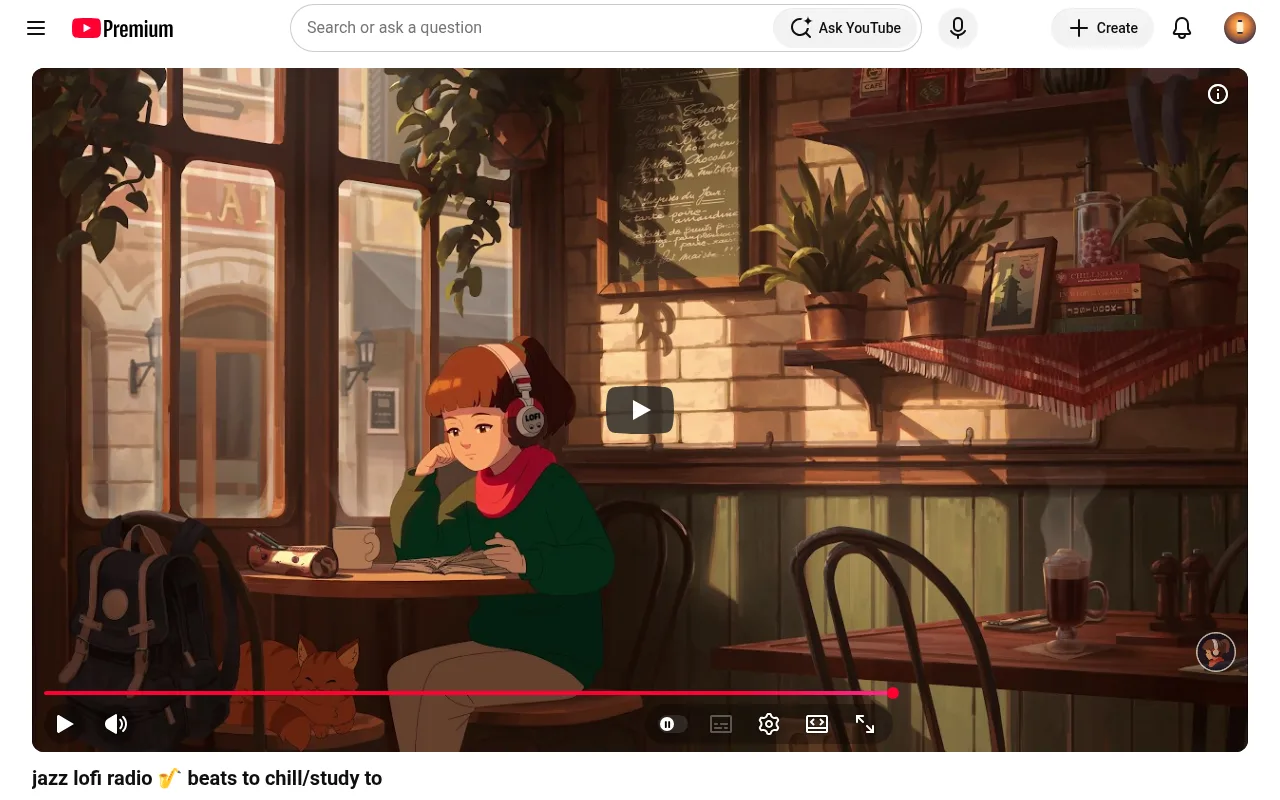
Searching lofi jazz on YouTube also turns up long mixes and playlists, like AcidJazz's Jazzhop & Lo Fi Beat playlist. For more on how the 24/7 streams work and how to pick one, see my guide to lofi livestreams.
Spotify
Spotify has plenty of user-made lofi jazz playlists. lofi Jazz cafe, Study Beats & Chill Vibes by Chill Select is a good one to start with, and its name tells you the mood it's going for.
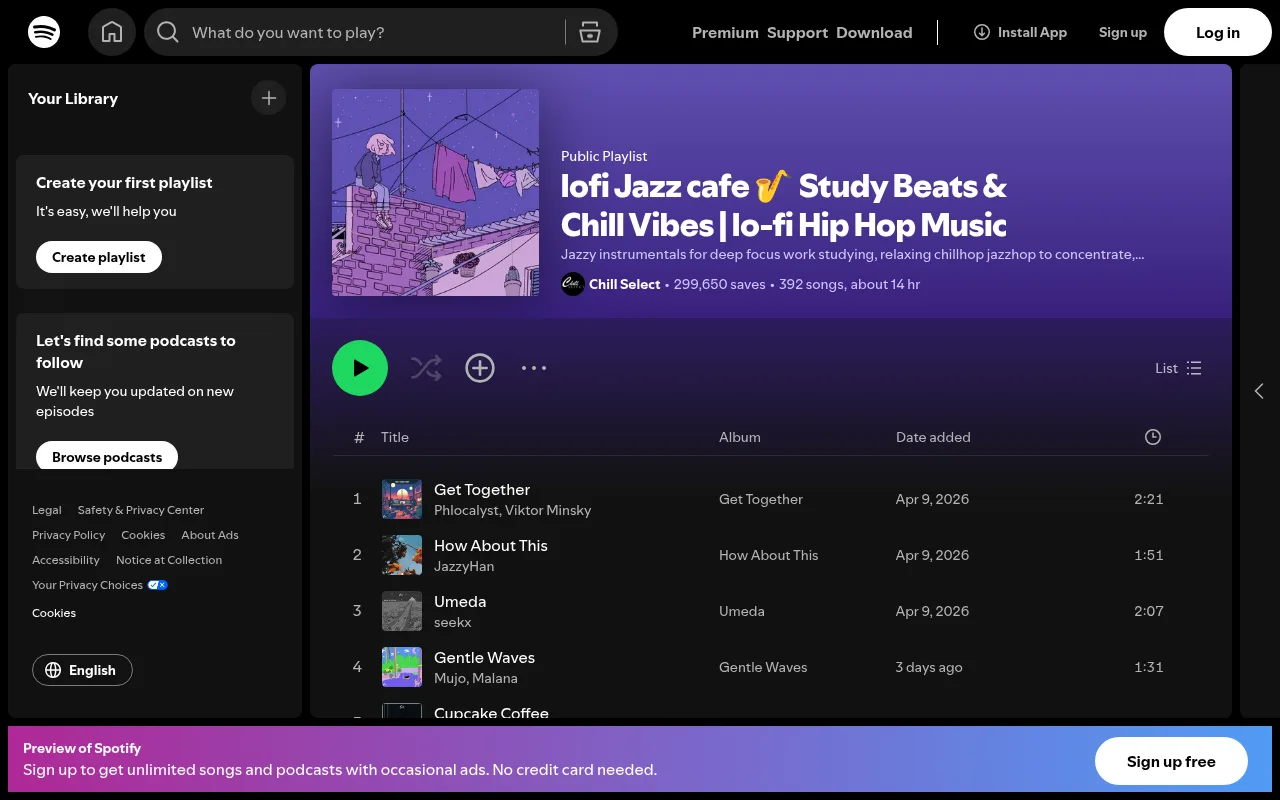
Bigger lists are out there too. PlaylistSupply lists one playlist called Jazz lofi with more than 65,000 followers and nearly 300 tracks. When a track catches you, open the artist's page and follow the thread from there.
Lofi jazz for every mood
Playlist names like "cafe" or "late night" are someone's description, not a measurement, so trust your ears over the label. These are the cues I'd listen for.
| Mood | What to listen for | Good behind |
|---|---|---|
| Cafe mornings | Bright piano or vibraphone, a walking bass, brushes at an easy pace | Writing, emails, cooking |
| Rainy study sessions | Felt-like piano, a quiet upright bass, rain underneath, short lead lines | Reading and study |
| Late nights | A muted trumpet or low saxophone, darker minor chords, more space and vinyl noise | Late work at a low volume |
Cafe mornings
Look for bright piano or vibraphone, a walking bass and brushes at an easy, unhurried pace. Searches like "jazz cafe lofi" or "coffee shop lofi jazz" find this end, and it works well behind writing, emails or cooking.
Rainy study sessions
Go slower and softer: felt-like piano, a quiet upright bass and rain sounds underneath. Pick mixes where the lead lines stay short, which is what you want when you're reading, and skip any track whose horn solo pulls your attention. My page on lofi for studying has more on keeping music out of your way while you think.
Late nights
Late nights suit a muted trumpet or a low saxophone line. Look for darker minor chords, more space between the notes and more vinyl noise, and keep the volume low. If you're winding down to sleep rather than working, the softer, beatless jazz in my jazz music for sleeping guide suits bedtime better.
If you're not sure where to start, put on the jazz lofi radio stream for an afternoon and notice which moments make you look up. It's usually a chord change or a horn line. Then find a playlist that leans that way and let it run.
Build a lofi jazz channel with Chillframe
Lofi jazz suits a faceless YouTube channel well: long stretches of music, a cafe or rainy-window scene and no presenter. People put it on to work, study and unwind, and a warm, consistent look carries a channel a long way.

Chillframe makes the whole video: the music, the scene, the finished video and the upload to your YouTube channel. The music is original and made fresh for each video, so you aren't looping someone else's jazz record, and every plan includes full commercial rights.
Lofi jazz has two moods that people look for separately, morning coffee and rainy evenings, and each one works well as its own Series.
For mornings, take a Jazz Coffeeshop scene like Jazz Café Morning or Café Terrace Light, leave the audio on Instrumental, and schedule it for weekdays at 7am, ready for the first coffee of the day. For evenings, use Rainy Jazz Café or a scene you describe yourself, like a basement club with an upright bass in the corner, and post it on Friday and Saturday nights. With vocals adds singing, and Ambience only gives you cafe sound or rain with no music.
Each Series holds its first video for your approval. Approve it with auto-publish on, and from then on Chillframe automatically writes the music, makes the scene and publishes a fresh video in every slot, fully hands-off, with an optimised title, description and tags.
One thing to know: each video runs up to 1 hour, so a channel that wants to cover a whole working day does it with a growing library of hour-long videos rather than one long upload.
One Series is included on the Starter plan, at $19 a month. Running the morning and evening Series side by side needs the Creator plan, at $49 a month, which allows three and adds gently moving scenes. My guide on how to start a lofi YouTube channel covers everything around the videos themselves.
Lofi jazz FAQ
Is lofi jazz good for studying?
It suits studying well when you pick the right kind. Go for instrumental tracks with a steady beat, warm chords and short melodies, and skip mixes with long horn solos or vocals, which pull at your attention.
What is the difference between lofi jazz and jazzhop?
The two names overlap so much that many playlists use both. Jazzhop puts the weight on hip hop drums under jazz samples. Lofi jazz is the same family with more of the soft, worn lofi texture, like tape hiss and vinyl noise, and it is often slower.
What instruments are in lofi jazz?
Usually a Rhodes-style electric piano or a sampled acoustic piano, a round upright bass, soft drums played with brushes or a lazy hip hop pattern, and now and then a muted trumpet, a saxophone, a vibraphone or a clean jazz guitar.
Can I use lofi jazz from YouTube in my own videos?
Only if the licence says you can. Every track on a stream or playlist belongs to its artist or label, and putting it in your own video without permission can bring a copyright claim. Use music you made, music licensed for that use, or music made for your channel.