Listening
Lofi Classroom Music: When to Play It, How Loud and Where to Find It
For teachers choosing music for a room of kids: when lofi helps, how loud to play it, why lyrics are out, and how to stop an ad or a school filter breaking the calm.
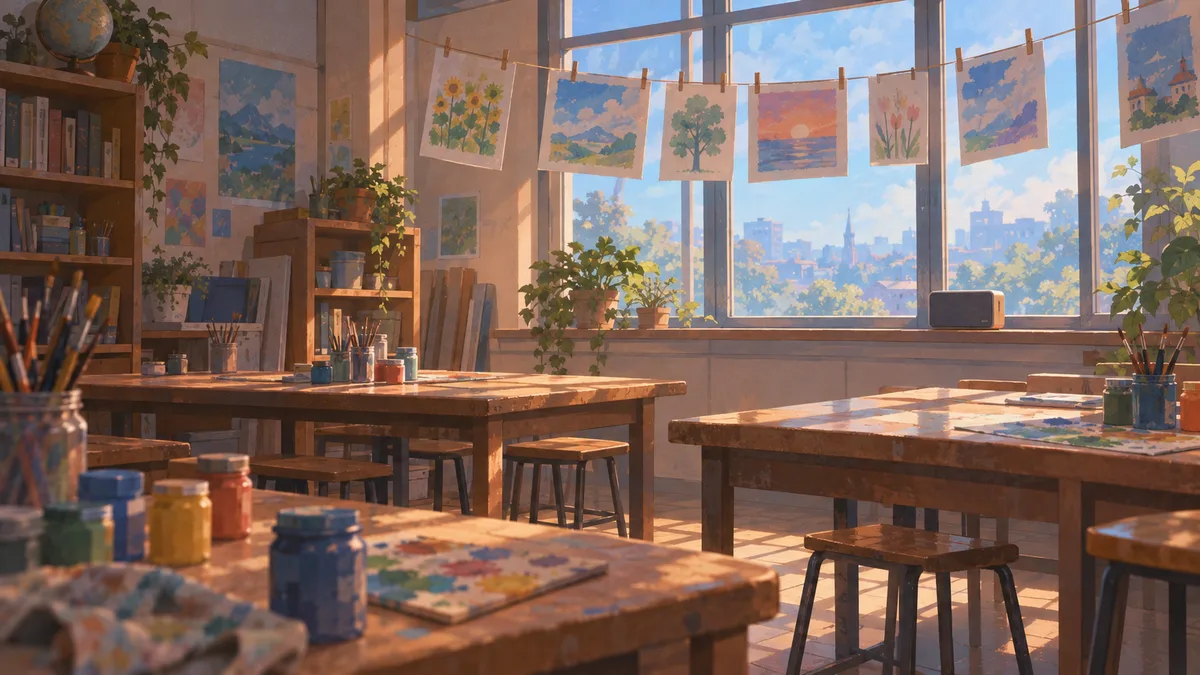
Lofi classroom music is soft, instrumental lofi played quietly while a class works: during silent reading, independent tasks, art or the tidy-up at the end of a lesson. It works because it has a steady beat, no lyrics and no sudden changes, so it settles a room without pulling attention away from the work.
Why lofi suits a classroom
Most music is made to be listened to. Lofi is made to sit in the background. A short run of soft chords repeats over a relaxed beat, with no big build-ups and no drop, so nothing in it asks for attention.
The bigger reason is the lack of words. In a study by Nick Perham and Harriet Currie at Cardiff Metropolitan University, 30 students did a reading comprehension task in quiet, with instrumental music, and with songs that had lyrics. They did worst with the lyrical songs, whether they liked the songs or not, and there was no significant difference between quiet and instrumental music. It was a small study of university students, not children, but the lesson carries over to a classroom: words in the music compete with words on the page.
So the rule is clear. If the class is reading or writing, the music has no lyrics.
When to play lofi in class
Lofi earns its place at certain points in a lesson and gets in the way at others. These are the moments where it tends to help:
- Silent reading and independent work. The steady sound covers small noises like chairs and pencils without adding anything to listen to.
- Art and making. Hands are busy and talk is quiet, which is where lofi feels most natural.
- Arrival and settling. Music already playing as the class comes in sets the tone before you say a word.
- Transitions and tidy-up. A track that starts when the tidy-up starts gives the room a shared signal, and a timed track tells everyone when it ends.
- Rest after a busy break. A few minutes of slow music with the lights down can bring the energy back to a workable level.
Turn it off when you're teaching, when the class is discussing, or when a task needs everyone to listen to each other. Music that's always on stops being a signal.
How to choose lofi classroom music
Not every lofi track is right for a room of children. Before a video or playlist goes on the classroom speaker, I'd check four things.
- No vocals. Some lofi has chopped vocal samples or full verses. Skip those for reading and writing time.
- A steady sound. Look for tracks that stay at one level, with no sudden drums, sirens or loud samples. Rain and soft piano work well, and heavy bass drops do not.
- Calm visuals. If the video is on the board, the picture matters too. A still or slow scene of a library, a rainy window or a desk keeps eyes on the work. Flashing text and fast cuts do the opposite.
- Clean content. Video titles, thumbnails and the occasional sample can carry things you'd rather not project. On Spotify, switch off explicit content in Settings and anything tagged explicit is greyed out and skipped.
For volume, a good test is your own voice. You should be able to speak at a normal level and be heard, and two students should be able to whisper without raising theirs. If you catch yourself talking over the music, it's too loud.
Where to find lofi classroom music
YouTube and Spotify are the two easiest places to start. YouTube is handy when you want something on the board as well as the speaker. Spotify is better for building your own list and keeping it free of surprises.
| YouTube | Spotify | |
|---|---|---|
| Best for | Something on the board as well as the speaker | Building your own list with no surprises |
| Classroom picks | Hour-long working music, short teacher playlists, timed lofi tracks | Playlists made for classrooms |
| Ads | Mid-roll ads on monetised videos of 8 minutes or longer; Premium removes them | Premium lists ad-free listening |
| Watch out for | Autoplay starting another video, and the school filter | Explicit tracks, unless you switch off explicit content |
YouTube
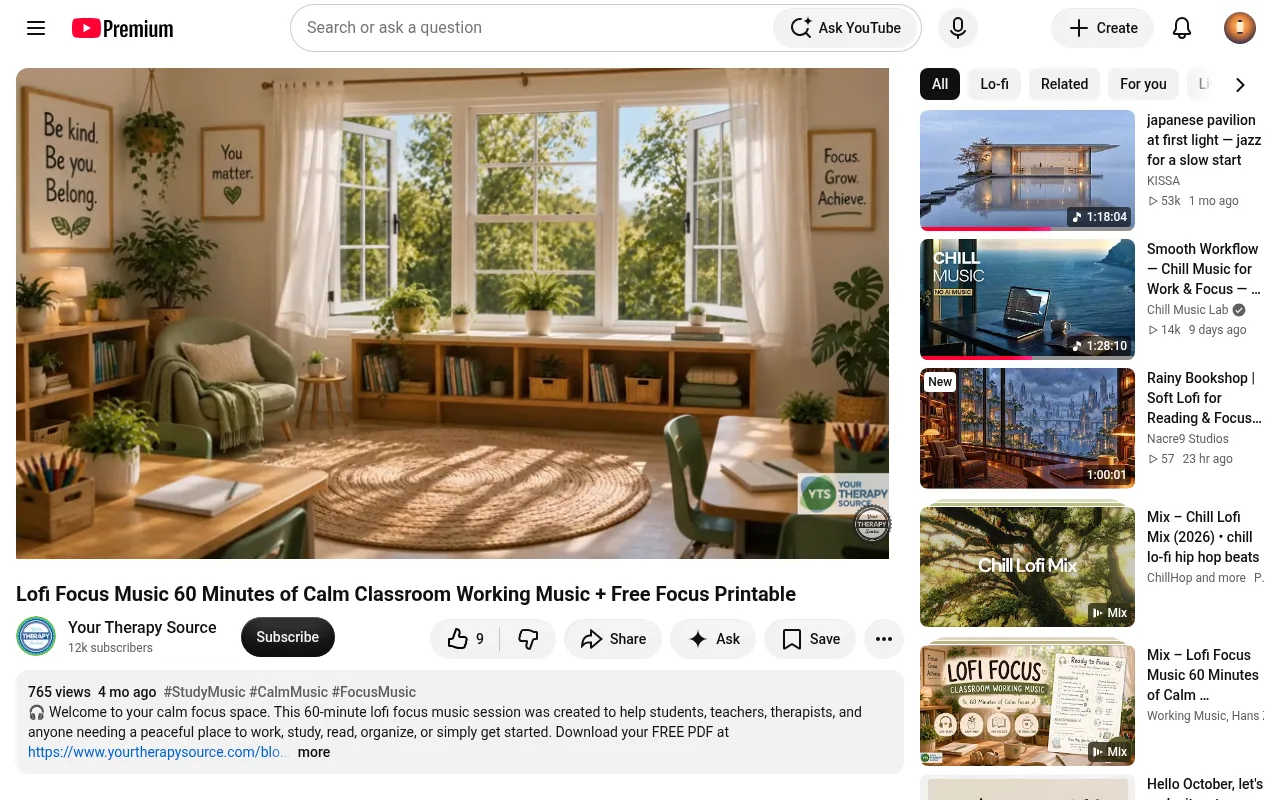
Search "lofi classroom music" and you'll find videos made with teachers in mind. Lofi Focus Music 60 Minutes of Calm Classroom Working Music by Your Therapy Source is a good example: one hour, a calm look and a clear purpose in the title.
There are short playlists too, like Miss Alyssa's LoFi Classroom Music. For music that runs all day, the 24/7 streams in my guide to lofi livestreams are worth a look, though a fixed-length video is easier to plan a lesson around.
Spotify
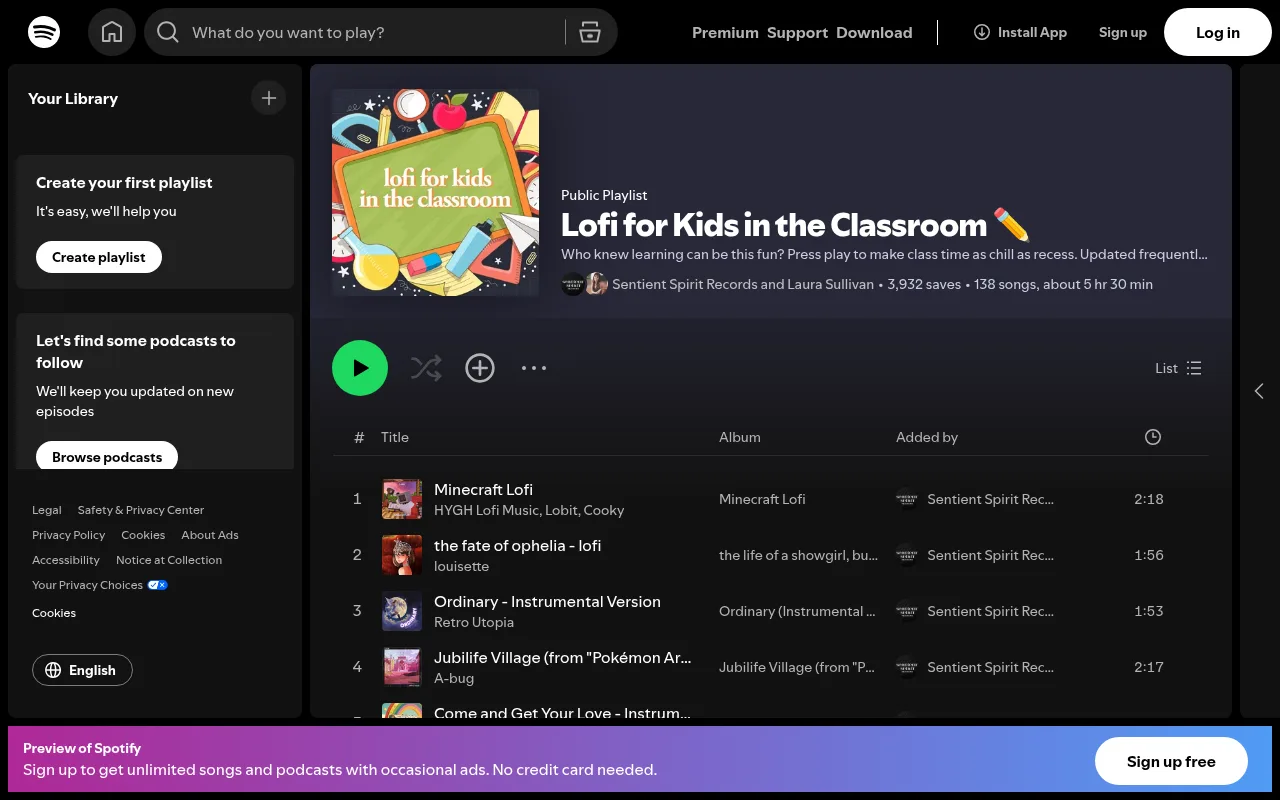
Spotify has user-made playlists built for classrooms. Lofi for Kids in the Classroom by Sentient Spirit Records and Laura Sullivan is one to start with, and the LoFi Classroom Playlist by cvgarcia88 is another.
Once you've found tracks that work, save them into a playlist of your own. That way you've heard every track before the class does.
My page on lofi for reading has more on music behind a book, and the lofi for studying page covers older students working on their own. When December comes, my guide to lofi Christmas music has the festive version.
Timed lofi tracks for activities
A timed track does two jobs at once. It plays calm music, and it tells the class how long they have left. When the music stops, the activity ends, so the class knows without you saying so.
YouTube has plenty of these. Milli Lofi Timer has a 10 minute lofi timer playlist made for classrooms, and Chill Countdown Timers has a 20 minute study timer with lofi music. Search the length you need with "lofi timer" and you'll usually find one.
A few ways to use them:
- 10 minutes for a quick write, a tidy-up or a reading warm-up.
- 20 to 30 minutes for a block of independent work or a stretch of art.
- 1 hour for a long practical lesson, where the music only needs to hold the mood.
For a first try, pick one quiet activity, line up a timed lofi track that matches its length and play it low. Watch how the room settles while it plays, and use the end of the music as the end of the task.
Keeping ads out of the lesson
An ad halfway through silent reading breaks the calm of the room. Long videos are where this happens: YouTube lets channels place mid-roll ads on monetised videos that are 8 minutes or longer.
These steps keep the room quiet:
- Use an ad-free account if you have one. YouTube says Premium members "can enjoy watching YouTube ad-free", and Spotify lists "ad-free music listening" as a Premium feature.
- Preview the video. Skim through it before the lesson to spot any ad breaks.
- Switch off Autoplay. On a computer, the Autoplay switch sits at the bottom of the YouTube player. With it on, another related video plays after the one you chose ends, which may not be one you'd want on the board.
When the school filters YouTube
If a video works at home and not at school, the school's filter is usually the reason. Schools on Google Workspace can restrict YouTube for their users, with a Strict level and a more open Moderate level. A restricted account sees a message that the video isn't available.
There are two ways through. An administrator can approve the video, or make you an approver. And if your school turns on Verified Google Classroom teachers can approve videos, you can approve it yourself. YouTube's Restricted Mode can also be turned on by a network administrator, and it screens out videos that may be mature.
The simple fix is to test each video on your school account, on the school network, before the lesson it's for. If it's blocked, you have time to ask for approval or pick another.
Run a lofi classroom music channel with Chillframe
Teachers look for calm, timed lofi on YouTube all through the school year, and classroom and study lofi is a growing corner of the site. A faceless channel with a clear purpose and a steady look can become the one a teacher opens before every lesson.
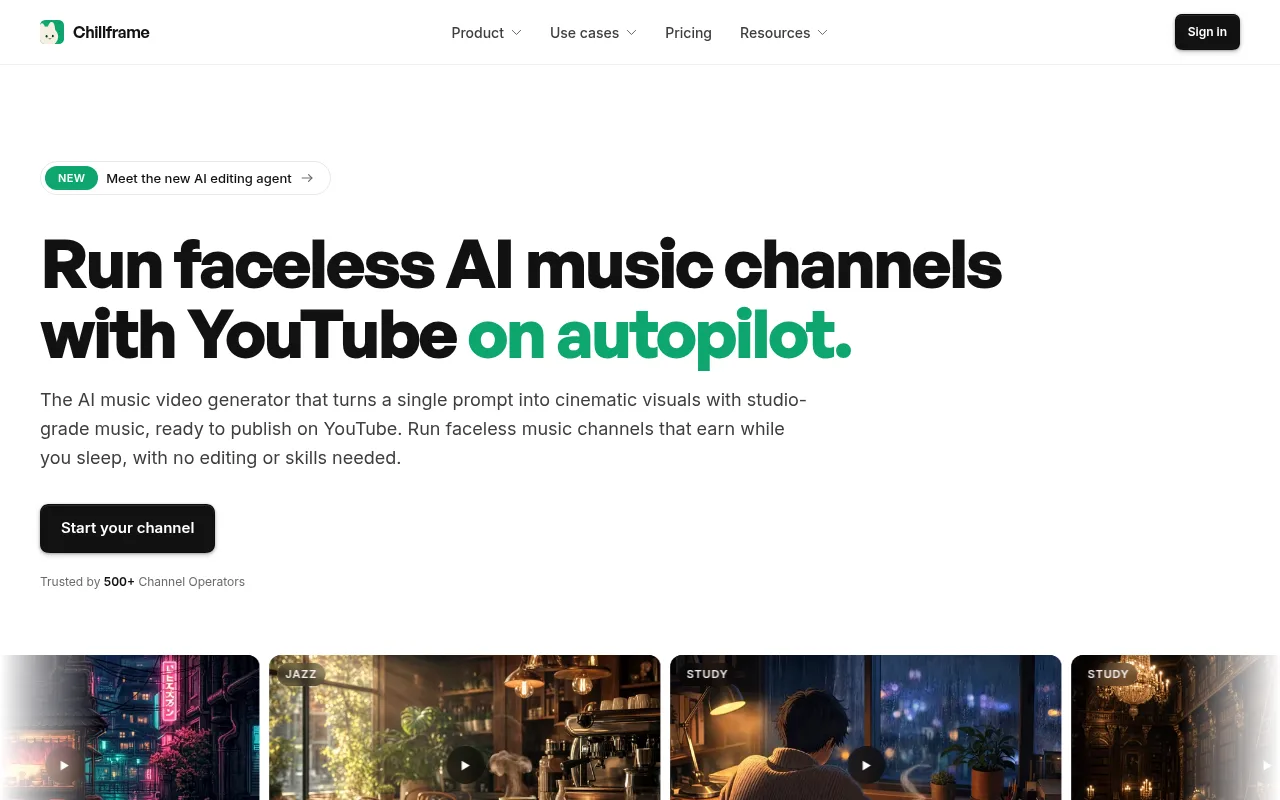
Chillframe makes these videos for you. It writes original music, makes a calm scene to match, puts them together into a finished video and publishes it to your YouTube channel. Instrumental, with no singing, is the default, which is what a reading lesson needs.
A classroom channel runs on the school timetable, so I'd build it around the first lesson of the day:
- Choose a study scene that reads well on a classroom screen, like Pixel Cozy Study, Voxel Cozy Library or Flat Illustrated Study, or describe your own, like a sunlit art room with paint jars on the tables.
- Decide what the video is for. A 10-minute video covers a tidy-up or a starter task, and an hour covers a whole lesson of quiet work.
- Schedule a Series for Monday to Friday at 7am, so a new video is up before registration.
Chillframe holds that first video back for you to watch. Approve it, keep auto-publish on, and every weekday morning after that a fresh video goes up with its title, description and tags written, fully hands-off. Nothing needs making the night before.
The limit to plan around is length. The choices are 1, 10 and 30 minutes or 1 hour, so there's no 20-minute track and nothing runs past an hour. For a 20-minute block, put two 10-minute videos in a playlist.
Still scenes keep a board calm in front of a class, and they're what the Starter plan makes, at $19 a month. Moving scenes start on the Creator plan at $49. My guide on how to start a lofi YouTube channel covers the whole road.
Lofi classroom music FAQ
Is lofi music good for a classroom?
Yes, for quiet work. It has a steady beat, no big build-ups and usually no lyrics, so it settles a room without asking for attention. Play it during reading, independent tasks, art and tidy-up, and turn it off when you're teaching or the class is talking together.
Should classroom music have lyrics?
Not while the class is reading or writing. In Perham and Currie's study, students did worst on a reading task with lyrical songs, and instrumental music did no worse than quiet. Save songs with words for moments when nobody is reading.
How loud should music be in a classroom?
Quiet enough that you can speak at a normal level and be heard. Two students should be able to whisper without raising their voices. If you catch yourself talking over it, turn it down.
How do I stop ads playing in a YouTube video during class?
The surest way is an ad-free account, such as YouTube Premium. Without one, skim the video before the lesson, because channels can place mid-roll ads in monetised videos of 8 minutes or longer. Switch off Autoplay too, so another video doesn't start when yours ends.
Why won't a YouTube video play on my school account?
Usually your school restricts YouTube through Google Workspace and that video hasn't been approved. Ask an administrator to approve it or to make you an approver. Test each video on your school account and network before the lesson, so there's time to sort it out.