List
The Best Sources for Copyright Free Lofi Music for YouTube Videos
Navigate the complex landscape of copyright rules and find safe, high-quality lofi beats for your channel.

Plenty of creators building faceless study channels spend hours searching for copyright free lofi music for YouTube videos, only to have their work flagged by automated systems. Lofi describes a style of production, with tape hiss, vinyl crackle and relaxed tempos. It is not a legal status. Download a random chill track from a forum and you risk losing your ad revenue to a Content ID claim.
If you'd rather skip that work altogether, Chillframe does it for you. It makes the music and visuals, puts the video together and publishes it to your YouTube channel on the schedule you set. You get a faceless channel that runs itself and watch-time that compounds, with no searching, editing or uploading by hand.
Quick answer: is lofi music copyright free?
No, lofi music is not copyright free by default. Copyright law protects every original composition and sound recording from the moment it's made. Unless the artist waives their rights or releases the track under a specific licence, you can't legally use it in your videos.
The terms are worth knowing:
- Copyright-free: the creator has given up all rights, often putting the work in the public domain.
- Royalty-free: you pay a one-time fee, or use a free tier, to get a licence with no ongoing royalties per view.
- Creative Commons: free to use, but usually with a specific attribution.
- Licensed: a formal agreement where the rights holder allows synchronisation.
Don't rely on blanket "zero claims" promises from third-party sites. Check the terms of every single track before you upload.
Best copyright-safe lofi music sources for YouTube
Several platforms give you clear, structured licences rather than vague promises. The YouTube Audio Library is the platform's own benchmark and has its own section further down this page. The independent libraries below fill the gaps in its catalogue.
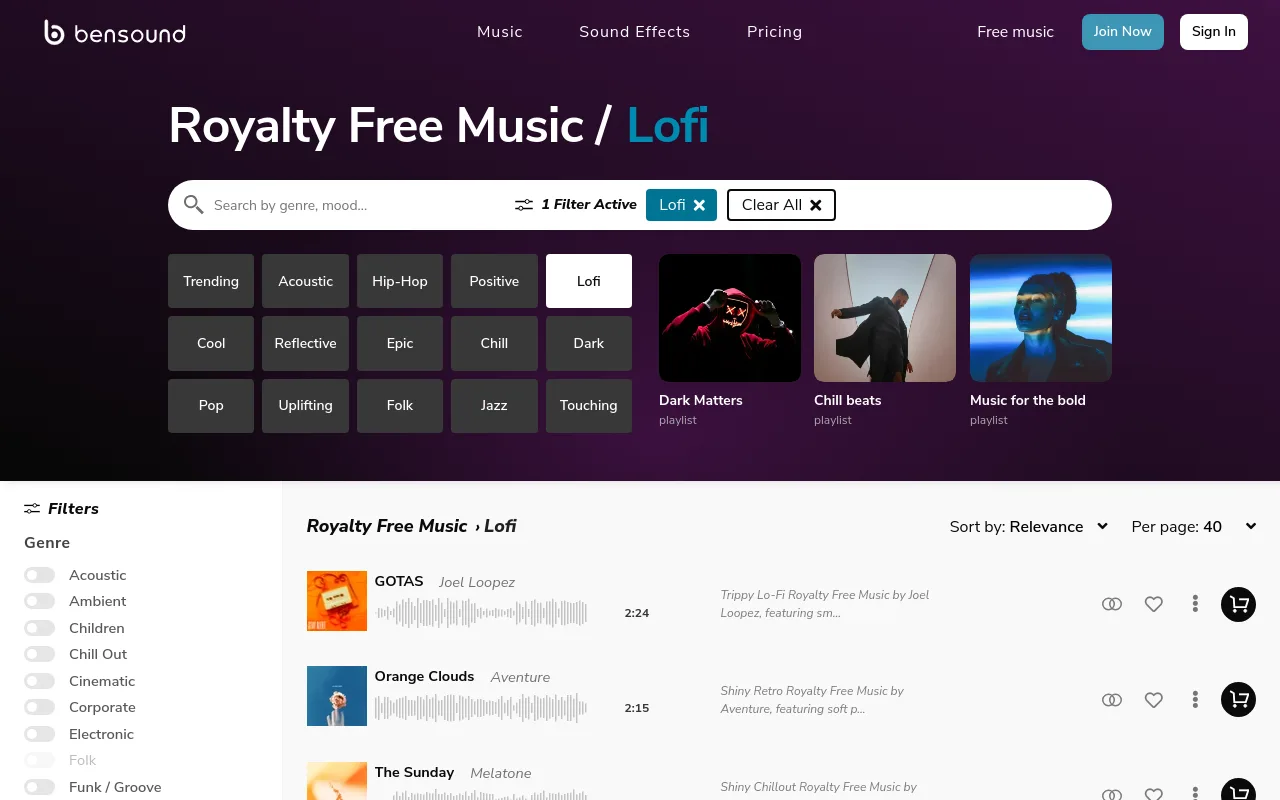
Bensound
Bensound offers a tightly curated collection. Its lofi page lists 71 tracks suited to corporate videos, vlogs and background audio.
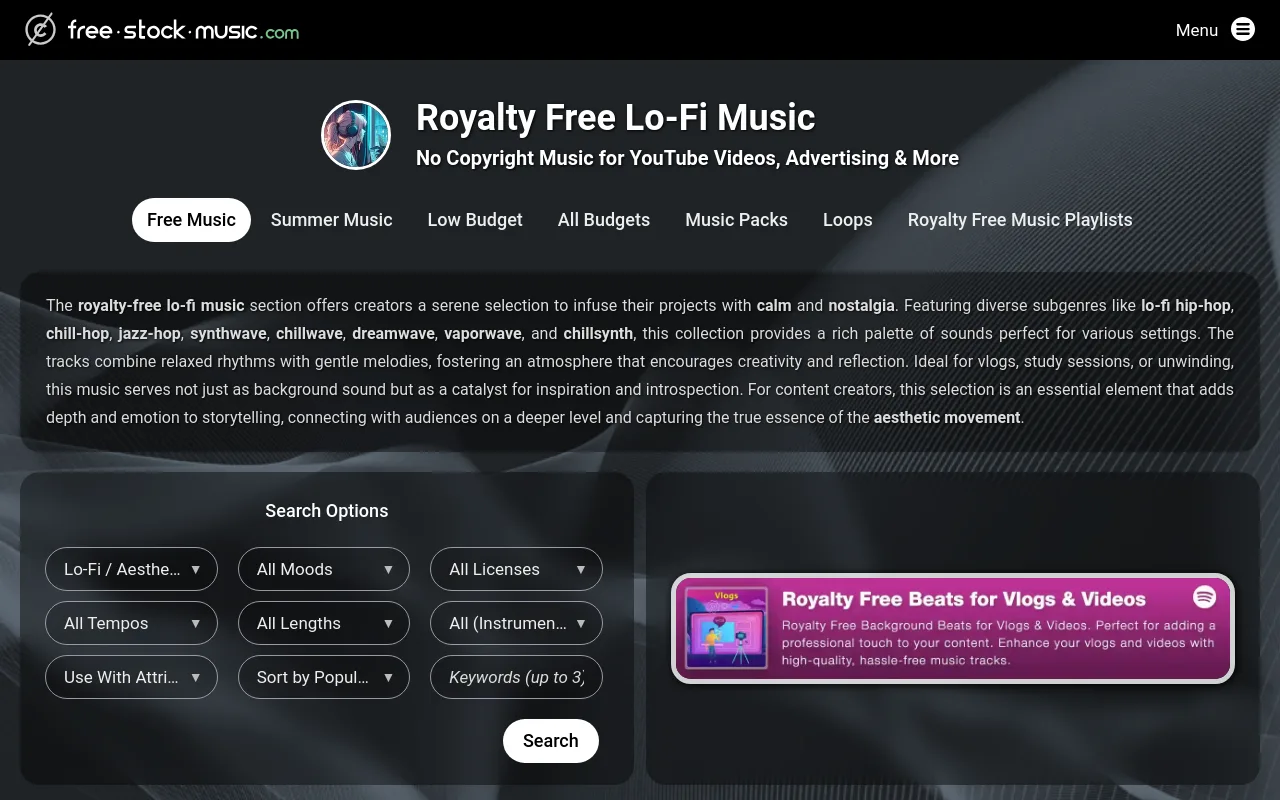
Free Stock Music
If you need a wider range of subgenres, Free Stock Music is a useful resource. Its lofi page lists 609 total tracks across several Creative Commons licence filters, so finding a specific tempo is easy.
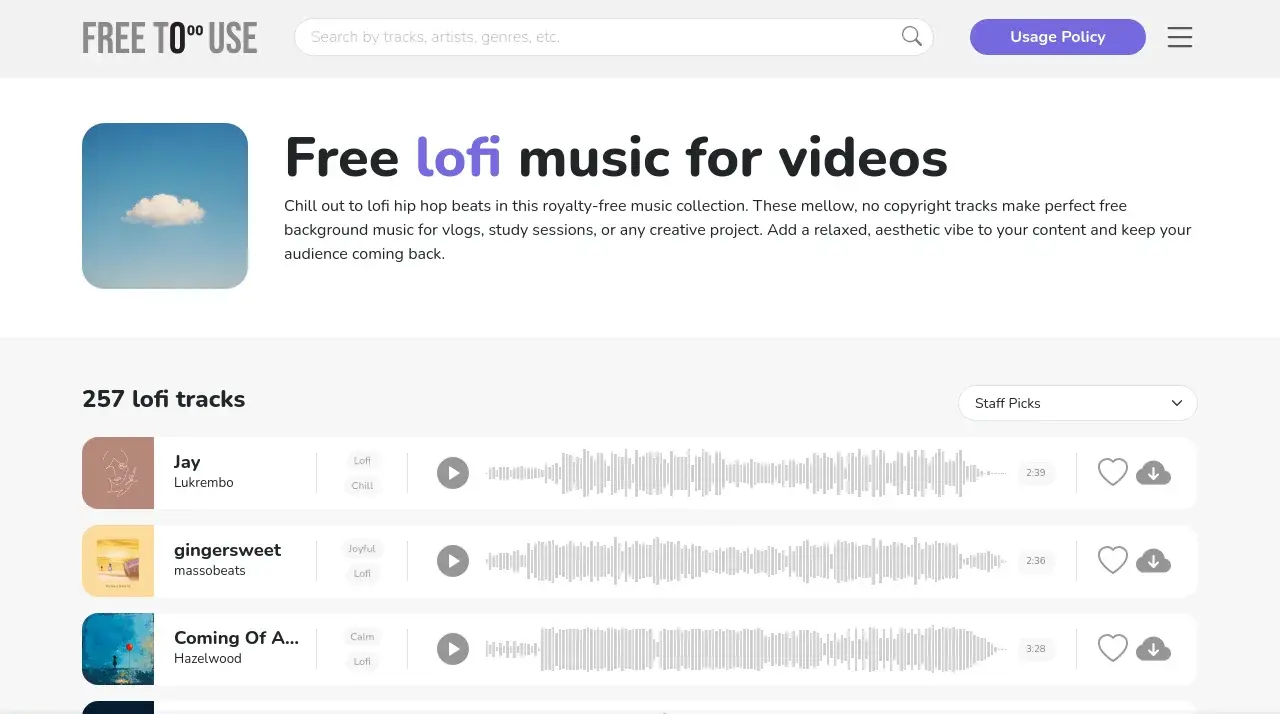
Free To Use
Free To Use is a popular choice for modern vlogs and travel content. Its lofi category lists 257 lofi tracks you can download for free, as long as you follow the platform's attribution policy.
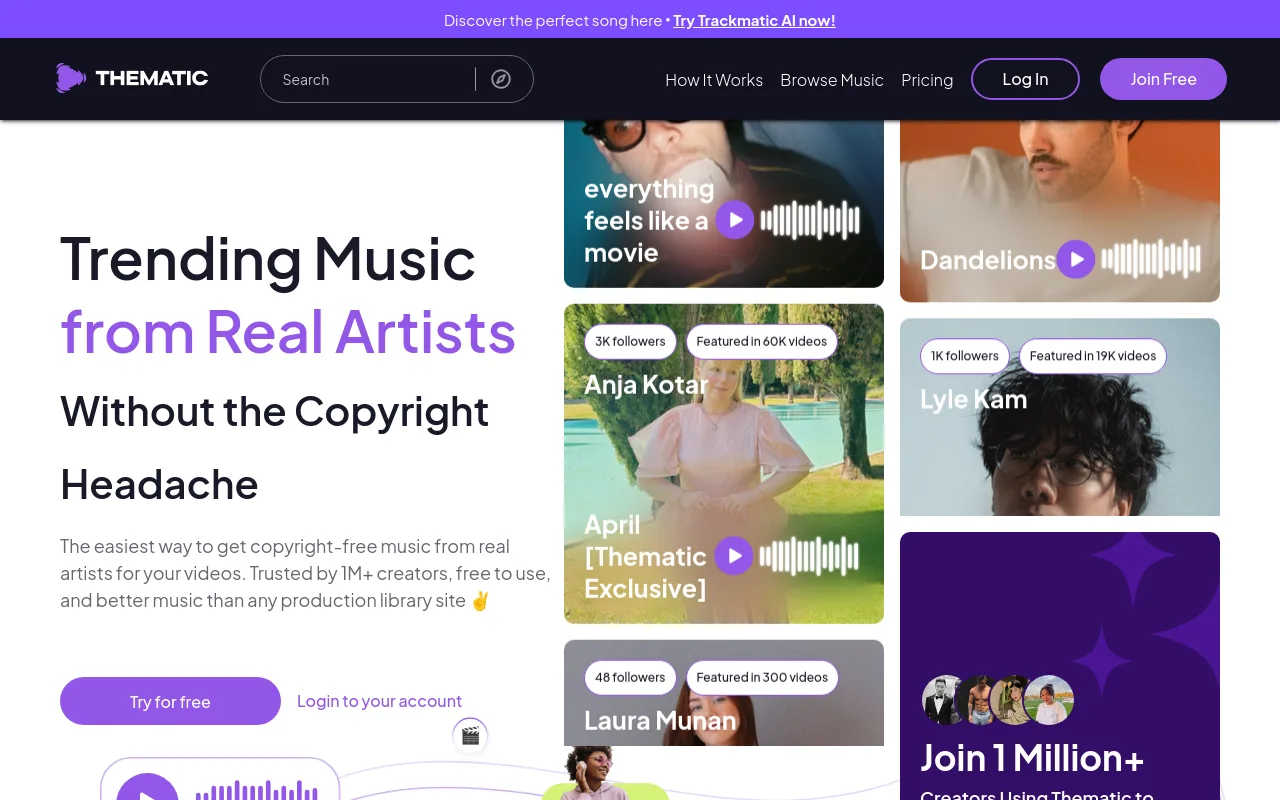
Thematic
Thematic works differently. It matches creators with independent artists in return for social promotion. Each track you request comes with a unique licence link tied to your channel, and that link is what clears it in Content ID.
Pixabay
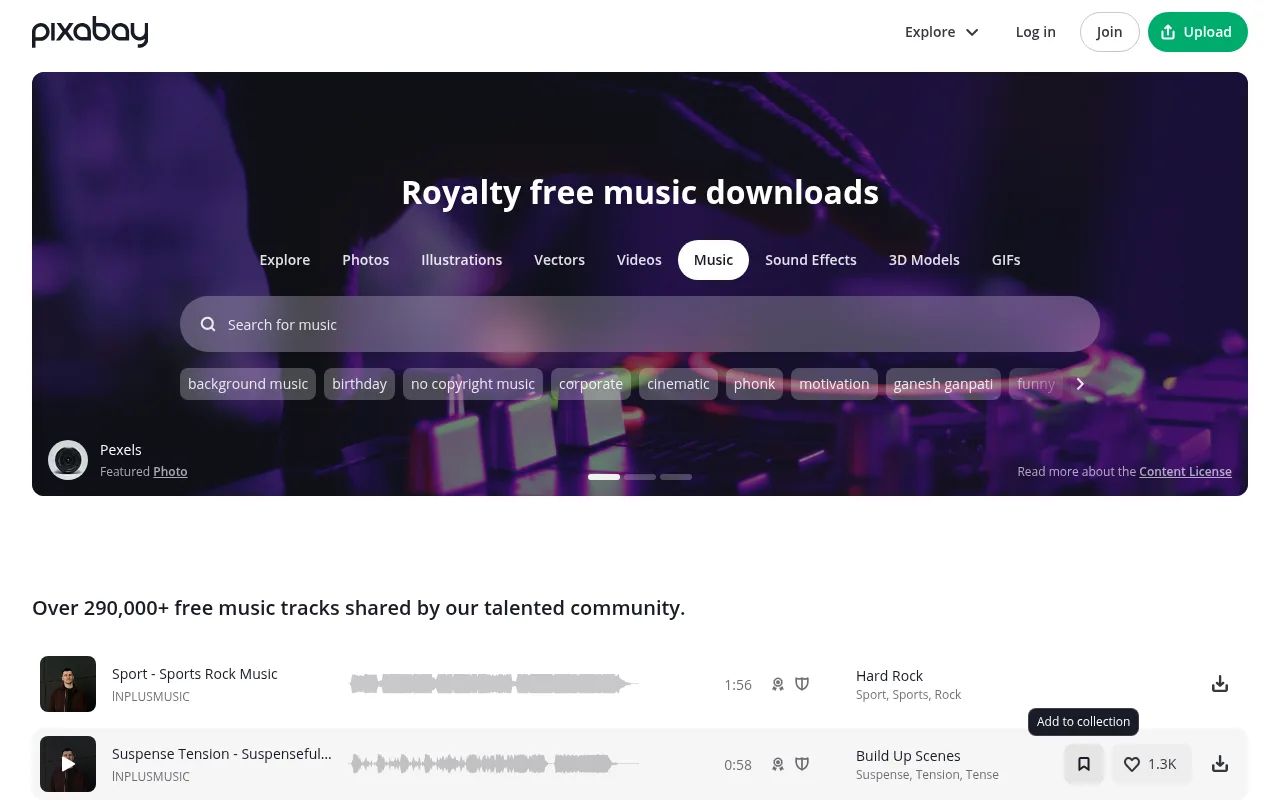
Pixabay has a searchable lofi catalogue with public-domain-style licences that need no attribution. Anyone can upload to it, so check each track's own page rather than assuming the site-wide licence covers everything you download.
When choosing background music for YouTube videos, match the source to your format:
- A 10-hour study stream needs loop-friendly instrumental beats, like the ones on Free Stock Music.
- A fast-paced vlog does better with the vocal-accented tracks on Thematic.
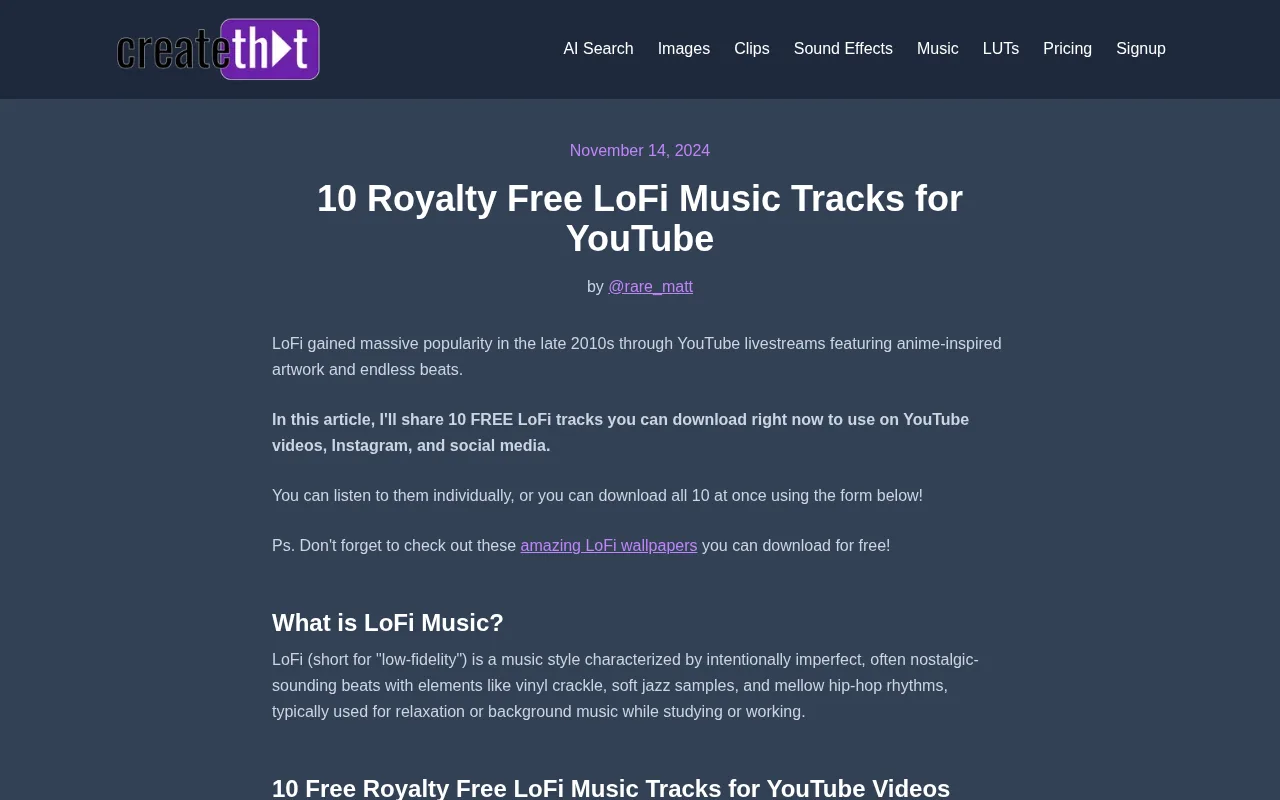
For a quick shortlist, CreateThat's roundup has 10 free royalty-free lofi tracks worth a listen. You can also look at AI video generation tools to turn these audio files into finished visual content.
Lofi music license comparison table
The table compares the licensing terms, attribution rules and monetisation rules for the top lofi music sources.
| Source | License Type | Attribution Required? | Monetization Allowed? | Content ID Process | Terms Link |
|---|---|---|---|---|---|
| YouTube Audio Library | Custom Platform License | Only for CC-BY tracks | Yes, fully supported | Claims rare, dispute if one lands | YouTube Terms |
| Bensound | Free with Attribution / Pro | Yes, on free tier | Yes, with Pro or Attribution | Whitelist channel | Bensound Licensing |
| Free To Use | Custom Usage Policy | Yes, exact copy-paste text | Yes, with correct credit | Manual review on appeal | Free To Use Policy |
| Free Stock Music | Creative Commons (various) | Yes, depends on CC type | Yes, under specific CC terms | Varies by artist | Free Stock Terms |
| Thematic | Creator License | Yes, unique license link | Yes, for registered channels | Automatic clearance | Thematic Terms |
Verdict:
- Safest with no attribution: the YouTube Audio Library is the best place to start.
- Distinctive, modern beats: Bensound and Free To Use have excellent catalogues that set your channel apart, as long as you follow their whitelisting and credit rules carefully.
YouTube Audio Library: the safest starting point
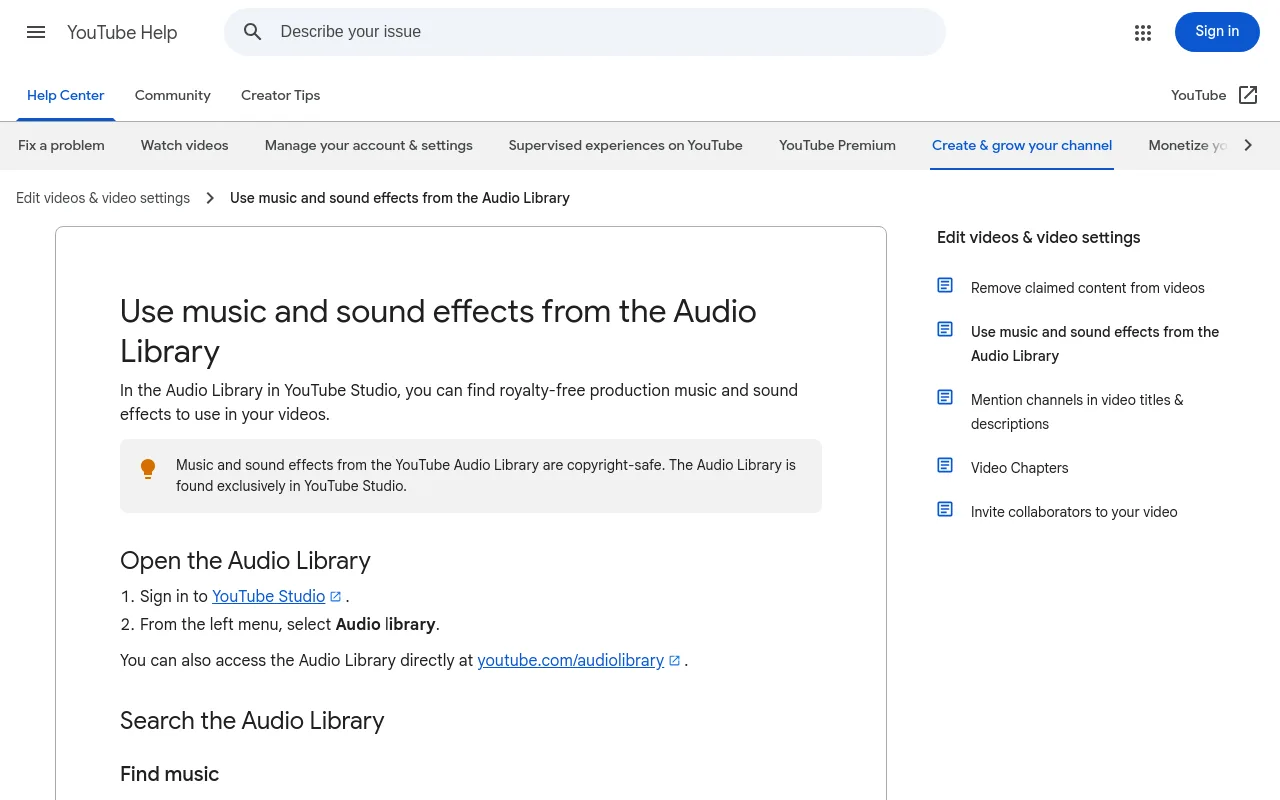
The YouTube Audio Library is the lowest-risk place to start for any creator who earns through the YouTube Partner Program. YouTube provides these tracks for your videos under the licence shown next to each one, which is why they rarely trigger Content ID.
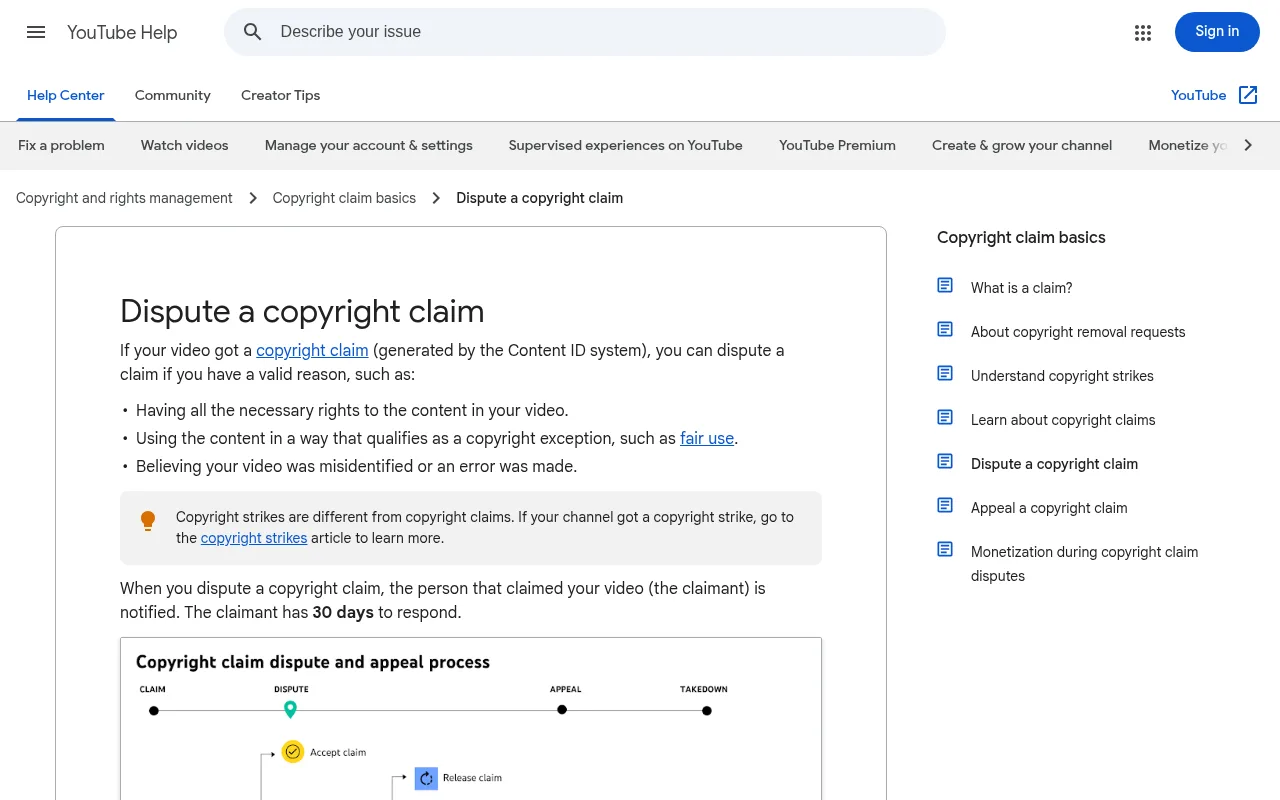
Claims can still happen, usually when a track has been sampled elsewhere or a rights holder registers a work by mistake. So keep the download record for anything you publish, and use YouTube's dispute flow if a claim ever appears on one of your videos.
The library is updated regularly to keep the content fresh. YouTube says new releases are added twice a month, so there's a steady supply of fresh chill-hop beats. Watch the licence icon next to each track:
- The standard YouTube Audio Library icon: no attribution needed.
- The Creative Commons Attribution (CC-BY) icon: paste the artist's credit details into your video description.
The library itself is very safe. YouTube is clear, though, that it doesn't vouch for third-party libraries or other YouTube channels that claim to offer copyright-free music. If you use music from outside the official library, you do so at your own risk.
How to verify a free third-party lofi track before publishing
Set a strict check for every outside track you download, so future claims can't catch you out. Never assume a track labelled "no copyright" on a forum is safe.
- Record the details. Open the track's own page on the provider's site and note the licence URL, the artist's name, the download date, the exact attribution text and the platforms it's allowed on. Some licences only cover YouTube, so cross-posting the video to Instagram or TikTok could bring claims.
- Confirm commercial use separately. Permission to download is not permission to monetise. Many sites let you download tracks for personal listening but need a paid subscription for commercial use.
- Check the provider's technical requirements. Find out whether you need to register your channel ID, create an account, include a specific promotional link or go through whitelisting. Bensound, for example, uses channel whitelisting to prevent automated claims.
If you plan to post a lot, an AI music generator can make this check much simpler, because it gives you clear, standard usage rights.
How to credit lofi music in a YouTube description
When a licence asks for attribution, paste the exact credit format the provider gives you. Getting it wrong can bring an automated Content ID claim.
Use the provider's own credit text when there is one. If there's no template, record your permission in the description with these five lines:
- Music: the track title followed by the artist name.
- Source: the URL of the track page you downloaded from.
- License: the license name, for example Creative Commons Attribution 4.0 International (CC BY 4.0).
- License link: the URL of the license terms.
- Promotional link: any link the provider requires you to include.
A credit on its own doesn't replace a licence or permission. If you don't have the legal right to use a track, putting the artist's name in the description won't protect your video from a copyright strike.
Can you monetize a YouTube video with lofi music?
Yes, you can monetise a YouTube video with lofi music. What decides it is the licence and the provider's terms, not the generic phrase "no copyright".
It's important to keep Content ID claims and copyright strikes apart, because they mean very different things:
- A Content ID claim is an automated notice that a rights holder has found their music in your video. Usually ads run on the video and the revenue goes to the artist. It isn't a penalty against your channel.
- A copyright strike is a formal legal request to take your video down for unauthorised use, and it can hurt your channel's standing.
If a licensed track gets an automated claim, don't panic. You can resolve it with the YouTube Studio dispute tool, using this evidence:
- The original license certificate or receipt.
- The specific track ID and artist name.
- The URL of the license terms from the provider.
- Proof of your channel-whitelisting status.
To avoid these disputes altogether, an audio to video AI generator can speed things up by pairing custom visual loops with pre-cleared audio.
Choose the right lofi sound for your video
Choosing the right sound keeps viewers listening and builds watch-time for your channel. Match the music to the kind of video you're making:
- Study, work and focus: mellow instrumental beats with little mid-range and soft percussion, so they don't distract the listener.
- Long background audio (3-hour relaxation videos, 24/7 livestreams): loop-friendly beats with clean transition points. Avoid sudden tempo changes or loud vocal tags.
- Vlogs, gaming highlights and tutorials: more rhythmic chill-hop, with slightly faster tempos (around 80 to 90 BPM) and light vocal chops to keep the energy up.
Before you finish your edit, check the track's length, loop points and mood. Then make sure the licence allows editing, cutting or remixing.
And don't mistake a curated YouTube playlist or a live stream for a reusable synchronisation licence. A track playing on a popular stream doesn't give you the legal right to download and reuse it.
Optional alternative: generate original lofi music with AI music tools
If you want to skip the risks of third-party licensing entirely, making your own original lofi music with AI music tools is a strong alternative. A track made for you isn't sitting in a shared library that thousands of other channels download too, so your audio won't clash with an upload someone else published first. Commercial rights still come from the provider's terms, not from the fact that a machine made the track, so read your plan before you monetise.
AI music tools make unique instrumental tracks to fit your video's exact length and mood. If you'd rather learn the craft yourself, making your own lofi music removes the licensing question at the source. A comparison of the best royalty free AI music generators shows how licensing terms differ between platforms.
Chillframe
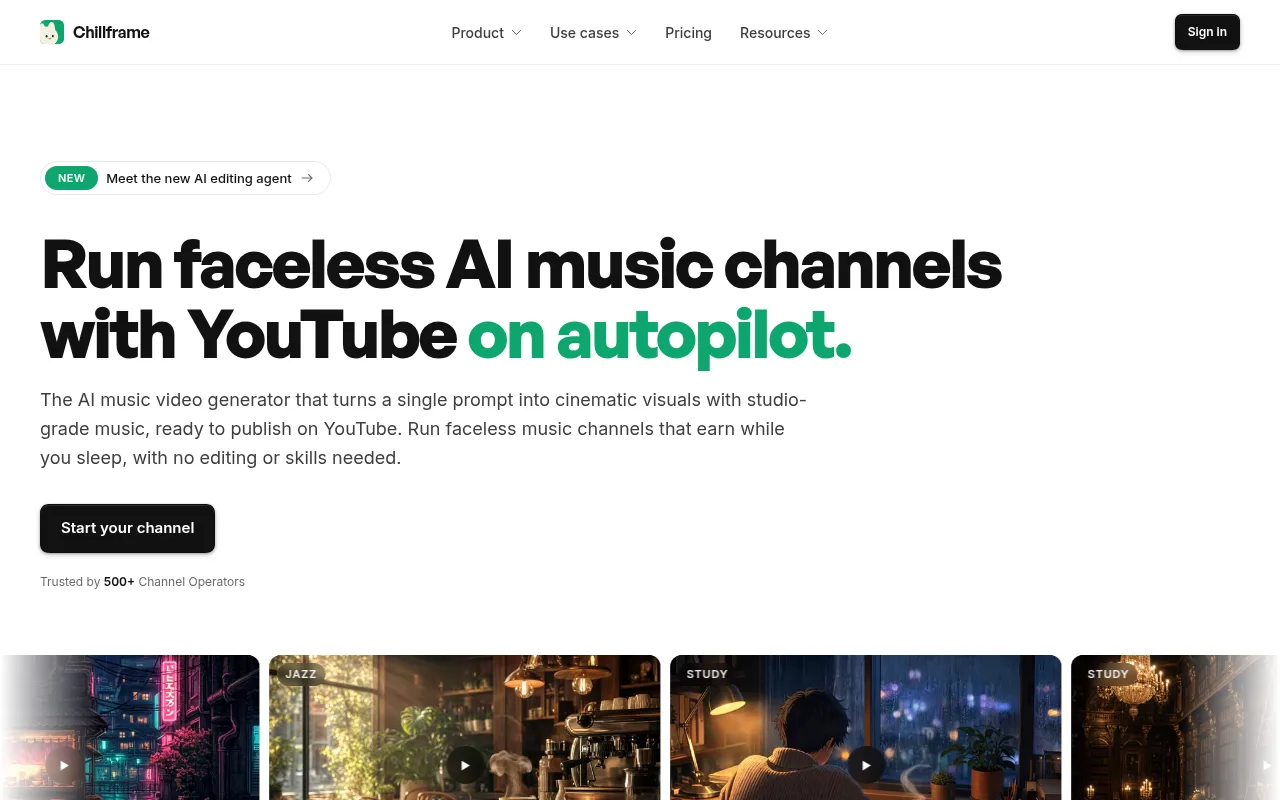
For a fully hands-off workflow, Chillframe makes the music and visuals, puts the video together and publishes it to your YouTube channel on the schedule you set.
- Your own tracks: the music is made for your video, not pulled from a catalogue everyone else is browsing.
- Fix one part: if the music or the visuals miss, remake just that part and keep the rest.
- Lengths: 1, 10 or 30 minutes, or 1 hour, on every plan. Creator, Pro and Max can also make motion videos.
Chillframe starts from $19 a month. You can also try tools like an AI YouTube shorts generator for shorter clips that send traffic to your long-form videos.
Frequently Asked Questions
Is all lofi music copyright free? No. Lofi is a musical genre defined by its aesthetic characteristics, not its legal status. Most lofi music is copyrighted, and you must obtain a license or explicit permission from the rights holder to use it in your YouTube videos.
What is the difference between royalty-free and copyright-free? Royalty-free means you pay a one-time fee or use a permitted free tier to get a license, and you do not have to pay ongoing royalties based on your video's views. Copyright-free means the creator has waived all copyrights, often placing the track in the public domain, allowing anyone to use it without restriction.
Can I monetize a video with Creative Commons lofi music? Yes, but only if the specific Creative Commons license allows commercial use (such as CC-BY or CC-BY-SA) and you include the required attribution in your video description. Licenses marked with "NC" (Non-Commercial) do not allow monetization.
Are YouTube playlists safe to reuse? No. Playlists labeled as copyright free lofi are curated collections, not legal licenses. The tracks within them may be claimed or copyrighted, and the playlist creator does not have the authority to grant you usage rights.
What is the difference between a Content ID claim and a copyright strike? A Content ID claim is an automated system match that typically redirects ad revenue to the copyright owner without penalizing your channel. A copyright strike is a formal legal takedown request that can lead to video removal and channel termination if you receive three strikes.
What should I do if a licensed track triggers a claim? You should file a dispute through YouTube Studio. Provide your license receipt, the track details, and the URL of the provider's licensing terms to prove you have the legal right to use the music.
A lofi channel grows on consistency, good audio and careful copyright habits. Source your music from reputable libraries, check each licence, and credit tracks properly in your descriptions, and you protect your channel's monetisation while you build a loyal audience of listeners.